The Silence Before the Echo
There is a silence in Ushguli that feels older than time. Perched at 2,200 meters in the heart of the Caucasus, this is the highest continuously inhabited settlement in Europe. The stone towers, known as koshki, stand guard over a landscape where the air is thin and the snow lingers until June. But a few years ago, a different kind of silence fell—not the peaceful hush of the mountains, but the hollow quiet of a community that had lost its heartbeat.
The heartbeat of Ushguli was always its sports. From fierce winter races on icy paths to summer festivals where young men wrestled on the grass, physical contest was woven into the fabric of daily life. Then, slowly, that heartbeat faded. The fields grew still. The laughter of competition was replaced by the silent shuffle of screens. The mountain seemed to wait, holding its breath, for someone to answer the question no one had dared to ask: Why did we stop playing?
The Mountain’s Command: Restore the Games
In the fall of 2023, an elder named Temur made a bold proclamation during the village council. He stood by the central tower, his voice steady against the wind, and declared: “The mountain has spoken to me. We must restore the Games.”
It was not a metaphor. For the people of Svaneti, the surrounding peaks are not just landmarks—they are ancestors, protectors, and judges. Temur claimed that during a late-night vigil near Mount Shkara, a vision had come to him: a reflection of Ushguli’s youth playing on a green field, laughing, falling, rising again. The mountain, he said, commanded them to reclaim their physical legacy.
At first, the idea was met with skepticism. Many had grown accustomed to the quiet. But Temur’s words struck a deep chord. The village began to gather. They remembered the old festivals—the Svanuri dances, the horse races, the stone-throwing contests. The mountain’s command became a rallying cry, and the silence began to break.
Where Gambling Buried Our Playgrounds
To understand why the sports died, one must look at what filled the void. In the early 2000s, as satellite television and mobile internet reached Ushguli, a new pastime arrived: online gambling. At first, it seemed harmless—a bit of entertainment during long winters. But soon, the slots and virtual bets consumed the village’s time and spirit.
- Young men spent hours in smoky teahouses, staring at glowing screens instead of the real peaks outside.
- Children imitated the adults, preferring phone games to outdoor running.
- Village festivals were canceled because no one had the energy or interest to organize them.
- The stone field, once used for wrestling and sprinting, was overtaken by weeds and trash.
The effect was devastating. The playgrounds were literally buried under neglect. The old track became a dumping ground. The wrestling circle disappeared under thistle. Gambling didn’t just steal money—it stole the communal will to move. The mountain’s silence grew louder.
Rebuilding the Stone Field of Ushguli
The restoration began not with a grand ceremony, but with a single shovel. On a frosty morning in May, a group of volunteers—led by a grandmother named Nana—gathered to clear the stone field. Step by step, they reclaimed the space that had once been the cultural core of the village.
| Phase | Action | Outcome |
|---|---|---|
| 1 | Remove trash and overgrowth | A level playing surface appeared |
| 2 | Repair the stone perimeter | Defined boundaries for games |
| 3 | Build wooden goalposts | Replaced rusted metal scraps |
| 4 | Install basic drainage | Playable even after snowmelt |
| 5 | Paint lines and markers | Ready for multiple sports |
> “The field is the village’s heart,” Nana told a visitor. “When it is broken, the people are broken. When it is healed, we all stand taller.”
The project spread. Local carpenters built bleachers from spare timber. A nearby town donated a net for volleyball. Children painted murals on the surrounding walls—depicting runners, wrestlers, and the great peaks watching over them. The mountain, once a silent witness to decline, now had a stage for revival.
A New Olympiad in the Caucasus Sky
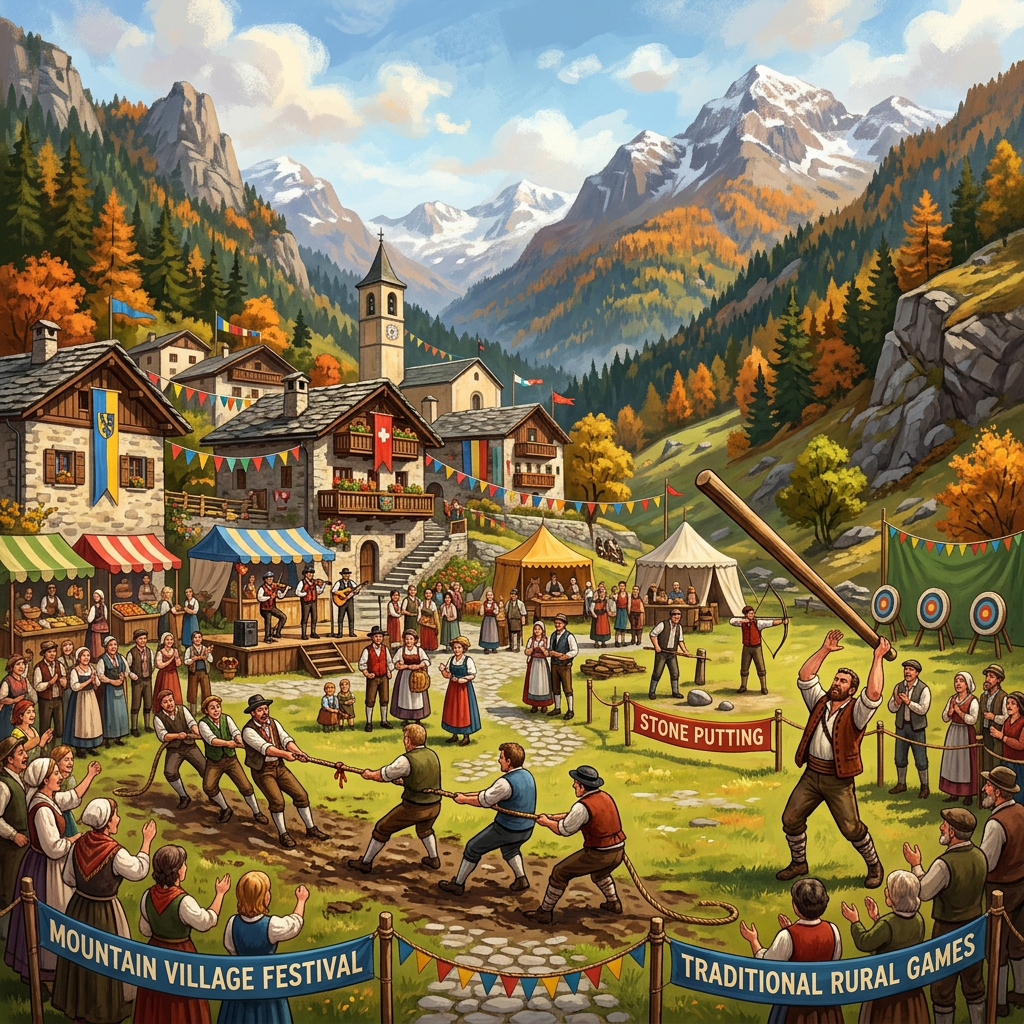
On the first Saturday of August, Ushguli held its first Mountain Games in nearly a decade. It was a modest affair—no sponsors, no officials, no medals of precious metal. But the air was electric. Families trekked down from the highest hamlets. Elders took seats on stone benches, while children scrambled for the best view.
The events were a blend of tradition and innovation:
- Kubidari Sprint – a 200-meter dash down the main slope, named after the local cheese bread
- Stone Toss – competitors threw flat river stones for distance and accuracy
- Tower Climb Relay – teams raced up the steps of the ancient defensive towers
- Winterball – a hybrid of soccer and rugby, played with a stuffed leather ball on snow
No one broke records. No scouts came from the city. But something more important happened: the mountain answered. At the closing ceremony, as the sun set behind Shkara, an eagle soared low over the field. The crowd went silent. Temur, the elder who had started it all, raised his arms and said simply, “It is done.”
The silence that returned that evening was not the silence of loss. It was the silence of peace—the quiet that follows a good game, a deep breath, a homecoming.
===
Conclusion: Ushguli’s story is not unique, but it is urgent. In a world where screens and addictions threaten to bury our public life, the answer may not come from policy or money, but from a mountain. By restoring their sports, the people of Ushguli did more than just play—they answered a call that had been waiting in the wind for years. The field is alive again. The echo has returned. And the mountain, it seems, is listening.
Leave a Reply