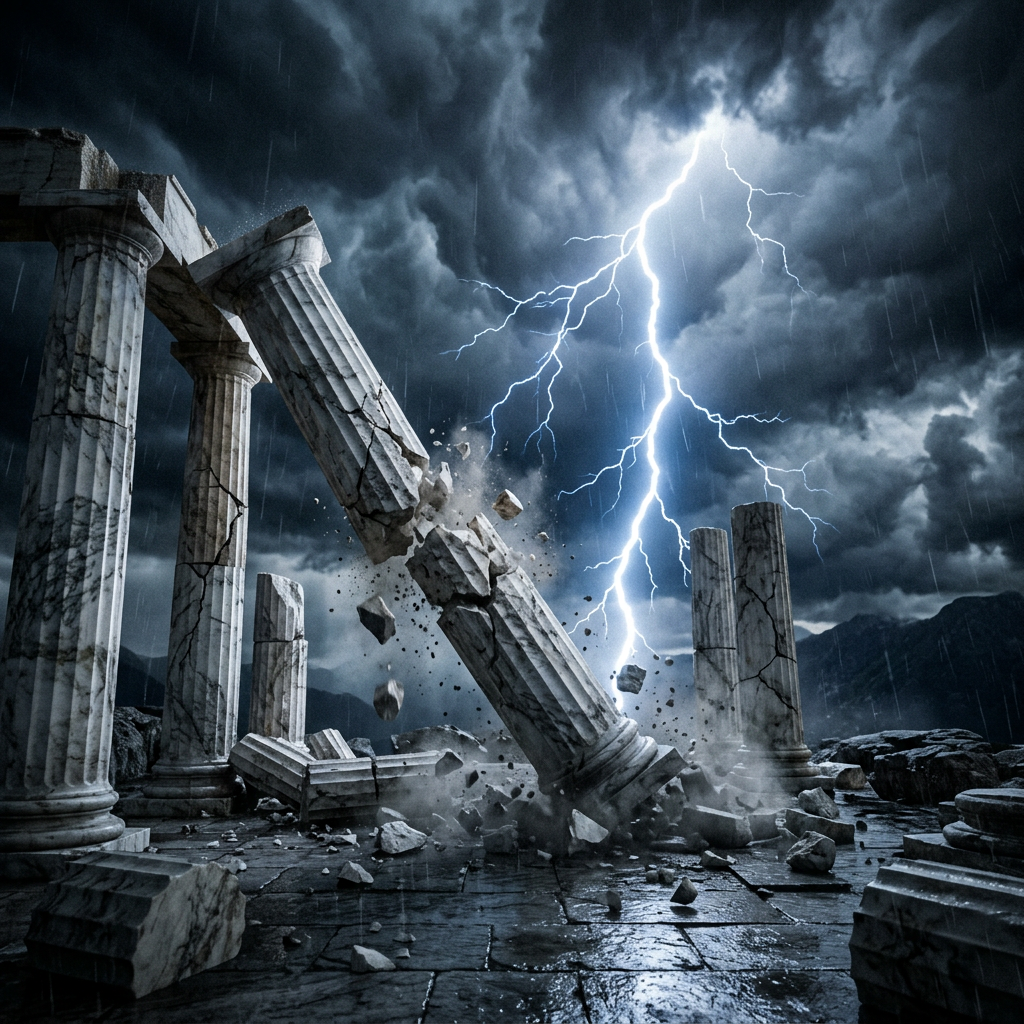
There is a fragile contract that binds every society together—a quiet agreement that what is seen and known can be trusted, and that what is hidden carries a debt that will one day come due. When we break that contract, when we choose comfort over clarity, we do not simply hide an inconvenient fact. We open a door. Through that door, the engines of chaos find their fuel. This is the story of how silencing the truth became the most dangerous decision we ever made.
When Truth Was Buried, Chaos Took Flight
The first lie is never the loudest. It is often a strategic omission—a sentence left unfinished, a statistic quietly rounded down, a warning softened until it sounds like a suggestion. The problem is not the lie itself, but the vacuum it creates. Nature, as the old saying goes, abhors a vacuum. And in that empty space where truth once stood, something else rushes in: disinformation, conspiracy, and fear.
Consider the pattern:
- A government agency withholds a health report to avoid public panic.
- A corporation buries internal data about a product defect to protect quarterly earnings.
- A leader denies obvious failures, blaming external forces instead of acknowledging mistakes.
Each of these actions seems rational in isolation. But collectively, they create a ripple effect:
- Trust erodes — Citizens stop believing official channels.
- Narratives multiply — Without verified facts, stories spin out of control.
- Authority crumbles — Institutions become hollow shells, their power replaced by rumor.
The moment the truth is silenced, chaos does not knock politely. It takes flight on wings of misinformation, circling until it finds a weak spot to land.
The Night We Dismantled the Transparent Engine
Every functioning society runs on what we might call a transparent engine — the system of checks, balances, independent media, whistleblower protections, and open records that keep power accountable. This engine is not glamorous; it is the daily grind of audits, press conferences, and public hearings. But it works.
The dismantling did not happen in a single night. It happened in stages:
- First, we labeled transparency as inefficient.
- Then, we called accountability divisive.
- Finally, we treated objective reporting as bias, and rewarded loyalty over accuracy.
With each step, the engine lost a gear. When a crisis came—be it a pandemic, an economic collapse, or a political scandal—there was no credible source left to guide the public. The guardians of truth had been replaced by influencers of narrative.
> “A nation that silences its truth-tellers does not protect itself; it merely blinds itself to the approaching storm.”
When the storm arrives, it is not the truth that seems dangerous—it is the silence that preceded it. The engines of chaos thrive in darkness, and we gave them acres of it.
How We Turned Stakeholders Back Into Spectators
The word stakeholder implies ownership. A stakeholder is someone with a vested interest in outcomes—they ask questions, demand accountability, and participate in solutions. But when the truth is silenced, stakeholders are reduced to spectators. They watch events unfold with no power to change course.
This transformation follows a deadly pattern:
- Information is withheld → People rely on guesswork.
- Guesswork breeds confusion → Confusion leads to apathy.
- Apathy opens the door to manipulation → The loudest, most extreme voices take the microphone.
The result is a society that no longer debates facts, but performs emotions. Anger becomes a substitute for analysis. Outrage replaces oversight. And the people who were once active contributors to problem-solving become passive consumers of drama.
> “A spectator does not ask ‘What can I do?’ They ask ‘What will happen to me?’ The first question builds nations; the second merely watches them burn.”
When we silenced the truth, we did not just destroy information. We destroyed participation. And without participation, democracy itself becomes a ghost.
The Fifth Trumpet and the Swarm of Judgment
There is a stark image in ancient literature that speaks of a fifth trumpet sounding, releasing a swarm of locusts that torment those without the seal of truth on their foreheads. It is a metaphor that transcends any single religion: when the warning system fails, the consequences feel apocalyptic.
In our modern world, that fifth trumpet is the moment a whistleblower is silenced, a journalist is discredited, or an election result is doubted without evidence. The swarm is not literal insects—it is the collective judgment of a people who no longer know what to believe.
The swarm manifests as:
- Echo chambers — Groups that amplify only what confirms their biases.
- Truth decay — A blurring of fact and opinion until both seem equally valid.
- Decision paralysis — Inability to act because every source is suspect.
Leaders who silence truth imagine they are controlling the narrative. In reality, they are summoning the swarm. The judgment that follows is not divine—it is human. It is the slow collapse of trust that makes governance impossible, cooperation unthinkable, and progress a memory.
> “He who suppresses the truth does not stop the truth; he only ensures that when it finally emerges, it comes as a force of destruction rather than a tool of healing.”
A World Betrayed by Its Own Guardians
The cruelest irony of all is that the truth is often silenced not by enemies, but by those sworn to protect it. The guardians—journalists, scientists, judges, civil servants—are pressured, defunded, or replaced. The institutions that once stood as pillars become empty monuments.
When guardians betray their duty, the world does not simply lose information. It loses direction. Consider what happens when:
- Scientific agencies suppress data for political expediency.
- Courts prioritize loyalty over law.
- Media outlets choose profit over accuracy.
Each betrayal adds a brick to a wall that separates people from reality. On the other side of that wall, the engines of chaos work undisturbed.
But there is a lesson in every betrayal: the truth will not stay buried forever. It has a way of surfacing—sometimes gently, sometimes with a roar. The question is whether we will be ready to receive it, or whether we have become so accustomed to the noise of chaos that we no longer recognize truth when it speaks.
Conclusion
We silenced the truth because it was uncomfortable. We called it practical, necessary, even patriotic. But what we called protection was actually surrender. The engines of chaos do not need armies or weapons—they need only a population that no longer trusts what it hears, and institutions that no longer know what to say.
The way back is not easy, but it is clear. It begins with restoring transparency as a value, not a weakness. It requires protecting the truth-tellers, even when their words sting. And it demands that we, as individuals, refuse to be spectators. We must become stakeholders again—curious, engaged, and unwilling to settle for comfortable silence.
Because when the truth is silenced, chaos always answers. And it never speaks softly.
Leave a Reply