The Frozen Hall: Where Power Met in Ilulissat
In the stark, breathtaking landscape of western Greenland, where icebergs drift silently through the Disko Bay and the midnight sun paints the sky in hues of amber and violet, a meeting of unprecedented significance took place. Ilulissat, a small town of colorful houses clinging to the edge of the Arctic, became the unlikely stage for a high-stakes drama that transcended borders. The “Frozen Hall,” as the local community center was called during that fateful week, was not a palace of marble and gold, but a functional building heated against the brutal cold. Yet within its unassuming walls, the world’s most powerful figures gathered, their breath misting in the cold air as they stepped inside, leaving the howling winds of the tundra at their backs. The agenda was a single, terrifying item: The Frozen Code — a digital contagion born of human hubris and engineered to destroy the very concept of trust.
The Code That Would Have Killed All Gambling
At the heart of the crisis was a piece of software so insidious that it threatened to collapse an entire industry. This was not a virus that stole credit cards or encrypted files for ransom. The Frozen Code was a logic bomb designed to exploit the mathematical foundations of chance. It targeted the random number generators (RNGs) that underpin all modern gambling, from online poker rooms to state lotteries. If deployed, the code wouldn’t simply rig games in favor of one house or another; it would kill the illusion of randomness entirely. Every online slot, every shuffled deck, every roulette spin would become deterministic — a pre-calculated outcome visible to the code’s creators. The result would be:
- Instant collapse of public trust: No player would ever risk a dime knowing the game was fixed.
- Legal and regulatory chaos: Governments that legitimized and taxed gambling would face a crisis of legitimacy.
- An economic blackout for entire nations: From Monaco to Macau, economies built on the house edge would shatter overnight.
The code was a perfect weapon for a world that had become addicted to digital uncertainty. It was the ultimate act of vandalism, not against property, but against probability itself.
A Metal Crate and the First Trumpet Over Ice
The crisis began not with a tweet or a press release, but with a sound. A deep, resonant horn blast that echoed across the frozen fjord just before midnight. It was the first of seven “trumpets” — a series of escalating cyberattacks that served as both warning and countdown. Each trumpet was preceded by the delivery of a metal crate to a different capital city, always addressed to a high-ranking official. Inside was not a bomb, but a single, high-fidelity speaker and a data stick. When played, the device emitted a complex, haunting tone — a sonic key that, when combined with a leaked algorithm online, unlocked the next phase of the code.
These “trumpets” were not brute-force attacks. They were psychological operations. The first trumpet was heard in Ilulissat itself, at the exact moment the world leaders began their closed-door session. It was a clear message: You are not safe here. We control the air you breathe. The sound was a low, thrumming vibration that rattled the windows of the Frozen Hall, causing the glasses on the conference table to tremble. Delegates from the US, China, Russia, and the European Union paled. They understood: the enemy was not a nation, but a ghost — a collective of mathematicians, game theorists, and disillusioned programmers who called themselves The House That Always Loses.
When the Ice Cracked Like Ancient Bones
As negotiations stalled inside the Frozen Hall, the environment itself seemed to respond. Outside, the ancient Sermeq Kujalleq glacier — one of the fastest-moving in the world — began to calve with alarming frequency. A massive chunk of ice, the size of a city block, broke free with a sound that witnesses described as “ancient bones cracking.” The geological metaphor was not lost on the negotiators.
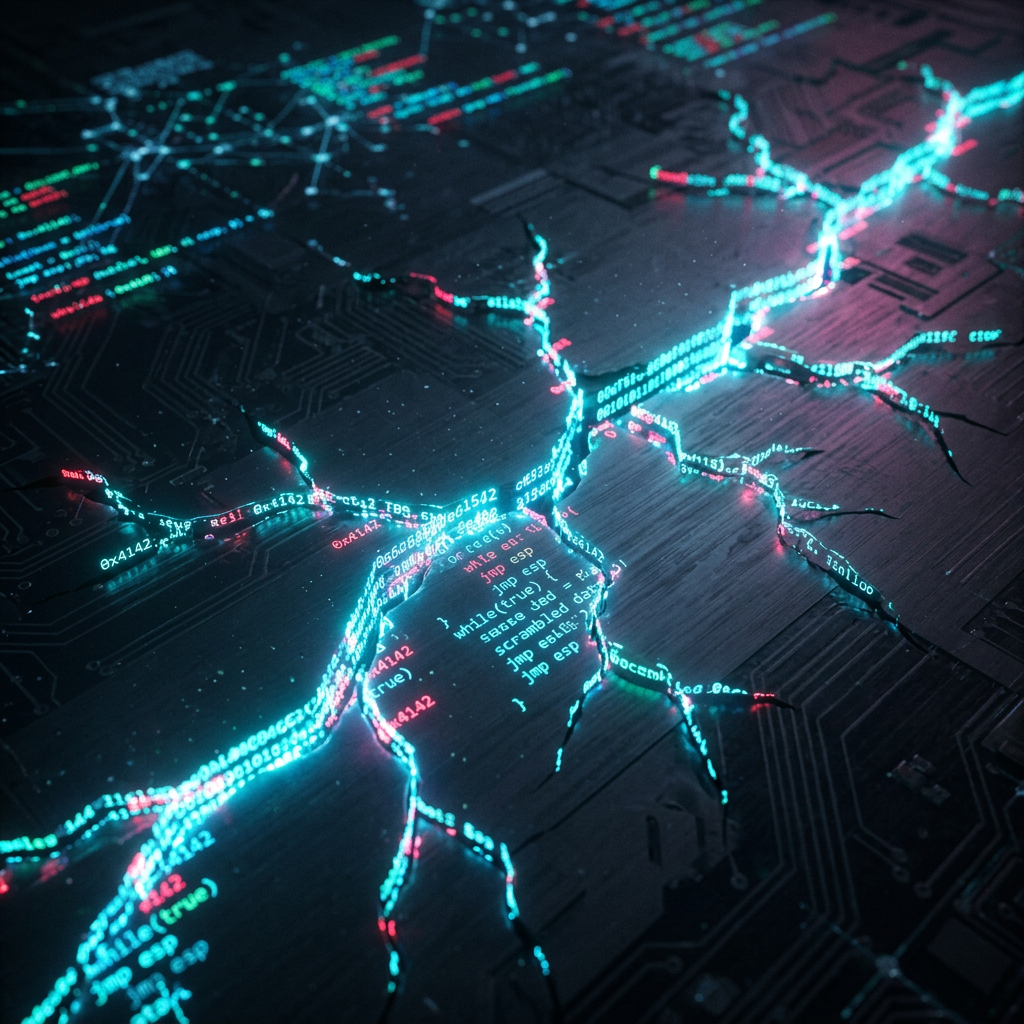
This event marked a turning point. The material world was mirroring the digital one. The ice, which had held its secrets for millennia, was splintering under immense pressure. Similarly, the fragile human consensus was fracturing. The leaders realized that The Frozen Code was not merely a tool for economic destruction; it was a test. The ghostly collective had woven the code into the very infrastructure of the Arctic:
- Subsea communication cables running through the Northwest Passage were silently infected.
- Satellite ground stations in Norway and Canada were compromised.
- Even the thermal monitoring systems on the ice sheet itself were part of the delivery mechanism.
The final trumpet, it was revealed, would be triggered not by a person pressing a button, but by the collapse of a specific ice shelf. The code was literally frozen, waiting for a climate catastrophe to release it. The world’s addiction to gambling, the collective realized, was nothing compared to its addiction to inaction on a warming planet.
Judgment Rising: The Sky Dimmed With Warning
In the final hours, as the sky above Ilulissat darkened with an unseasonal storm — a dusty, crimson twilight that felt more like smoke than clouds — the leaders made a decision. They would not fight the code. They could not. Instead, they would accept the judgment it represented. In a dramatic break from protocol, they agreed to a global moratorium on all high-frequency digital gambling for 72 hours. They publicly released the core algorithm of The Frozen Code, as demanded, ensuring that the “house” could no longer hold an advantage.
Then, something remarkable happened. The seventh trumpet never sounded. The storm passed. A gentle, crystal-clear aurora borealis danced over the fjord, as if the earth itself was exhaling. The ghost collective sent a final, encrypted message that simply read: “The game is reset. Play fairly, or we will freeze the board again.”
Conclusion
The tale of The Frozen Code in Ilulissat is not a conventional thriller. There were no car chases through the ice, no gunfights on the tundra. The victory was one of humility and collective reason. The leaders learned that in a hyper-connected world, the most dangerous codes are not the ones that steal money, but the ones that reveal our deepest flaws: our greed, our addiction to chance, and our disregard for the planet’s own frozen systems. The code was neutralized, but the warning remains etched in the ice of Greenland: trust is the most fragile asset of all, and once it cracks, it can take centuries to refreeze.
Leave a Reply