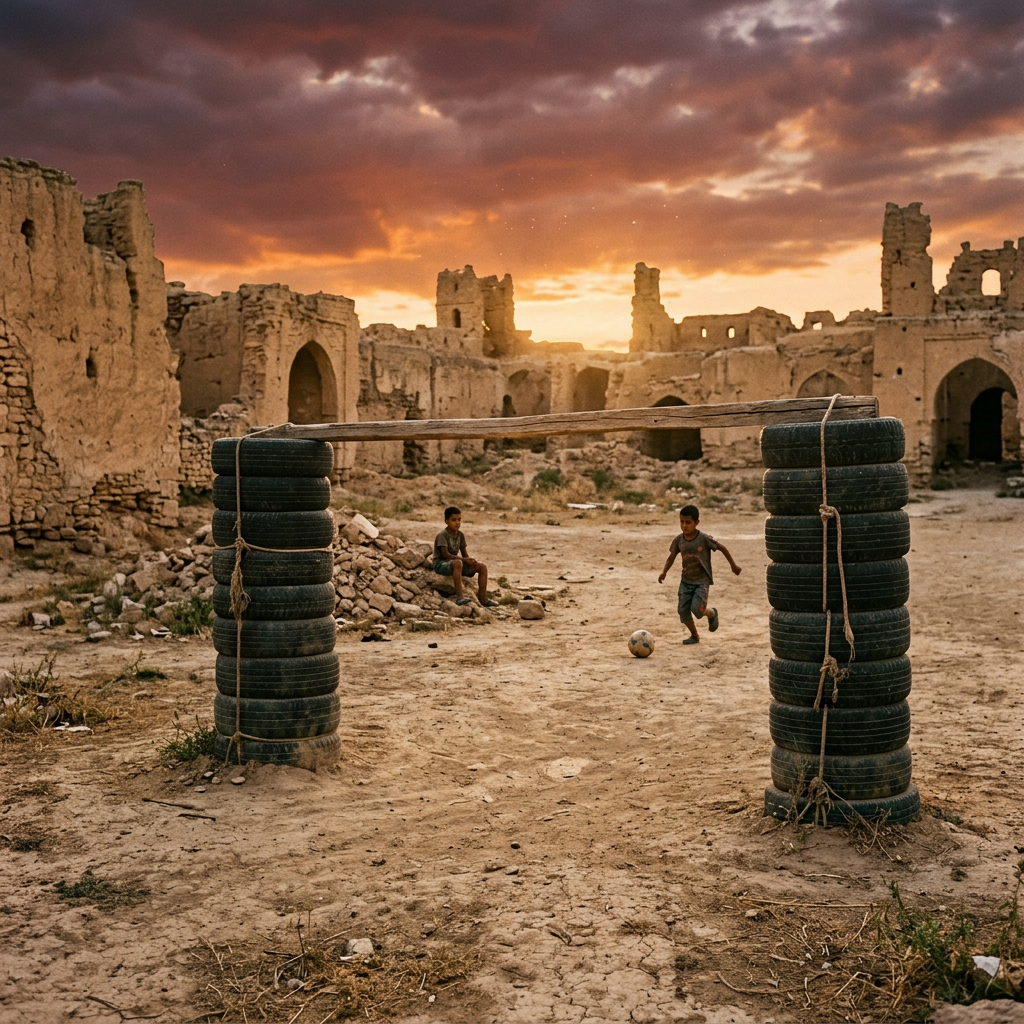
In the quiet aftermath of collapse—when a civilization’s noise has faded and its monuments are buried under dust—there is still one thing that persists. It is not a structure, nor a memory stored in stone. It is the breath that remains when the world forgets. This article explores that fragile yet resilient force: the unseen vitality that endures through ruin, silence, and the slow erasure of all we once built.
The Breath That Survives a World Gone Silent
When the last broadcast fades and the hum of traffic dies, a different kind of breathing begins. It is the pulse of nature reclaiming asphalt, the whisper of wind through empty windows. This breath is not loud; it is patient.
- Resilience is not a roar but a quiet rhythm. It adapts, shrinking into smaller spaces, beating in hidden chambers.
- Silence becomes a teacher. In the void, the forgotten land does not weep—it waits.
- Memory fades from collective consciousness but lives in the soil, in the roots of plants pushing through cracked concrete.
The world may forget a name, a language, a story. But the breath—the elemental exchange of oxygen and time—remains. It is the first and last contract between life and the void.
When Iron Air Chokes the Forgotten Land
Yet, not all that remains is gentle. The forgotten land often breathes through iron lungs—factories rusting, pipes leaking poison, air thick with the residue of ambition. This is the toxic persistence of progress abandoned.
> “The air you learn to live with can become the air that slowly kills you. But even then, you breathe—because breathing is the only answer to forgetting.”
In these zones, the struggle is literal:
- Particulate memory: Every grain of dust carries a story of industry, of labor, of dreams burnt to fuel.
- Choked ecosystems: Birds sing less, leaves turn brittle, yet insects still carve their tunnels through the debris.
- Human adaptation: Those who stay learn to filter the air with their own bodies, developing a strange immunity to loss.
This iron air is a reminder that forgetting is not passive—it is an active process of erasure. But the breath persists, stubbornly, against the odds.
The Scroll of Wind Against the Suffocating Odds
Wind becomes the archivist of the forgotten. It carries whispers from one ruin to another, weaving a story without beginning or end. In a world of suffocating odds—climate collapse, cultural amnesia, ecological grief—the wind writes its own scroll.
Key insights into this invisible record:
- Wind as messenger: It transfers pollen, spores, and seeds, refusing to let the land stay barren.
- Sound as texture: The howl through broken windows is not mere noise; it is a sonic archive of what was lost.
- Directional memory: Prevailing winds align with old trade routes, tracing the ghost of commerce and contact.
This scroll is not read by eyes but by bodies. You feel it on your skin as a temperature shift, an electric charge before a storm. It says: you are not the first to struggle, and you will not be the last.
Finding Sport in the Dust of Ruined Futures
When survival becomes a game, the human spirit invents sport from the rubble. Children kick cans through abandoned squares; adults race against the setting sun to gather water. This is not frivolity—it is defiance in motion.
- Play as protest: To laugh in a dying world is to spit in the face of despair.
- Rules from wreckage: Old tires become hurdles, broken glass marks boundaries, and the goal is always the same—to reach tomorrow.
- Teamwork in silence: Without words, survivors coordinate through gesture and instinct, turning every day into an olympiad of endurance.
> “In the dust of ruined futures, the body remembers joy before the mind can name it. That is the breath’s truest sport: to move, to strive, to celebrate the fleeting.”
This athleticism of the soul is not recorded in history books. It is passed down in breath, in muscle memory, in the way a child’s eyes light up when they score a goal with a crushed can.
A New Market Rises Where Hope Once Died
Finally, from the ashes of forgotten economies, a new market emerges. It trades not in currency, but in currency of the breath—clean air, rare knowledge, a moment of peace.
What does this market look like?
- Barter of resilience: A jar of filtered water for a story that teaches how to find shelter.
- Value in scarcity: The most precious commodity is attention—someone who truly listens to the wind’s scroll.
- Trust as capital: Deals are sealed with a shared exhale, a mutual acknowledgment that you both survived another day.
- Innovation born from loss: Tools are made from scrap, medicine from weeds, community from strangers.
This is not a market of consumption, but of reconnection. Hope does not rise like a phoenix in a single blaze; it seeps through the cracks, slowly, like morning fog over a forgotten field.
Conclusion
The breath that remains when the world forgets is not a metaphor for passivity. It is a living, active force—part biology, part spirit, part rebellion. It teaches us that even when memory fails, when structures crumble, and when air turns to iron, we still have the capacity to inhale, to move, to play, and to trade in the currency of survival.
Let this be a guide not to despair, but to attention. Listen to your own breath today. It carries the echo of every forgotten land, every ruined future, every new market rising from dust. The world may forget, but the breath remembers.
Leave a Reply