Introduction
Not all markets are born from charts, supply chains, or quarterly earnings. Some emerge from the wreckage of the impossible—from a sky that cracked, a sea that churned, and a prophecy that refused to stay buried. For centuries, the tale of the Shattered Moon was whispered in coastal taverns and etched into crumbling temple walls, dismissed as myth by scholars and bankers alike. But when the moon actually broke into seven fragments on a still night, the world learned that some stories are not metaphors. They are blueprints. What rose from that cataclysm was not just a new currency or a new commodity—it was a market unlike any the world had seen before. This is the story of how a lunar catastrophe gave birth to an economy.
The Night the Moon Broke into Seven
It began without warning. At the stroke of midnight, the full moon—ancient, constant, and trusted—split along unseen seams. Seven jagged fragments drifted apart, each trailing a ghostly luminescence that painted the oceans in silver and ash. The event was witnessed globally, sparking immediate panic.
- No astronomical explanation emerged from any observatory; telescopes showed nothing striking the moon.
- Tides went wild, surging and retreating in erratic rhythms, stranding ships and flooding coastal cities.
- Communications failed for three days, as if the moon’s shattering had torn a hole in the electromagnetic field.
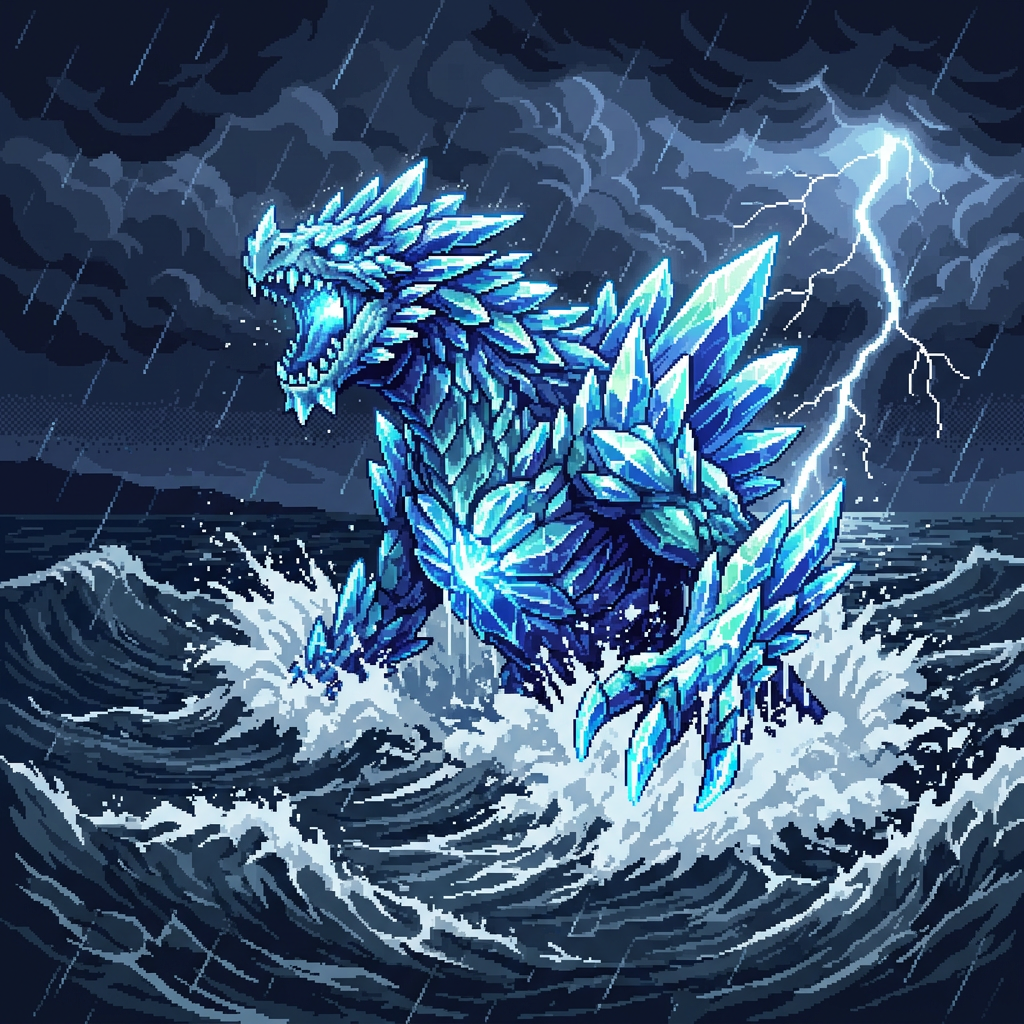
Yet amid the chaos, something strange happened. Where the largest fragment—called the Keystone—fell into the sea, the water did not boil or steam. It crystallized. A new kind of substance, a mineral that seemed to hum with stored energy, washed ashore. This was the first evidence that the shattered moon was not just a disaster, but a resource.
> “The moon did not die that night. It was harvested by forces we do not understand, and what it seeded in the sea was meant for us to find.” — from the recovered Ledger of the First Tide
When a Beast of Ledgers Rose from the Sea
Within weeks, the sea gave birth to what the first traders called the Beast. It was not a creature of flesh, but a phenomenon: a massive, semi-sentient formation of crystallized moon-matter that drifted through the deep, constantly shifting shape. It consumed ships that drew too close, yet it also shed fragments—pure, energy-dense shards that could power entire cities.
- The Beast defied ownership. No nation could claim it, no corporation could fence it.
- Its movements were unpredictable, but traders soon noticed a pattern: it surfaced near the sites of ancient, submerged ruins.
- The shards it shed could be refined into a fuel that burned at temperatures high enough to smelt any metal, yet left no smoke.
This created the first problem of the new market: how do you trade something that no one controls, that appears and disappears, and that has no fixed value? The answer came from an unexpected source—a cache of scrolls discovered in a sealed cave beneath the old city of Caelum.
The Scroll That Foretold a New Market
The scrolls were written in a language that predated any known civilization. When decoded, they described not a prophecy of doom, but an economic system. The ancient scribes had anticipated the moon’s shattering and had laid out rules for what they called the Market of Seven Reflections.
Key tenets of the scroll’s economic model:
- The Seven Shards are not to be owned, but leased. Ownership leads to hoarding; leasing ensures circulation.
- Value is determined by resonance, not scarcity. Each shard vibrates at a unique frequency; the market price is set by how that frequency aligns with trade routes, seasons, and human emotions.
- Trade must be anonymous to prevent the Beast from sensing greed and sinking the vessels carrying the shards.
This was not theory. The scrolls contained tables, formulas, and legal contracts. They described a market built on trust, risk, and a deep respect for the unpredictable forces at play. The first traders who followed these rules survived. Those who ignored them—who tried to hoard or speculate—were invariably lost to the sea.
> “You do not conquer the Moon Market. You dance with it. One step off rhythm, and the Beast takes your ledger.” — inscription on the door of the first trading house in Port Caelum
Fire and Ice: The Truth That Survived
As the market matured, a schism emerged. Two philosophies clashed:
- The Fire School believed the shards should be refined into pure energy, used to power industry and exploration. They pushed for high-volume trading and rapid consumption.
- The Ice School argued that the shards were alive, or at least connected to the original moon’s consciousness. They advocated for minimal extraction, ritual use, and long-term preservation.
The debate grew heated until a pivotal event: a Fire-aligned caravan attempted to transport a massive shard across the Sea of Glass. The Beast rose, not to attack, but to freeze the ship in place for seven days. When the ice thawed, the shard had been returned to the deep, and the caravan’s ledgers were found intact but rewritten—in a script no one could read.
- This event proved that the market had a will of its own.
- It established that the Ice School’s caution was not superstition, but strategy.
- A hybrid system emerged: Fire-ice trading, where energy is sold, but only after a portion of every shard is ritually returned to the sea.
A Market Born from Collapse and Prophecy
Today, the Moon Market is the most volatile, respected, and feared economic system in the world. It runs on a set of principles that would horrify conventional economists:
- No central bank. The market is regulated by the collective memory of the scrolls and the living will of the Beast.
- No futures contracts. You cannot bet on what you cannot touch; the shards must be physically present to trade.
- No insurance. The sea does not honor policies. You trade at your own peril, and your profit is your only safety net.
Yet it works. Coastal cities that once feared ruin now thrive on the processing and exchange of lunar shards. New professions have been born—resonance calibrators, Beast trackers, and scroll scribes who update the ancient texts with modern annotations. The market has even influenced art: poets write in seven-line stanzas, and architects design buildings with seven-fold symmetry, believed to attract favorable tides.
Conclusion
The market born from the shattered moon is not a system of numbers and digits—it is a living dialogue between humanity and a broken sky. It reminds us that the most valuable things are often born from destruction, that the best rules come from ancient wisdom, and that no market can thrive without humility before nature’s power. The moon has not been restored; it remains seven fragments, drifting apart. But in its shattering, it gave us something more precious than a full lunar disk: a chance to trade not with greed, but with grace. The Beast still swims below, the scrolls still whisper, and the market continues to turn—one resonance at a time.
Leave a Reply