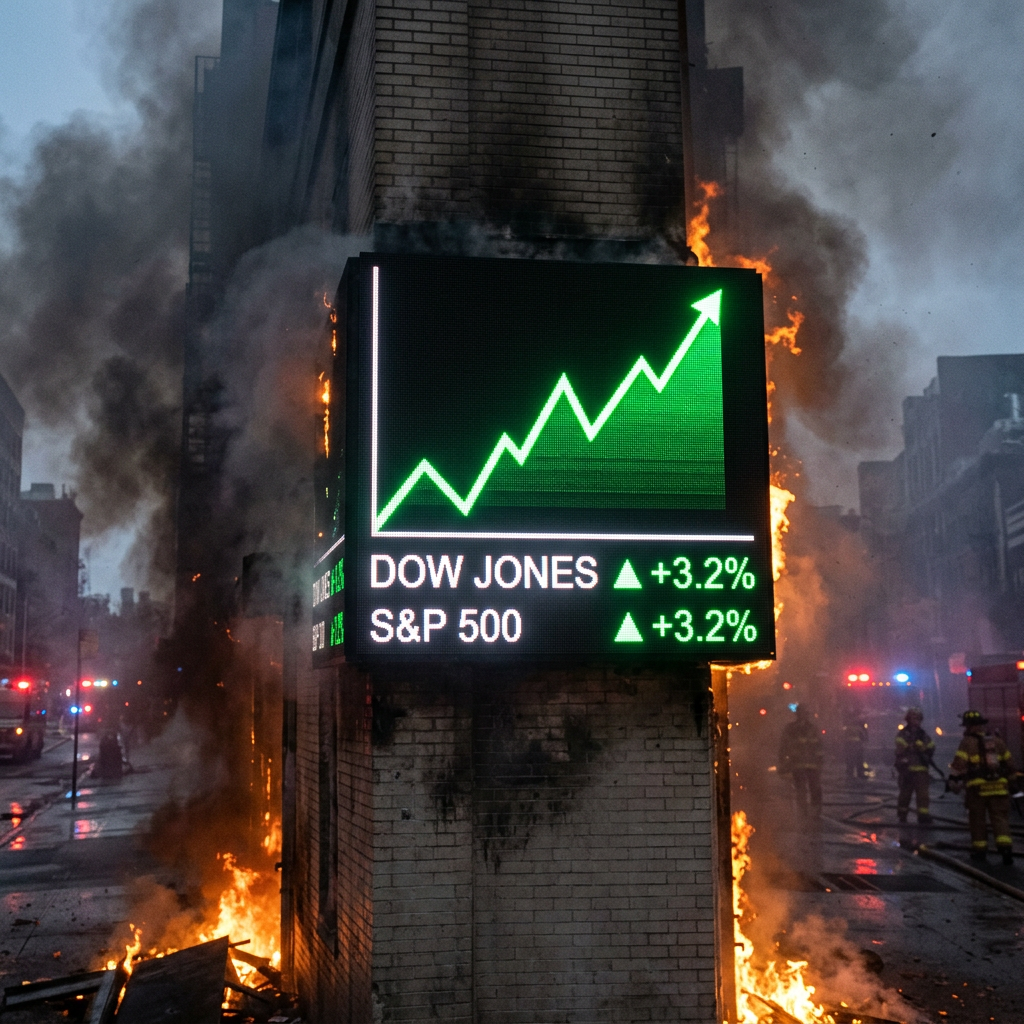
The Firestorm That Couldn’t Melt the Market
Every few years, the financial world throws a tantrum. Pessimists roll out doomsday charts, media outlets scream “correction,” and the average investor feels a cold sweat trickle down their spine. Yet, history has shown us a peculiar truth: the market is a phoenix that prefers to rise while still smoldering. When the flames of panic, recession fears, and geopolitical chaos rage highest, the market often walks straight through the inferno—and emerges not just intact, but stronger.
The secret isn’t luck. It’s a deep, structural resilience that defies short-term hysteria.
A Scroll of Truth in the Flames
Let’s unroll the historical scroll. From the dot-com bust to the 2008 financial crisis, from the COVID-19 crash to the inflation scares of 2022, each time the fire seemed absolute.
- The 2008 Meltdown: Bank failures, housing collapse, global panic. The S&P 500 lost over 50% of its value. Yet, within five years, it had not only recovered but doubled.
- COVID-19 Crash (2020): The global economy shut down overnight. Markets fell 34% in weeks. But relentless stimulus, adaptation, and innovation pushed the S&P to new highs by August of the same year.
- The 2022 Inflation Inferno: Interest rates rose faster than in decades. The market shed 20%. Yet by 2023, tech stocks and the broader market began a resilient rally.
In every case, the flames licked the feet of the market, but the core structure—innovation, human ingenuity, and adaptive capitalism—remained unscathed. The scroll of truth reads: panic is a short-term visitor; resilience is the permanent resident.
When Gambling’s Illusions Turn to Ash
During these fires, a curious phenomenon occurs. The gambler-investor—the one chasing meme stocks, leverage, and hot tips—gets incinerated first. Their illusions of easy wealth turn to ash. Why? Because they mistake volatility for opportunity and short-term noise for long-term signal.
Consider the GameStop frenzy or the crypto blow-ups of 2022. When the firestorm hit, these speculative bubbles evaporated. The market didn’t burn; the gamblers did. What remains is the bedrock of sound investing:
- Diversification across sectors and geographies.
- Value investing focused on fundamentals, not hype.
- Long holding periods that let compound interest work its quiet magic.
The market is a crucible that melts away the dross of greed and fear, leaving only the gold of disciplined strategy.
The Beast of the Burning Mirage Fails
Perhaps the greatest trick the market plays is making the fire look like the end of the world. Headlines scream: “Worst week in decades!” “Recession inevitable!” “Cash is king!” This is the burning mirage—a terrifying illusion designed to shake you from your plan.
Yet time after time, the beast fails. Why?
- Central banks step in with liquidity.
- Corporate earnings adapt through cost-cutting and innovation.
- Consumer behavior pivots faster than pundits predict.
- Technology creates new industries even in downturns (think of Zoom, Amazon, and streaming during COVID).
The fire looks real, but it rarely consumes the entire forest. Instead, it clears the deadwood—weak companies, frauds, and overvalued assets—allowing healthy growth to shoot up from the ashes.
Walking Unscorched Through the Inferno
So how do you walk through the flames without getting burned? It requires not magic, but emotional discipline and a tactical toolkit.
> “The stock market is a device for transferring money from the impatient to the patient.” — Warren Buffett
Here are the steps to stay unscorched:
- Stay invested, not frozen. History shows that missing the 10 best days in a decade can cut your returns in half.
- Dollar-cost average during dips. Buy the fire sale, don’t flee from it.
- Rebalance your portfolio annually. Cut winners? Only if they make up too much of your risk.
- Ignore the noise. Turn off CNBC. Delete the app that pings you every minute.
- Hold cash as a strategic reserve, not as a flight instinct. Cash let’s you buy when others are selling in panic.
In short, the market is not a fragile house of cards—it’s a fire-resistant vault. The flames of fear, recession, and uncertainty may rage around it, but the vault holds.
Conclusion
The market that walked through fire and didn’t burn is not a myth—it’s a living historical pattern. The flames of panic will always return, but so will the resilience. Those who mistake the fire for the end will run out and miss the recovery. Those who understand the market’s true nature—a dynamic, adaptive, and unbreakable engine of human progress—will walk through the inferno calmly.
So the next time the headlines scream “fire,” remember: you’re not in a burning building. You’re in the vault.
Leave a Reply