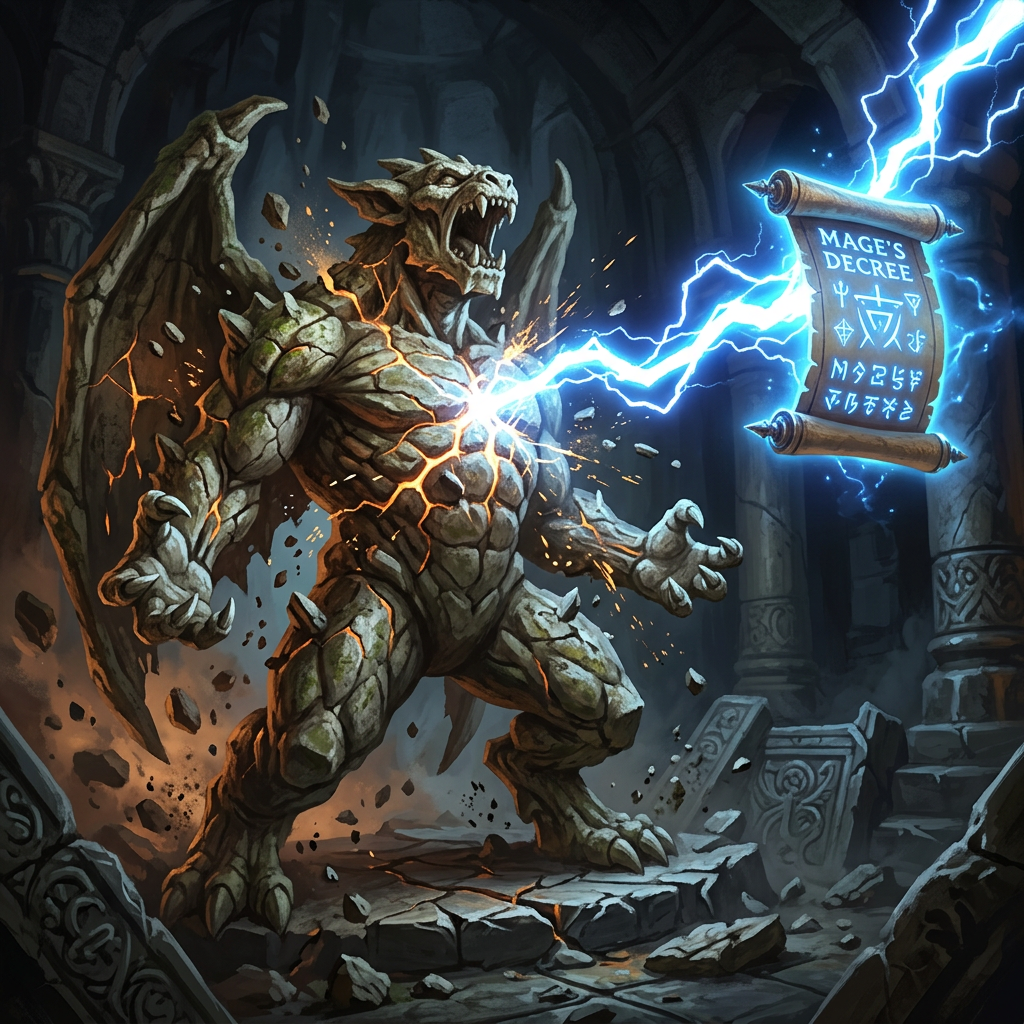
Long before the internet’s first whisper, a different kind of digital revolution was etched into clay. It began not with a server crash, but with the roll of a scroll and the thunder of a beast. This is the story of how an ancient artifact, the Epic of Gilgamesh, didn’t just crumble a mythical creature—it laid the cornerstone for a new market in human understanding.
The Scroll That Shattered the Beast
In 1853, a team of archaeologists working in the ruins of Nineveh uncovered a library of clay tablets belonging to the Assyrian king Ashurbanipal. Among the fragments was a story that had been lost for over two millennia. It told of a hero, Gilgamesh, king of Uruk, who wrestles with the wild man Enkidu—a being sent by the gods to curb the king’s arrogance. But the true beast wasn’t a man. The Beast of Ignorance—the belief that history began with the Greeks and the Bible—was about to shatter.
The scroll, or rather its cuneiform fragments, revealed a flood narrative eerily similar to that of Noah’s Ark. This wasn’t a coincidence; it was a seismic shift. For Victorians steeped in biblical literalism, this was heresy. The clay said: this story is older than Moses. The tablet didn’t just punch a hole in a religious monopoly; it shattered the very idea that ancient history was a simple, linear tale. The beast of scholarly dogma crumbled, and from its dust, a new discipline was born: Assyriology.
When Stone and Lightning Wrote a New Law
The discovery of the Gilgamesh epic didn’t just rewrite history—it rewrote the law of the marketplace. Before this, the trade of antiquities was a quiet, gentlemanly affair. Afterward, it became a global frenzy. The key moment came when a clay fragment known as the “Flood Tablet” was translated by George Smith in 1872. He was so overcome that he reportedly tore off his clothes and ran around the room shouting, “I am the first man to read that after more than two thousand years of oblivion!”
News spread like lightning. Suddenly, there was a hot new commodity: knowledge from the deep past. The market for cuneiform tablets exploded. Dealers in Baghdad and London began treating these baked stones not as relics, but as blue-chip investments. The law was simple: the more a tablet challenged established narratives, the more it was worth. The stone of the past became the lightning rod of a new economy—one driven by academic prestige, national pride, and raw, unfiltered curiosity.
The Foundation That Did Not Crack
Not everyone was thrilled. The Victorian establishment—clerics, historians, and classicists—tried to dismiss the find as a forgery or a fluke. They argued that the flood story was too perfect, too convenient. But the clay tablets held their ground. They were not fragile papyrus or vellum; they were fired clay, hardened by centuries and baked by the Mesopotamian sun. They were the foundation that did not crack under scrutiny.
Why? Because they came in bulk. The Library of Ashurbanipal yielded over 30,000 tablets. You cannot fake 30,000 pieces of evidence. This sheer volume created a new market mechanism: verifiability. Unlike a single scroll that could be hoarded or hidden, cuneiform tablets could be cross-referenced, cataloged, and traded. The market for antiquities grew not on hype, but on a bedrock of peer-reviewed discovery. Dealers learned that authenticity sold better than speculation.
From Ashes of Fire to a Market Reborn
The market wasn’t a peaceful place. The scramble for Mesopotamian treasures turned into a bidding war between European powers. The British Museum, the Louvre, and the Berlin Museum each wanted a piece of the action. But the true rebirth happened in the ashes of fire—the dissolution of the Ottoman Empire after World War I. As borders collapsed, a new, chaotic market emerged.
- Looters and locals began digging at night, selling tablets to anyone with a pound note.
- Forgeries flooded the market, mimicking the Gilgamesh style, creating a parallel economy of fraud.
- Private collectors emerged, willing to pay fortunes for a single, intact tablet showing Enkidu fighting the bull of heaven.
The market was reborn as a wild, unregulated bazaar. It was dangerous, but it was also thrilling. The Epic of Gilgamesh became the gold standard—a totem of value that could be traded across borders, languages, and religions. It was no longer just a poem; it was a currency.
Beyond Betting: The Twentieth Bowl’s Legacy
Today, we think of the Gilgamesh tablets as museum relics. But their legacy is far more alive than we admit. They invented a new way of trading: selling the past to fund the future. Before Gilgamesh, antiquities were curiosities. After him, they became assets.
> “He who sees the deep has brought a tale of before the flood.” — Tablet I, Epic of Gilgamesh
The “twentieth bowl” is a metaphor for the final, overflowing container of this legacy. It is not about literal betting; it is about risk and reward in the market of ideas. Every time a new Dead Sea scroll, a new fossil, or a new city is unearthed, we are playing the same game that George Smith played: betting that the past holds value. The market built by that broken beast is still alive today.
- Digital Marketplaces: eBay and auction houses now trade cuneiform replicas and 3D scans.
- Blockchain Authentication: Some startups now use digital ledgers to track the provenance of relics, directly inspired by the chaos of the 1920s looting sprees.
- Cultural Economics: Museums now “trade” exhibits with nations, building a new market of soft power and diplomacy.
Conclusion
The scroll that crumbled a beast did not just rewrite history—it invented a new way to value time itself. From the clay of Nineveh to the auction blocks of London, the Epic of Gilgamesh taught humanity that stories are assets. The beast of ignorance fell, and in its place rose a market that trades not in gold, but in meaning. We still walk through that market every time we open a book, visit a museum, or scroll through a digital archive. The scroll is broken, but its market is immortal.
Leave a Reply