The Vision of the Seventeenth Bowl
In the annals of forgotten scriptures, there is a tale that does not appear in any canonized text. It speaks of a moment after the final judgment, when the last of the seven bowls of God’s wrath had been poured out. The earth was scorched, the seas turned to blood, and the cities of men lay in ruin. But then, a voice from the throne said, “There is yet one more.”
The Seventeenth Bowl was not made of brass or gold, but of crystallized ash from the first fire that ever burned. It held no liquid—only a single, living flame. This flame was not meant to consume the wicked, for they had already been judged. Instead, it descended to test the righteous.
> “The fire that does not burn the just is the fire that purifies the world.” — Fragment from the Lost Scrolls of Enoch.
This vision is unsettling. We are comfortable with a God who punishes evil, but a flame that spares the good forces us to ask: What kind of righteousness survives the inferno?
A Flame That Spares the Righteous
The flame of the Seventeenth Bowl behaves unlike any natural fire. It licks at the robes of the virtuous and leaves them untouched, yet it reduces a single thread of deceit to ash. Imagine walking through a burning temple, the heat unbearable, but your skin remains cool. The fire knows your heart.
- It exposes hypocrisy: A smile hiding envy will singe the lips.
- It tests motives: A gift given for praise will burn the giver’s hand.
- It reveals truth: A memory of cruelty, even if forgiven, will smoke in your lungs.
The righteous do not pass through because they are perfect. They pass through because they have nothing to hide. Their hands are empty of stolen treasures, their hearts free of hidden idols. The flame respects this emptiness.
> Key insight: The fire does not burn those who have already let go of what they love more than truth.
The Beast of the Burning Ledger Rises
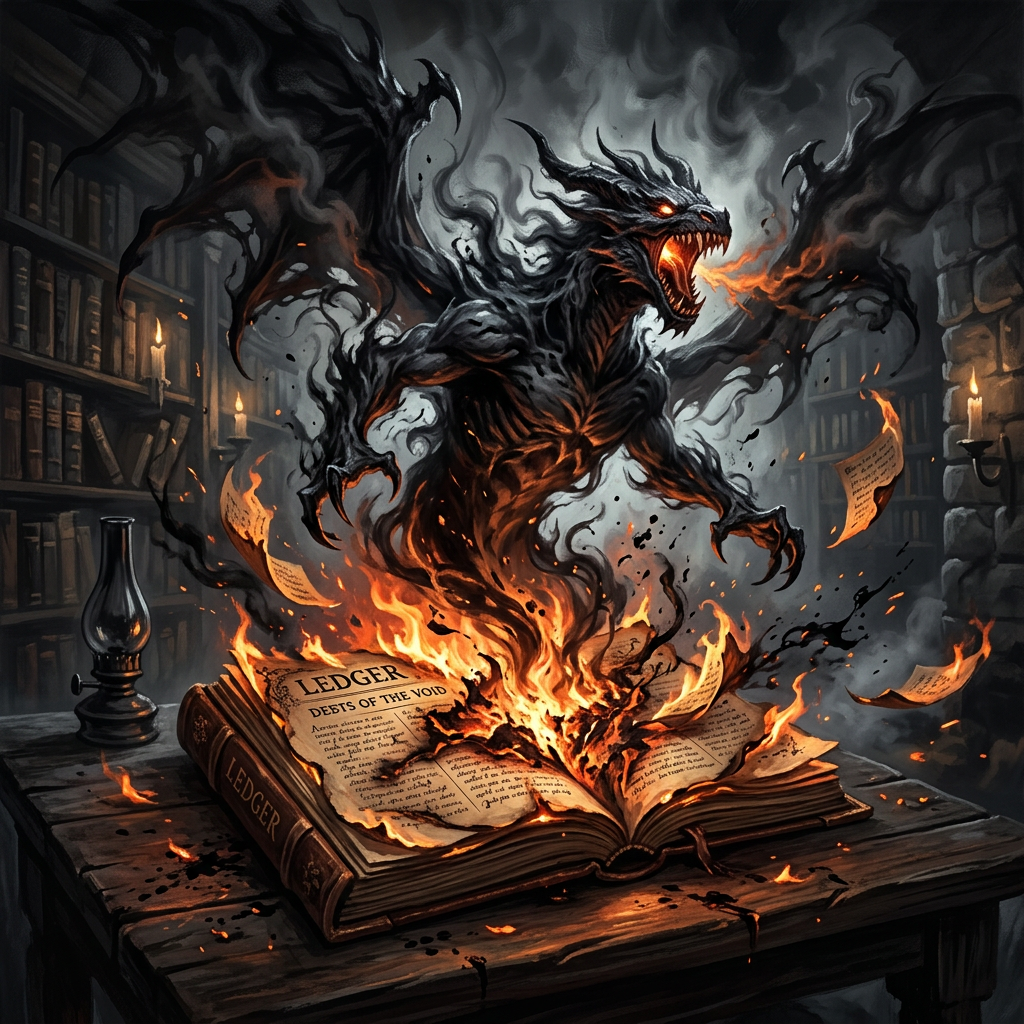
But the Seventeenth Bowl is not the only power at work. From the smoke of the first six bowls, a darker entity emerges: the Beast of the Burning Ledger. This creature does not breathe fire; it breathes accounts. Its body is covered in scrolls—every debt, every unkind word, every broken promise is written on its hide.
- It corners the righteous and says, “You owe.”
- It whispers names of people you wronged.
- It shows you the ledger of your own shame.
The Beast’s power lies in condemnation through memory. It believes that even the forgiven are forever stained. It offers the righteous a deal: “Give me the bowl, and I will tear out the pages that accuse you.”
But the Seventeenth Bowl cannot be traded. The flame in it recognizes that forgiveness is not amnesia. It is the courage to face the ledger and still walk forward.
Judgment in the Furnace of Fire
Here, the story takes a breathtaking turn. The Beast of the Burning Ledger, enraged, drags the righteous into a furnace—but the furnace is the same fire as the Seventeenth Bowl. Inside, the fire burns brighter than a thousand suns.
- The righteous see their sins in the flames, but the flames do not consume them.
- Instead, each sin becomes a small, silver ember that floats away.
- The Beast screams as its ledger catches fire, the ink burning white.
Judgment in this furnace is not destruction; it is liberation. The righteous emerge not as saints who never sinned, but as humans who were fully known and fully loved. The fire did not burn them—it burned the lies they believed about themselves.
> “Gold is not purified by being hidden from the fire, but by being held in it.” — Old proverb.
The Market Beyond the Gambler’s Flame
After the furnace, the righteous find themselves standing before a strange market. It is not a market of goods, but of choices. Every stall offers a gamble: trade a virtue for a desire, exchange patience for power, swap humility for recognition.
This is the Gambler’s Flame—the final temptation. The Beast, now reduced to a whisper, offers one last wager: “Bet the Seventeenth Bowl. Gain everything back.”
- Some righteous ones hesitate. The bowl feels heavy.
- Others remember what the flame taught them—that they do not need to win to be whole.
The market beyond the gambler’s flame is the place where we decide if we will trust the fire or trust our fear. Those who keep the bowl walk away, their hands empty, their hearts full. Those who gamble with it find the bowl empty, and the flame gone.
> Life lesson: You can keep the truth if you stop trying to trade it for comfort.
Conclusion
The Seventeenth Bowl is not a story of doom, but of intimate grace. It tells us that the final judgment is not a courtroom where we are sentenced, but a flame where we are seen. The righteous are not those who never burned, but those who walked through the fire and found it did not consume them.
We live in a world that often feels like a burning ledger—full of past debts, hidden shames, and the constant whisper that we are not enough. But the flame of the Seventeenth Bowl offers a different truth: You are not your ledger. And the fire that tests you can also set you free.
May we all face our own Seventeenth Bowl with empty hands and a heart that trusts the flame.
Leave a Reply