There are stories whispered in the ember-glow of dying campfires, tales of sovereignty that is earned not through birthright or conquest, but through the crucible of absolute truth. Among these, none burns brighter than the legend of Selene’s Ember Crown — not a circlet of gold or silver, but a living wreath of eternal flame. This is no simple myth; it is a parable about the nature of power and the necessary destruction of false kingship.
The Ember Crown Awakens: Selene’s First Flames
The legend begins in a time when leadership was a mask worn by the deceitful. Selene, a woman of no noble blood and no divine parentage, was found tending a dying fire in the wilderness. As the old gods watched, the last coal of a forgotten star fell into her hands. Instead of burning her, it recognized her.
This is the first truth of the Ember Crown:
- It does not choose the strongest, but the most truthful.
- It does not crown the richest, but the most generous.
- It does not favor the loudest, but the most listened.
- Its flames consume lies before they ever touch the wearer’s skin.
When Selene placed the fiery wreath upon her brow, it did not scorch her hair. Instead, it illuminated the shadows around her, revealing the hidden pacts and broken promises of every ruler within a thousand miles.
A Ring of Fire: Judgment Across the Heavens
The Ember Crown did not seek conquest. It sought clarification. Selene, now crowned with living radiance, began a pilgrimage across the celestial kingdoms. She did not bring an army; she brought a mirror of flame.
Wherever a ruler claimed to lead by divine right, Selene stood before them. She did not speak a word. She simply revealed. The Ring of Fire — the aura of the Crown — formed a perfect circle around the throne. If the ruler had ruled with integrity, the flames would bow and cool. But if the king sat on a seat of falsehood, the fire would blaze brighter, offering no heat, but a terrible light.
- Public secrets became visible to all.
- Stolen wealth glowed red within locked vaults.
- Broken oaths manifested as cracks in the throne itself.
The judgment was not in the fire, but in the exposure. The people saw, and the people decided.
Scroll of Burning Gold: The False King’s Verdict
The most profound test came when Selene reached the Gilded Palace of the Usurper, a king who had forged his lineage, burned the original bloodline, and sat upon a throne made from the melted crowns of ten conquered nations. His name is lost to history, but his lesson remains.
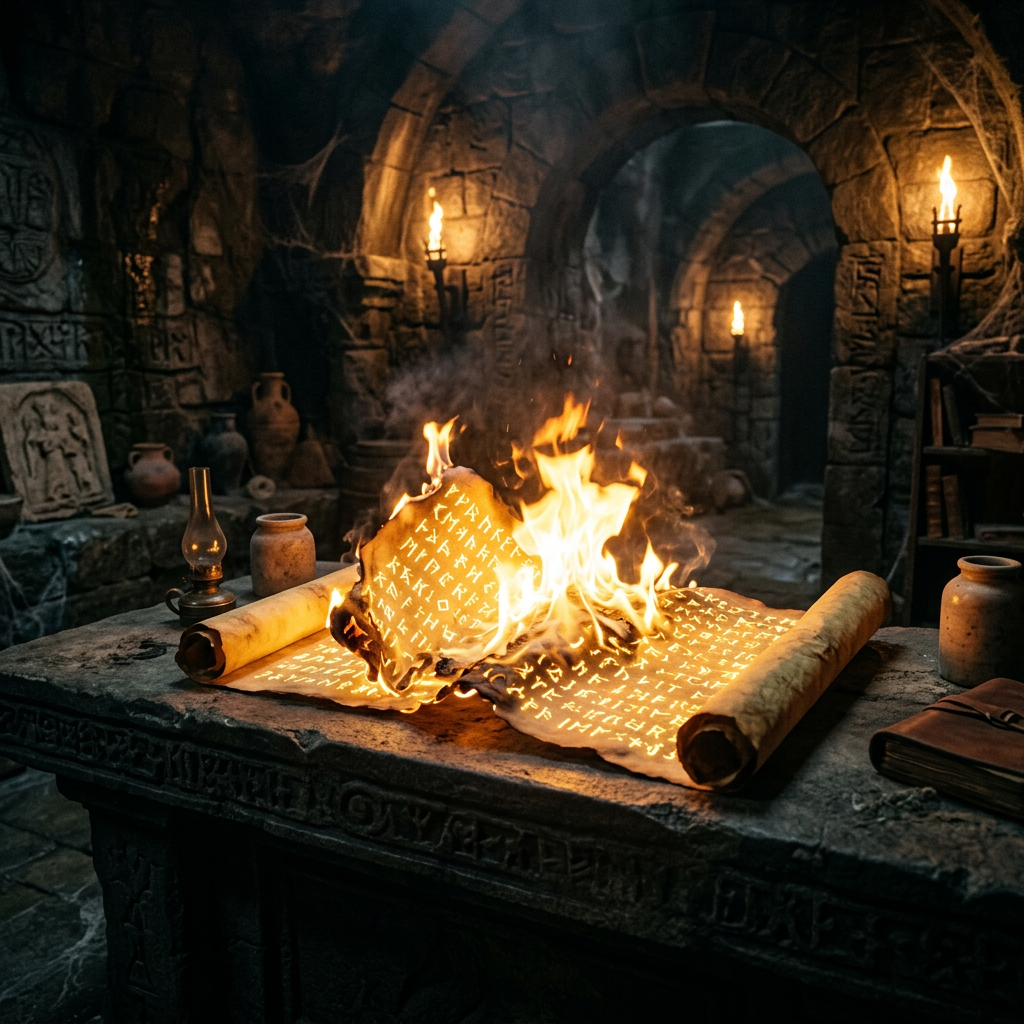
As Selene approached, the king laughed. He produced a Scroll of Burning Gold — a decree written in metallic ink that claimed his right to rule was absolute. He threw it into the Ember Crown, expecting the fire to go out.
Instead, the Scroll ignited with a terrible clarity.
The Royal Writ of the False King, as read by the flames:
> “Thus decrees the one who calls himself King: The land is my flesh. The people are my bones. They shall move only when I will it. Their breath is mine to tax, their hope is mine to mint.”
The Crown did not burn the scroll. It translated it. The golden ink transformed into a recorded history of every murder, every theft, every lie that founded that dynasty. The verdict was not a sentence of death, but a sentence of exposure. The false king’s reign evaporated in the light of absolute truth.
Molten Dawn Falls: The Crumbling of Wager Crowns
After the collapse of the Gilded Palace, a shadow fell across the kingdoms. The rulers who had built their thrones on cunning and deceit felt the ground tremble. They called their seats the Wager Crowns — thrones that could be won in a gamble, bought in a bribe, or stolen in the night.
Selene’s fire taught them a terrible lesson:
- A crown bought with gold burns the buyer.
- A crown stolen by cunning blinds the thief.
- A crown won by chance is a cage of luck.
- A crown inherited without responsibility is a tomb.
The Molten Dawn was not a war. It was a revelation. As the sun rose, it was indistinguishable from the glow of the Ember Crown. Thrones across the land crumbled into ash, not from a blast of heat, but from the sheer weight of their own rot made visible. The people did not need to rebel; they simply needed to see.
Ash of Glory: What Survives the Burning Throne
In the end, Selene did not rule. That was never the Crown’s purpose. When the last false throne had turned to dust, the Ember Crown began to cool. Its flames dimmed, not from weakness, but from satisfaction.
The ash of glory is not the end of power. It is the beginning of accountable power. What survived the burning throne were the people themselves, free from the illusion of divine or inherited kingship. They understood now that leadership is not about wearing a crown, but about carrying a truth.
> Leadership is not a throne to sit upon; it is a fire to tend. And the only fuel that lasts is honesty.
Selene’s story ends not with her coronation, but with her walking away. The Ember Crown, having done its work, returned to a single coal. It waits, somewhere in the wilderness, for the next time power is abused, the next time a lie sits upon a throne.
Because the flame never truly dies. It only sleeps — until a new false king dares to claim a crown that was never theirs to hold.
Leave a Reply