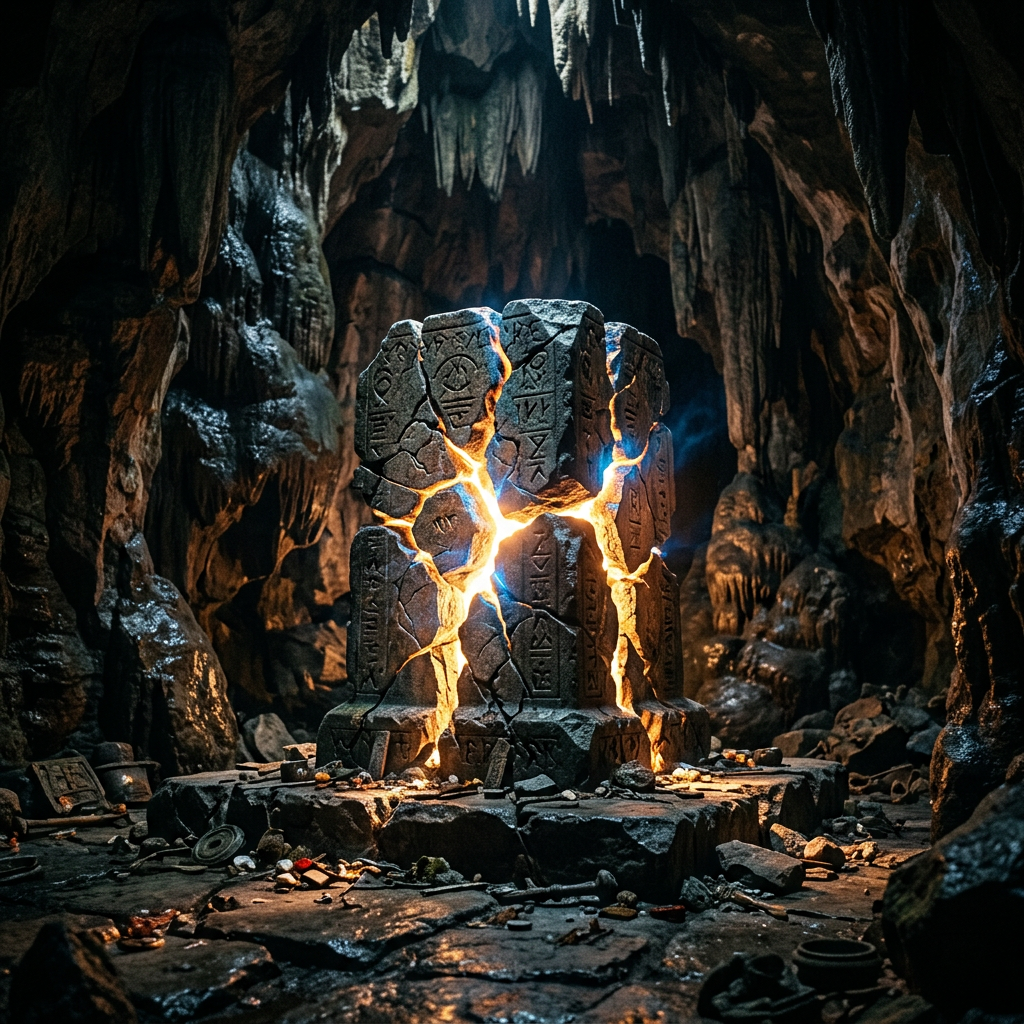
Voices Beneath the Altar We Ignored
We built our civilizations on altars of progress, freedom, and order. But every altar has a foundation, and every foundation is poured over the bodies of those we chose to bury. The Fifth Seal is not a literal place or a physical crack in the earth—it is the moment of silence when the cries of the buried finally press against our consciousness.
In the biblical imagery of the apocalypse, the fifth seal reveals the souls of the martyrs crying out from under the altar: “How long, O Lord, until you judge and avenge our blood?” These are the voices of the inconvenient dead—the victims of our collective decisions, the people we erased so that the story we told ourselves could go on smoothly. We did not kill them with malice alone; we killed them with indifference, with bureaucracy, with the quiet decision that some lives were expendable.
Key signs that we are ignoring these voices:
- A persistent unease about the past that we cannot name.
- The tendency to celebrate progress while silencing its cost.
- Rituals of remembrance that focus on the perpetrators rather than the victims.
- The feeling that something is fundamentally unfinished in our society.
Confessing the Systems We Chose to Save
Silence is not neutral. When we choose not to hear a voice, we are actively affirming the system that silenced it. The first step toward breaking the seal is confession—not as a vague spiritual exercise, but as a concrete acknowledgment of the structures we have defended.
We have systems of law, economy, and education that were designed to produce winners and losers. But we designed them so that the losers would be forgotten. Consider the systems we saved while burying their victims:
- Colonial extraction networks that enriched metropoles while starving peripheries.
- Criminal justice systems that prioritize property over human life.
- Labor markets that treat certain bodies as disposable.
- Healthcare infrastructures that triage by wealth and race.
> “The opposite of love is not hate; it is indifference. The opposite of justice is not injustice; it is forgetting.”
To confess is to name the architecture of our burying. It is to say, “I participated in a system that demanded sacrifices I never saw.” This confession does not grant absolution—it opens the door to something harder: repair.
White Robes for the Ruined and Forgotten
In the vision of the fifth seal, each martyr is given a white robe and told to rest a little longer. On the surface, this seems like comfort. But consider the irony: they are given the garment of purity while still waiting for justice. Their robes do not erase their wounds; they testify to them.
We do the same today. We offer symbolic gestures to the ruined and forgotten:
- Statues and memorials for the victims of our policies.
- Corporate diversity statements that leave pay gaps intact.
- Apologies that cost nothing.
- Land acknowledgments that end with the same building projects.
These “white robes” are not evil—they are incomplete. They soothe our consciences without changing the systems that produced the suffering. The true purpose of the white robe is not to make us feel better, but to remind us that the wound remains under the cloth.
Waiting for the Sixth Seal of Reckoning
The fifth seal is a waiting room. It is the unbearable pause between testimony and judgment. The voices have spoken, the robes have been given, but the sixth seal—the cosmic upheaval that shakes the foundations of the old order—has not yet arrived.
What does it mean to wait in this space?
- It means resisting the temptation to hurry past grief.
- It means refusing to offer premature forgiveness that bypasses accountability.
- It means sitting with the discomfort of knowing that justice is delayed—and that we are the delay.
> “We are not waiting for God to act. We are waiting for ourselves to stop pretending we have not already heard.”
The sixth seal is not a supernatural event. It is a human choice: the moment when enough people refuse to bury the buried any longer. It is when the systems crack because we stop holding them up.
The Full Measure of What We Buried
The fifth seal does not end. It remains open, like a wound that refuses to scab over. The voices of those we chose to bury are not ghosts of the past—they are the active unresolved debt of the present.
To close the seal is not to silence them again. It is to measure:
- How much land was taken?
- How many hands built this wealth?
- Which names were erased from the ledger?
- What knowledge died with the tongues that were cut?
These are not rhetorical questions. They are calculations we must make with our full attention. The full measure includes not only the dead but the living who inherited their silence.
Conclusion
The Fifth Seal is a story we carry in our bones. It is the collective memory of every civilization built on buried grief. We can continue to add stones to the altar, piling them higher to drown out the sound. Or we can stop, turn around, and begin the long, terrifying work of excavation.
The voices are not waiting for permission. They are already speaking. The only question is whether we will finally listen—or keep building our peace on the tombs of others. The seal is broken. The choice is ours.
Leave a Reply