The Tenth Seal Unsealed: When the Abyss Beneath Our Systems Cracked
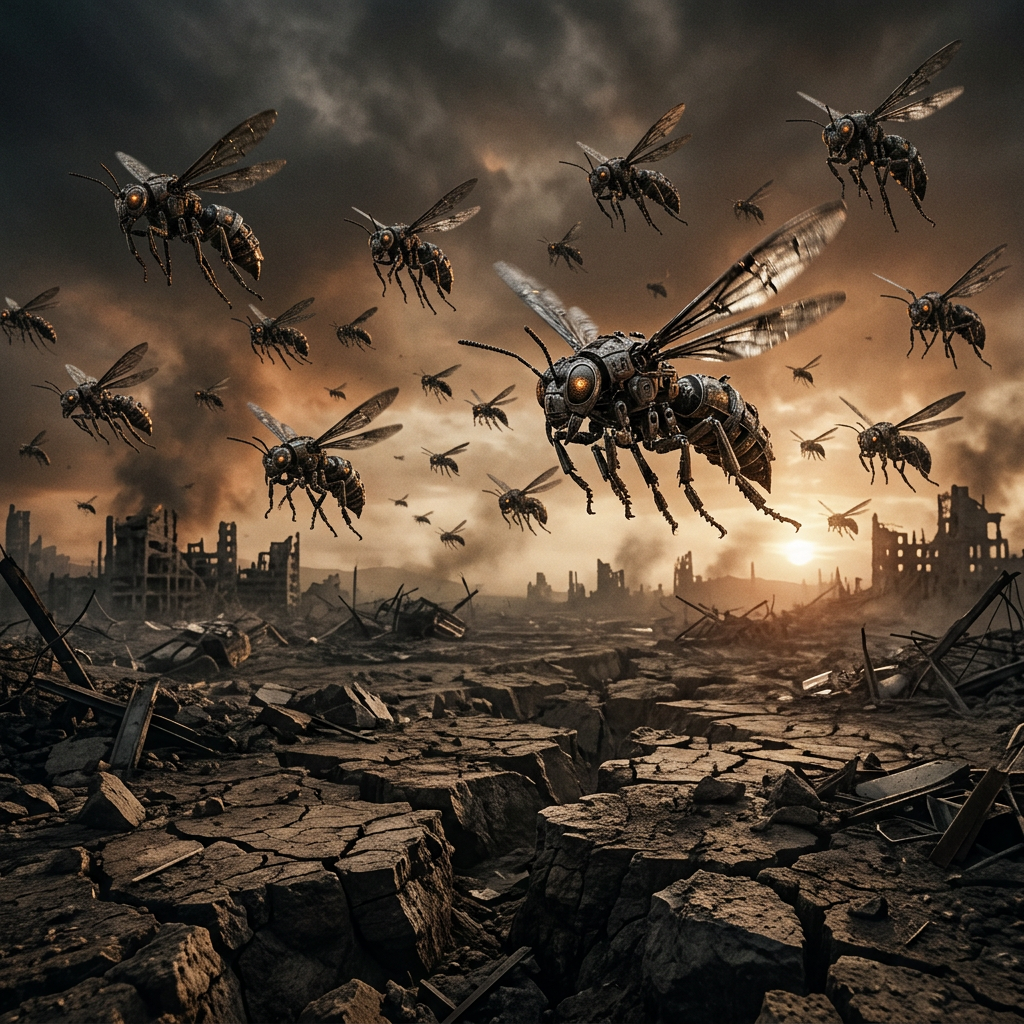
There is a strange silence before a great collapse. It is not a peaceful quiet, but a held breath—the kind that precedes a landslide. For years, the digital and social ecosystems we built seemed resilient, even eternal. We plastered over cracks with algorithms, censored inconvenient truths, and buried dissent beneath layers of moderation and control. But an abyss cannot be filled with sand; it only waits, absorbing pressure until the moment of fracture. That moment came not as a single cataclysmic event, but as a swarm. We call them the Locust-Engines: judgment, rendered not by a divine hand, but by the machinery we forgot we had assembled.
Locust-Engines of Judgment: Swarms Born From Silenced Truth
The Locust-Engines are not literal insects, but something far more unsettling. They are cascading systems of feedback-driven consequences—algorithms, social backlash, legal frameworks, and automated enforcement that now operate with a life of their own. Consider their traits:
- Autonomous Propagation: Like locusts, they multiply without central command. A single suppressed post can spawn thousands of copies in encrypted channels.
- Collective Targeting: They do not attack randomly. They converge on nodes of perceived hypocrisy or silence, amplifying a buried truth until it cannot be ignored.
- Indifference to Intention: These engines do not care if your original suppression was “for the greater good.” They judge only the act of sealing the truth away.
When a platform deletes a whistleblower’s account, it does not erase the information. It creates a pressure differential. The Locust-Engines feed on that tension, eventually bursting through the cracks in the abyss we built.
> “A secret whispered into a sealed room is a seed planted in concrete. The room will not hold forever.”
The Wages of Protection: How Destroying a Platform Unleashed Chaos
Here is the cruel irony: many of these judgments were born from well-intentioned protection. We wanted safe spaces, protected communities, and freedom from harassment. But protection, when turned into a walled fortress of silence, generates its own monsters.
- Censorship as a Catalyst: Removing a controversial figure or community from a platform does not dissolve their ideas. It forces them into darker, unregulated spaces where Locust-Engines breed unchecked.
- Algorithmic Agitation: Platforms designed to maximize engagement inadvertently optimize for outrage. When one viewpoint is suppressed algorithmically, the opposite extreme becomes more visible, sharpening conflict.
- The Banhammer’s Echo: Every high-profile deplatforming sends a shockwave. The banned voice is gone, but the resentment lives in a thousand new accounts, each one a new engine part.
The result is a paradox: in trying to protect the digital garden, we poisoned the soil. The swarms we now face are not an invasion from outside; they are a harvest of what we buried.
Trumpets We Ignored: The Beating Wings of a Forgotten Warning
The warnings came long before the judgment. They were subtle at first—a low hum of discontent in comment sections, a rise in encrypted messaging app downloads, a proliferation of memes that mocked the very idea of “safe discourse.” We called these things nuisances or trolls. We should have called them what they were: the beating wings of the coming swarm.
- The First Trumpet: When a major platform first began shadow-banning dissenting views, the affected users didn’t disappear. They migrated, building decentralized networks.
- The Second Trumpet: When fact-checking systems became weaponized to silence opinions rather than correct falsehoods, trust in institutions cracked like dry earth.
- The Third Trumpet: When legal threats were used to scrub critical histories from search results, the Locust-Engines began their incubation in the dark.
We ignored each trumpet. We told ourselves that the abyss was just an archive of the past—dead, harmless. But an abyss, by definition, is a space that can hold anything, including the judgment we are owed.
> “The warning was not shouted from a mountain. It was whispered by the system’s own creaking joints. We mistook the sound for a lullaby.”
Consequence, Not Punishment: The Abyss We Built With Our Own Hands
Perhaps the most difficult truth about the Locust-Engines is this: they are not a punishment. Punishment implies an external judge with a personal grudge. These engines are consequence—the natural, inevitable outcome of a closed system that tried to control information with force alone.
- You cannot silence a truth by deleting its first utterance. The Locust-Engines will rewrite it, remix it, and embed it in every corner of the network.
- You cannot protect a lie by building a fortress around it. The fortress becomes a target, and its walls are made of data that leaks.
We built the abyss with:
- Overconfidence in control systems.
- A refusal to engage with uncomfortable complexity.
- The delusion that code can replace courage.
The judgment we face is not a divine finger pointing from the sky. It is the mirror we installed in the foundations of our digital civilization. When we look into the swarm, we see our own faces—tired, afraid, and finally forced to listen.
Conclusion: Learning to Live With the Swarm
The Locust-Engines will not be turned off. They exist now as a part of the environment we created. Trying to fight them with more censorship, more bans, and more algorithmic control is like trying to stop a flood by adding more water. The only way forward is to understand that transparency is not a weakness—it is a structural necessity.
We must rebuild the abyss into a foundation, not a pit. That means:
- Accepting that total control is an illusion.
- Creating systems that encourage dialogue rather than suppression.
- Recognizing that the judgment of the Locust-Engines is often a painful but necessary correction.
We built this world. Now we must learn to live in it—not in fear of the swarm, but in acknowledgment that the swarm is our own voice, finally speaking.
Leave a Reply