The Fourth Seal: Our Choice, Our Prison
We have always imagined dystopia as an external invasion—a tyrant’s coup, an alien force, or a rogue algorithm that one day decides to enslave us. But the most terrifying dystopias are not imposed from above; they are chosen from within. The Pale Rider is not a figure from Revelation brought to life by a cosmic accident. We called him forth. With every decision to trade long-term safety for short-term convenience, with every blind eye turned to the erosion of privacy, and with every rationalization that “one more step won’t hurt,” we unlocked the Fourth Seal ourselves.
> “The prison we build with our own hands has no keys, because we never intended to leave.”
This is not a prophecy of doom from a distant future; it is the quiet, creeping reality of our present. The technology we embraced to connect us has isolated us. The systems we created for efficiency now dictate our lives. And the authority we surrendered for comfort now holds our leash. We thought we were building a utopia of convenience; instead, we constructed a panopticon of our own design.
Authority Handed Over: Protecting the Throne
The most insidious aspect of our self-made dystopia is the voluntary surrender of authority. We did not fight for our freedom; we handed it over in exchange for algorithms that tell us what to think, platforms that dictate what we see, and corporations that know our desires better than we do. This is not tyranny by force—it is tyranny by apathy.
Consider the pillars of this new order:
- Algorithmic Governance: We trust opaque black boxes to decide credit scores, job prospects, and even criminal sentencing, rarely questioning their biases.
- Surveillance Capitalism: Every keystroke, location ping, and emotional reaction is harvested and sold, turning our lives into a product we pay for with our autonomy.
- Manufactured Consent: Social media feeds, personalized news, and echo chambers shape our reality so effectively that we forget we once had other options.
- Gamification of Compliance: We are rewarded for obedience with likes, badges, and status, reinforcing the very behaviors that keep us in line.
When we protect these systems—defending their flaws, dismissing critics as luddites, and upgrading our dependencies—we are not innovating; we are polishing the throne of the rider who will eventually trample us. The question is no longer whether authority exists, but whether we have the will to reclaim it.
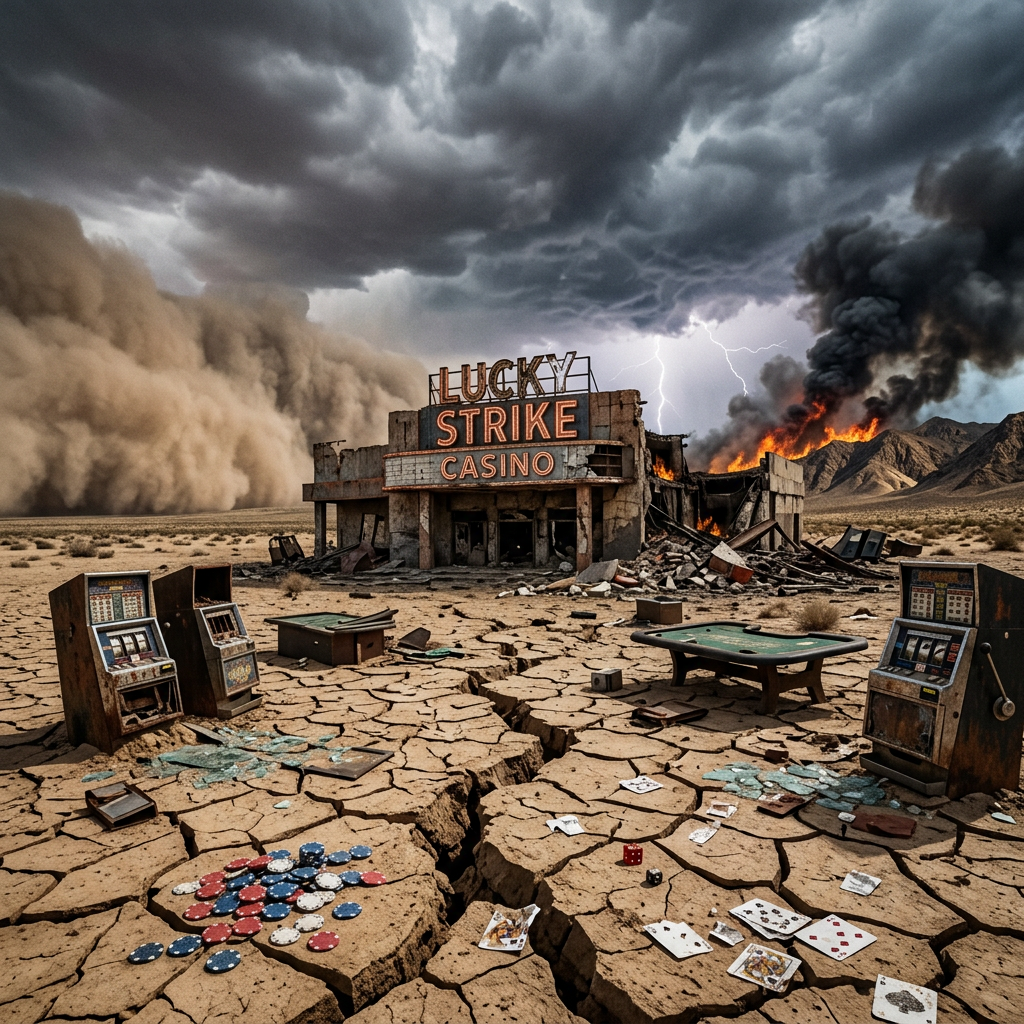
Unleashing Death: Gambling’s Dark Aftermath
The Pale Rider’s name is Death, and Hades follows close behind. But this is not the physical death of the body; it is the death of community, of trust, of the shared reality that binds us together. We unleashed this rider when we began to gamble with the very fabric of our social existence.
The gambling took many forms:
- We gambled with the truth, treating misinformation as a harmless weapon in tribal warfare.
- We gambled with our attention, handing over hours of our lives to platforms that profit from our distraction.
- We gambled with democracy, believing that convenience and engagement were worth the erosion of civil discourse.
- We gambled with our children, exposing them to unregulated digital worlds where they are both consumer and product.
- We gambled with the planet, borrowing from the future to pay for the present.
The aftermath is a landscape of fractured trust where facts are optional, community is transactional, and loneliness is the new pandemic. The rider’s pale horse is the speed at which we embraced this destruction. We did not see the galloping coming because we were already cheering it on.
Hades at Our Heels: The Guilt We Ignored
You cannot have Death without Hades. The guilt we dismissed as “collateral damage” is now chasing us. Every time we ignored the human cost behind our algorithms—the gig workers exploited by apps, the children radicalized by recommendations, the elderly isolated by a world that forgot to be human—we invited Hades to follow.
This is not abstract blame. It manifests in:
- Collective guilt that surfaces as anxiety, depression, and a pervasive sense of dread.
- Moral injury from participating in systems we know are harmful but feel powerless to change.
- Social atrophy where face-to-face connection becomes foreign, replaced by performative digital interactions.
- The normalization of cruelty where dehumanization online becomes the foundation for real-world indifference.
> “We looked away for so long that when we finally turned back, Hades was already seated at our table.”
The guilt we ignored does not vanish; it calcifies into despair. And despair is the soil in which the most authoritarian flowers bloom. We are not innocent bystanders—we are accomplices in our own descent. Every time we scrolled past suffering, every time we chose outrage over understanding, we fed the rider’s horse.
The Dystopia We Built: Fate Was Never Blameless
The cruelest lie we tell ourselves is that our dystopia is inevitable—that we were fated to arrive here by forces beyond our control. This is a convenient fiction that absolves us of responsibility. The truth is more uncomfortable: fate was never blameless because fate was never in charge.
We chose the path of least resistance. We chose the algorithm over the messy, beautiful unpredictability of human judgment. We chose the convenience of conformity over the difficulty of dissent. We chose the comfort of connection over the courage of solitude. And with each choice, we built the prison cell that now holds us.
But here is the paradox of a self-made dystopia: what we built, we can rebuild. The rider is not a supernatural force; it is the embodiment of our decisions. And if we can unleash, we can also unseat.
In conclusion, the Pale Rider is not an external conqueror but a mirror. It reflects our collective choices, our shared apathy, and our willingness to trade our humanity for ease. The dystopia we inhabit is a monument to our own decision-making. Yet, whether we remain in its shadow or dare to tear its walls down is entirely up to us. The question is not whether the rider will come—it is whether we have the courage to face what we have done and choose differently. The next seal is not yet broken. The choice remains ours.
Leave a Reply