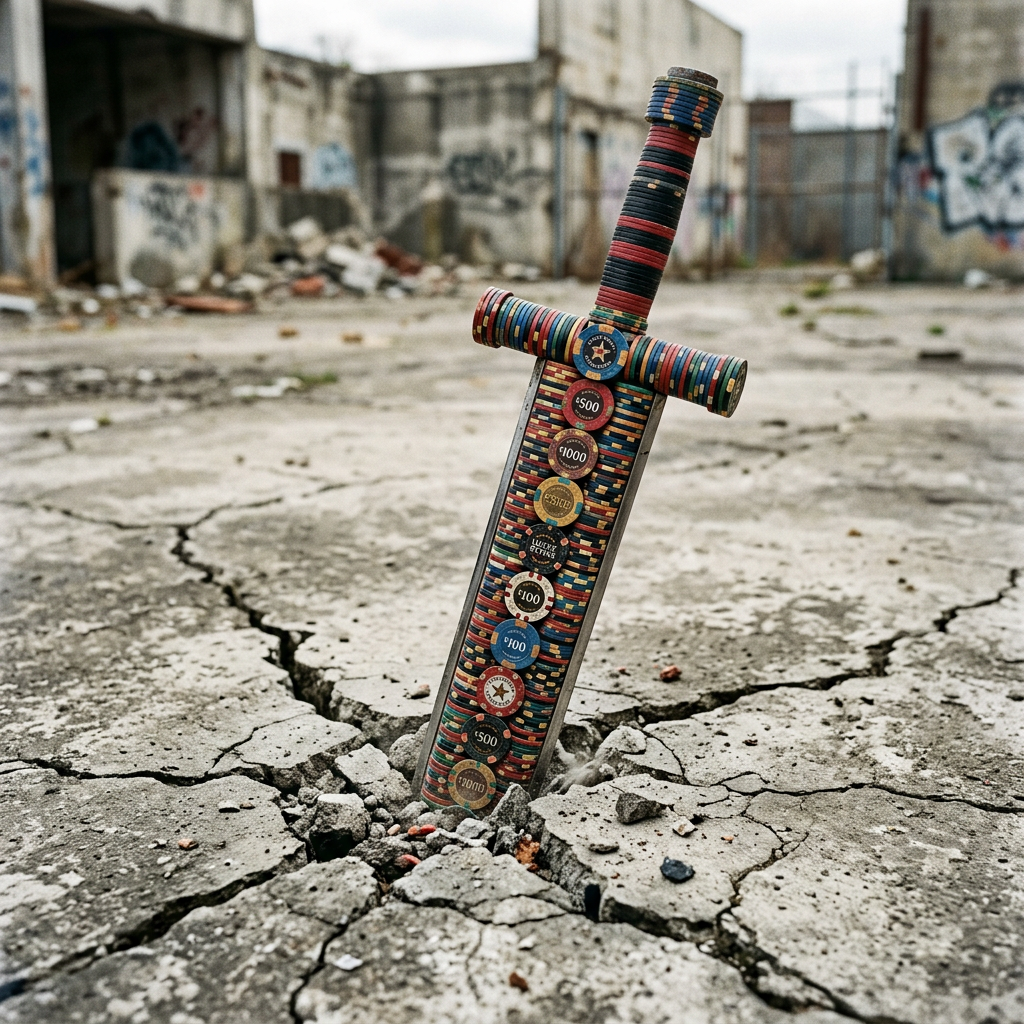
There is a story that is not told in the headlines, not shouted from the podiums of victory. It is written in a different ink—red, seeping from the margins of broken families, silent debt, and forgotten lives. The Red Ledger is not a book of profit; it is an accounting of betrayal. It records, in chilling detail, how an empire of chance was built on the ruins of human will, and how we, as a society, signed our names to the contract.
The Red Ledger: A Betrayal Written in Blood
Every casino floor, every online slot, every glowing sportsbook app is a page in this ledger. But the numbers don’t tell the story of stock prices or shareholder returns. They tell the story of moral bankruptcy. The betrayal is not that gambling exists—it is that we allowed it to metastasize. We watched as the industry dressed itself in the robes of entertainment, while its true business remained the same: extracting hope in exchange for despair. The ledger is written in blood because the cost is always paid by the flesh and blood of the vulnerable.
Choosing Profit Over Deliverance — The Empire’s Pact
At some invisible council table, a choice was made. It was not a single decision but a thousand small ones, each prioritizing revenue over redemption. Governments, desperate for tax income, struck a devil’s bargain. They chose to license sin rather than cure it. This is the pact:
- Legalization without limitation: Casinos moved into neighborhoods like occupying armies, promising jobs but delivering addiction.
- Advertising as a weapon: Sports betting ads saturated every commercial break, normalizing risk as a lifestyle.
- Regulatory loopholes: Algorithms designed to keep players hooked were celebrated as “innovation.”
- Charity as camouflage: Philanthropic donations were used to scrub the stench of predatory practices.
The empire did not conquer us; we invited it in, trading our collective well-being for a fleeting tax windfall. The betrayal is that we knew better.
The Second Seal: How We Silenced the Warnings
For decades, researchers, counselors, and broken gamblers held up signs. They spoke of the three waves of disaster: first the euphoria, then the debt, finally the collapse. But their voices were drowned out by the roar of jackpots and the jingle of commercials. We sealed their warnings under the weight of denial.
> “It’s just a game.” > “They can afford to lose.” > “Regulation will handle it.”
These were the lies we told ourselves. We silenced the whistleblowers inside the industry, ignored the studies linking gambling proximity to bankruptcy rates, and mocked the problem gambler as weak. Meanwhile, the empire built AI-driven engagement systems—sophisticated tools that could predict when a player was most vulnerable and nudge them back to the table. The warning signs were not missed; they were buried.
A Sword Forged from Ruined Lives — Gambling’s Toll
This sword has many edges, and each one cuts deep. Gambling’s toll is not merely financial; it is a systemic destruction of the human spirit. The ledger itemizes the damage:
- Financial Ruin: Average gambling debts exceed annual income for chronic players. Bankruptcies, home foreclosures, and even crimes to fund the habit.
- Mental Health Devastation: Rates of anxiety, depression, and suicide are exponentially higher among addicts. The dopamine hook rewires the brain to crave loss as much as win.
- Family Fracture: For every addict, an average of 10-15 loved ones are directly impacted. Divorce, child neglect, and domestic abuse are common co-conspirators.
- Community Decay: Local economies don’t thrive; they shift. Money that once bought groceries now goes to machines. Small businesses die. Crime rises.
The empire’s leaders do not swing this sword. They merely forge it, sharpen it, and hand it to the desperate. The damage is real, and it is documented.
The Scroll Unrolls: Red Ink and Fresh Wounds
Today, the scroll keeps unrolling. New markets open. Cryptocurrency gambling removes the last barriers of shame. Live-streaming turns addiction into spectator sport. The red ink flows faster than ever. Fresh wounds appear daily: the college student who lost tuition, the retiree who emptied the pension, the parent who can’t look their child in the eye.
The empire is not a monolith of evil—it is a network of enablers. From the software developer coding the random number generator to the politician who votes against consumer protections, everyone is complicit. The most frightening entry in the ledger is the one that names us all.
What can we do?
- Advocate for ethical regulation that puts harm reduction before profit.
- Support mandatory affordability checks and loss limits.
- Demand transparency from tech platforms that host gambling content.
- Break the stigma around addiction to encourage seeking help.
- Refuse the normalization of gambling as a harmless pastime.
In the final accounting, The Red Ledger is not a closed book. It is still being written. Every day we choose to look away, we add another page. But the pen is not in the empire’s hand alone. We can choose to rewrite our relationship with this industry. The betrayal was real, but so is the chance for accountability. The ink is still wet. The wounds are still fresh. And perhaps, if we read the ledger clearly enough, we will finally stop pretending that the price is worth paying.
Leave a Reply