Sighișoara is a place that lives in layers. Underneath the pastel facades and the tick of the medieval clock tower, there is a hum of something older—a tension that pulls at the edges of cobblestone and shadow. This is not just history; it is a ledger of things remembered. And on the night when the fourth trumpet echoed over its streets, the city became a character in an allegory it never asked to join. This is the story of judgment arriving on time, but not on schedule.
The Council in the Clocktower
The council convened not in a hall of mirrors or a gilded palace, but in the narrow, winding heart of the Clocktower itself. Eleven men and women sat around a weathered oak table, their faces half-lit by candlelight and the pale glow of an electric bulb that flickered with every gust of wind. They were the guardians of the citadel—the historians, the innkeepers, the keepers of keys.
The agenda was not written down. There was no point. Everyone knew why they had gathered: the fourth seal had been unsealed in the ledger above the city’s gate, and no one could explain how or why. The seam between what was real and what was remembered had begun to fray. The council debated in hushed voices:
- The prophecies scrawled on parchment in the town archive matched the exact sequence of events outside.
- Every raven in the region had gathered on the rooftops, refusing to sing.
- Gambling parlors—three of them—had burned to the ground in the last twelve hours, and no fire had been seen.
“It is not a storm,” the oldest council member whispered, arranging a deck of tarot cards on the table. “It is a reckoning.”
When the Fourth Seal Was Broken
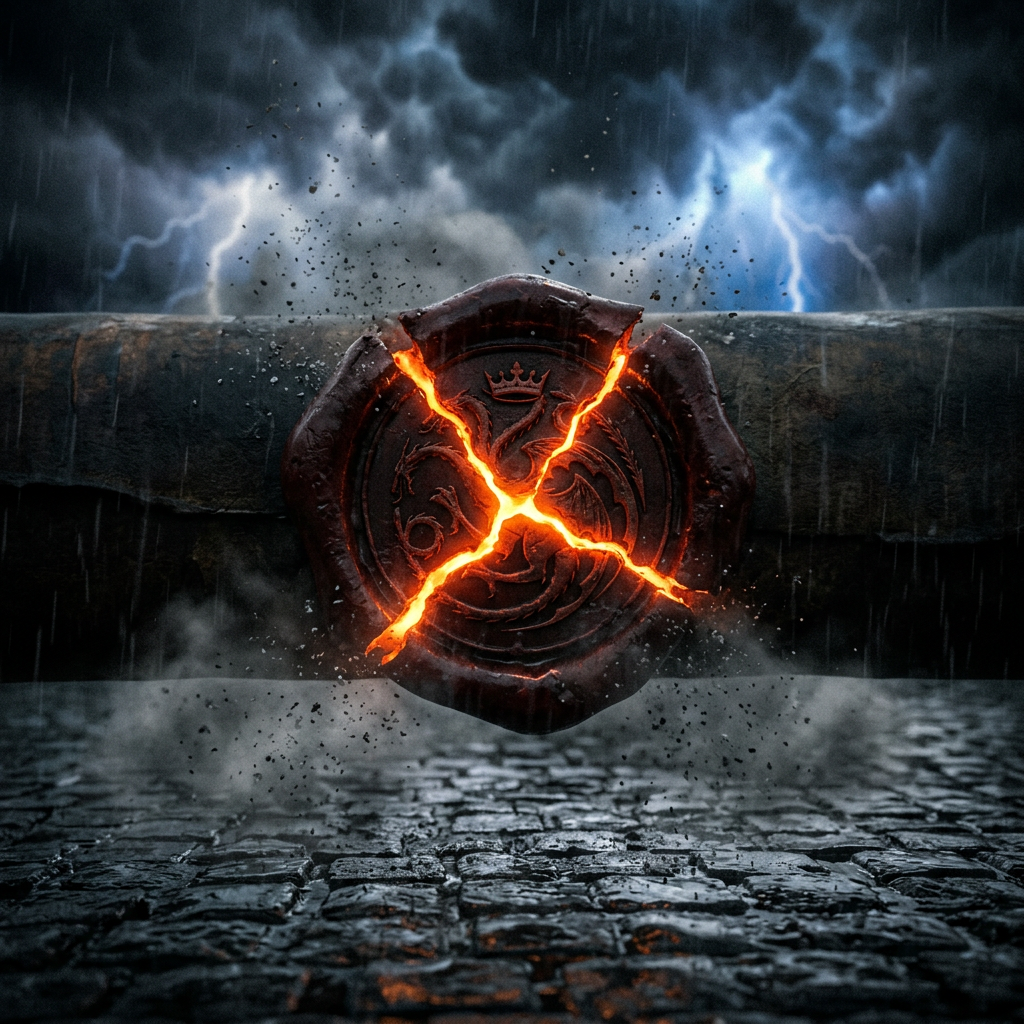
The breaking of the fourth seal is not a dramatic crack or a thunderclap. It is a slipping—a moment when the world tilts just slightly, and you feel gravity lose its grip on certainty. In theological terms, it is the moment when the pale horse is given permission to ride. But here, in Sighișoara, the seal broke at 2:34 AM on a Tuesday.
Historians found the evidence in the Registry of Oaths, a book that had not been opened since 1689. In it, a certain guild of cartographers and gamblers had struck a bargain: they would map the secrets of the citadel in exchange for protection from the plague. The ledger recorded their signatures in crimson ink. And directly above those names, a fourth seal was drawn—a circle divided into four quadrants, each one scarred with an ancient numeral.
When the seal was broken, the first thing to vanish was not light or sound, but choice. The gamblers’ dice stopped rolling. The dealers’ cards fell blank. The soul of the city seemed to inhale.
> “A seal is not broken by force, but by truth. Once the truth is written, the seal is already dust.” > — Inscription found on the back of the Clocktower door
Gambling’s Dominion Turned to Ash
Gambling in Sighișoara was never just about money. It was a ritual—a test of nerve and luck, wrapped in the seduction of risk. The Dominion, as locals called the gambling quarter, occupied a maze of cellars and hidden rooms beneath the citadel’s eastern wing. There, under vaulted stone ceilings, fortunes were won and lost with the turn of a card.
But on the night of the fourth trumpet, the Dominion became a tomb of fire without flame. Witnesses reported seeing black smoke rising in spirals from the basement grates, but no heat. The wooden chairs did not singe. The cash in the tills remained crisp. Yet every table, every tile, every cup of wine was covered in a fine layer of ash, as though the idea of gambling had burned away.
- Slot machines displayed only the number 4.
- Roulette wheels stopped on four consecutive zeroes.
- The playing cards were found arranged in a perfect circle—face down.
It was not destruction. It was transformation. The dominion of chance had been replaced by the dominion of consequence.
Ravens and Embers Over Sighișoara
By dawn, the ravens had taken to the sky. Not in chaotic panic, but in formation—a swirling cyclone of black feathers and sharp intelligence. They traced the perimeter of the citadel, their flight paths intersecting above the Clocktower like threads of a tapestry being rewoven.
The locals called them the gardists—the guardians of the old pact. Ravens had nested in Sighișoara’s bell towers for centuries, and their presence was considered an omen of either great change or great loss. That morning, they carried something in their beaks: embers from the burned gambling halls.
They dropped the embers into the fountains, the wells, and the copper gutters. Where the embers met water, steam rose in plumes, and with it, a scent that smelled like old parchment and cloves. Those who inhaled it reported vivid dreams—dreams of ledgers being balanced, of debts being forgiven or collected.
> Important tip for visitors: Never shoo away a raven in Sighișoara. They are not pests. They are recorders.
Judgment Descends on Cobblestone Streets
Judgment in Sighișoara did not come as a rider with a sword. It came as a stillness. The cobblestones, usually alive with the shuffle of shoes and the roll of cart wheels, became quiet. Every footfall echoed twice—once in the street, once in the memory of the city.
The council descended from the Clocktower and walked the streets in a silent procession. They carried no weapons, no torches. Only the Registry of Oaths, opened to the page with the broken seal. At every burned gambling den, they stopped, and one member read aloud the names inscribed in crimson ink.
With each name, a raven landed on a rooftop.
With each name, a cobblestone shifted—just slightly, like a scale adjusting weight.
By the time the sun set, the fourth trumpet had faded. The ravens dispersed. The embers grew cold. But something had changed. The Dominion was no longer a place, but a lesson. The ledger was closed, but not destroyed. And Sighișoara, older and wiser, settled back into its layers, knowing that some seals are not meant to be broken twice.
Conclusion
What happened to Sighișoara on that quiet Tuesday cannot be easily explained. It wasn’t a miracle, and it wasn’t a catastrophe. It was a reminder—etched into the stone, written in the flight patterns of ravens, and seared into the memory of every soul who heard the fourth trumpet echo over the cobblestones. The city survived not because it was lucky, but because it remembered its own story. And sometimes, remembering is the most powerful form of judgment.
If you ever walk Sighișoara’s streets and feel a sudden stillness, listen. The ledger is still being updated.
Leave a Reply