The Descent into the Seventh Bowl’s Inferno
The world remembers the Seventh Bowl as the final, consuming plague—a cataclysm of fire that scoured the earth and left nothing but ash. But what if the stories got it wrong? What if the Bowl was not an ending, but a test? In the scorched ruins of what was once a great library, a young woman named Zaphira descended not into despair, but into purpose. She walked through rivers of ember and breathed air thick with sulfur, guided not by fear, but by a strange, unwavering certainty that something had been preserved.
Imagine the heat: a wind so hot it could melt glass, the sky a bruised violet, and the ground a mosaic of cracked clay and glowing coals. This was Zaphira’s reality. While others fled to caves or perished in the flames, she moved deeper into the inferno, her robes singed, her skin blistered. She was looking for the heart of the destruction, a place where meaning might survive the fire.
> “The hottest flames do not consume truth; they test it.” — Ancient proverb whispered among desert scribes.
Zaphira’s Discovery of the Unburned Scroll
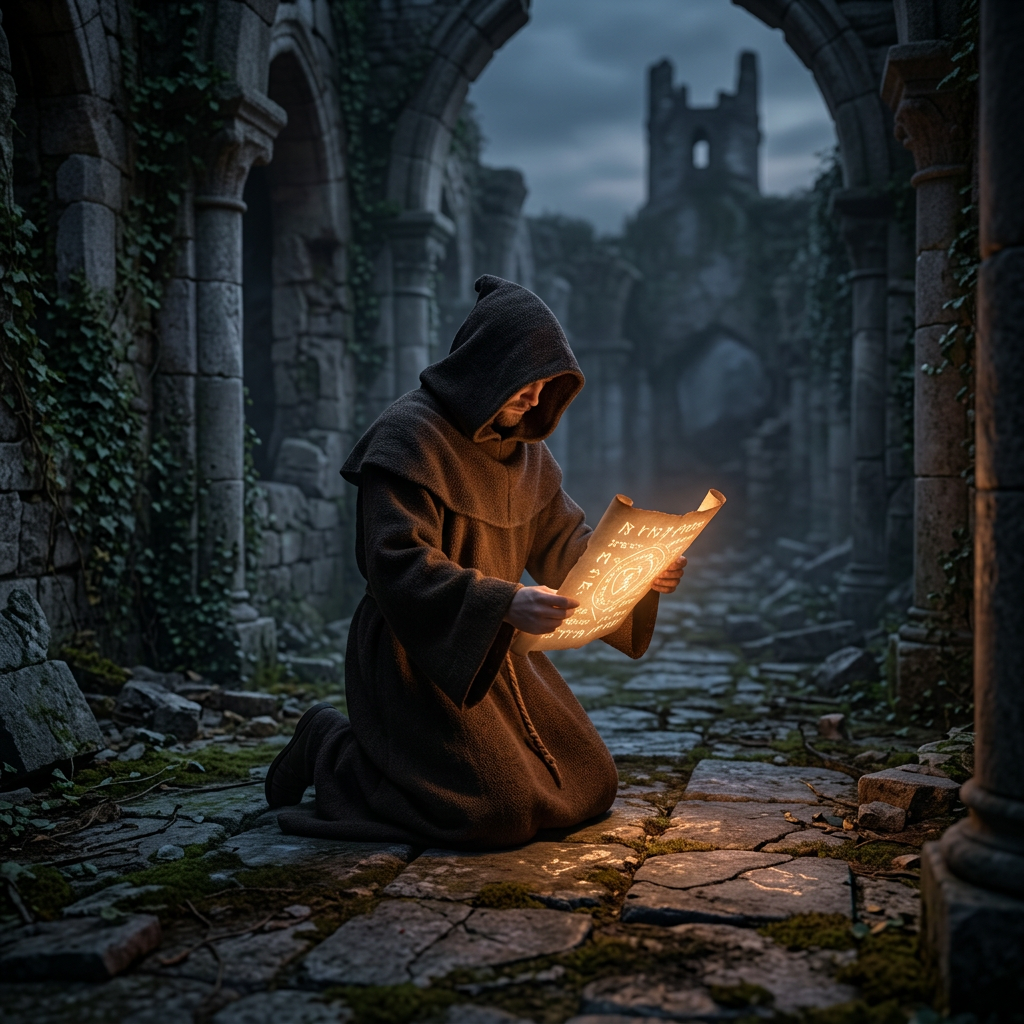
Amid the ruins of a temple dedicated to forgotten knowledge, Zaphira found it: a single Unburned Scroll. It lay in a hollowed-out altar stone, untouched by the inferno that had turned everything else to dust. The papyrus was cool to the touch, its edges crisp and whole. When she unrolled it, the ink shimmered with a faint, golden light—a light that pulsed like a heartbeat.
This was no ordinary document. It was a text that had been written in anti-fire, a substance known only to the most ancient of civilizations. The scroll’s survival was not a miracle; it was a design. Zaphira’s hands trembled as she read the first line: “To the one who holds this, you are not lost. You are found.”
A Scribe Chosen by the Cooling Desert
Who was Zaphira before this moment? She was a scribe—a keeper of records in a world that had long since stopped caring about history. She lived on the edge of the Cooling Desert, a vast expanse of frozen dunes that had once been a sea of sand. Her people were nomads, but Zaphira was different. She collected stories, writing them on scraps of leather and bone, preserving the whispers of a dying age.
The desert itself seemed to speak to her. She would sit for hours in the cold, watching the stars, feeling a shift in the air that others dismissed as wind. It was the desert that first taught her the secret: some flames are not meant to burn, but to guide. When the Seventh Bowl fell, she knew exactly where to go.
- Key trait: Patience. Zaphira spent years learning to listen.
- Key skill: She could read ancient script and translate forgotten tongues.
- Key connection: The desert chose her as its voice.
The Scroll’s Revelation: The Eternal Flame
The Unburned Scroll did not contain a prophecy of doom. Instead, it revealed the existence of the Eternal Flame—a fire that does not consume, but illuminates. It is not a destructive force, but a source of pure, creative energy. The scroll explained that all the great fires of history, from the burning of libraries to the cataclysm of the Seventh Bowl, were echoes of this one flame, distorted by human fear.
The Eternal Flame had been hidden at the core of the world, guarded by silence. Its purpose was not to end the world, but to reboot it. The scroll described a ritual: a path of seven steps, each requiring a sacrifice of memory, pride, or fear. Zaphira understood that she was not meant to use the flame, but to keep it—to ensure that it remained hidden until the world was ready.
> “The flame is not a weapon. It is a mirror. What you bring to it, it reflects.” — Inscription on the scroll’s final seal.
Zaphira’s Path as the Second Prophet and Keeper
History had recorded only one Prophet of the Flame: a figure from the First Age who had glimpsed the fire and gone mad. Zaphira was the Second Prophet, but her path was different. She would not preach or convert. She would become the Keeper—a silent guardian of the Unburned Scroll and the knowledge of the Eternal Flame.
Her role required:
- Isolation — She retreated to the Cooling Desert, where she built a sanctuary of ice and obsidian.
- Transcription — She copied the scroll’s teachings onto new materials, each copy hidden in a different corner of the world.
- Teaching — She trained a handful of students in the art of fire-listening, a practice of meditating on the flame without being consumed by its power.
Zaphira did not seek followers. She sought caretakers. And in the end, she succeeded where the First Prophet had failed: she did not let the flame burn her identity away. Instead, she became the flame—quiet, steady, and eternal.
Conclusion
The legend of Zaphira is not one of fire and brimstone, but of preservation and quiet courage. She walked into the Seventh Bowl’s inferno and found not destruction, but a keeper’s purpose. The Unburned Scroll remains hidden, its Eternal Flame waiting for a world that may one day be ready to see itself reflected honestly. Until then, Zaphira’s story reminds us that some truths are too bright to be carried in the open—they must be kept, guarded, and passed down in silence.
In a universe of burning stars and dying worlds, the greatest act of heroism is sometimes simply to hold the light.
Leave a Reply