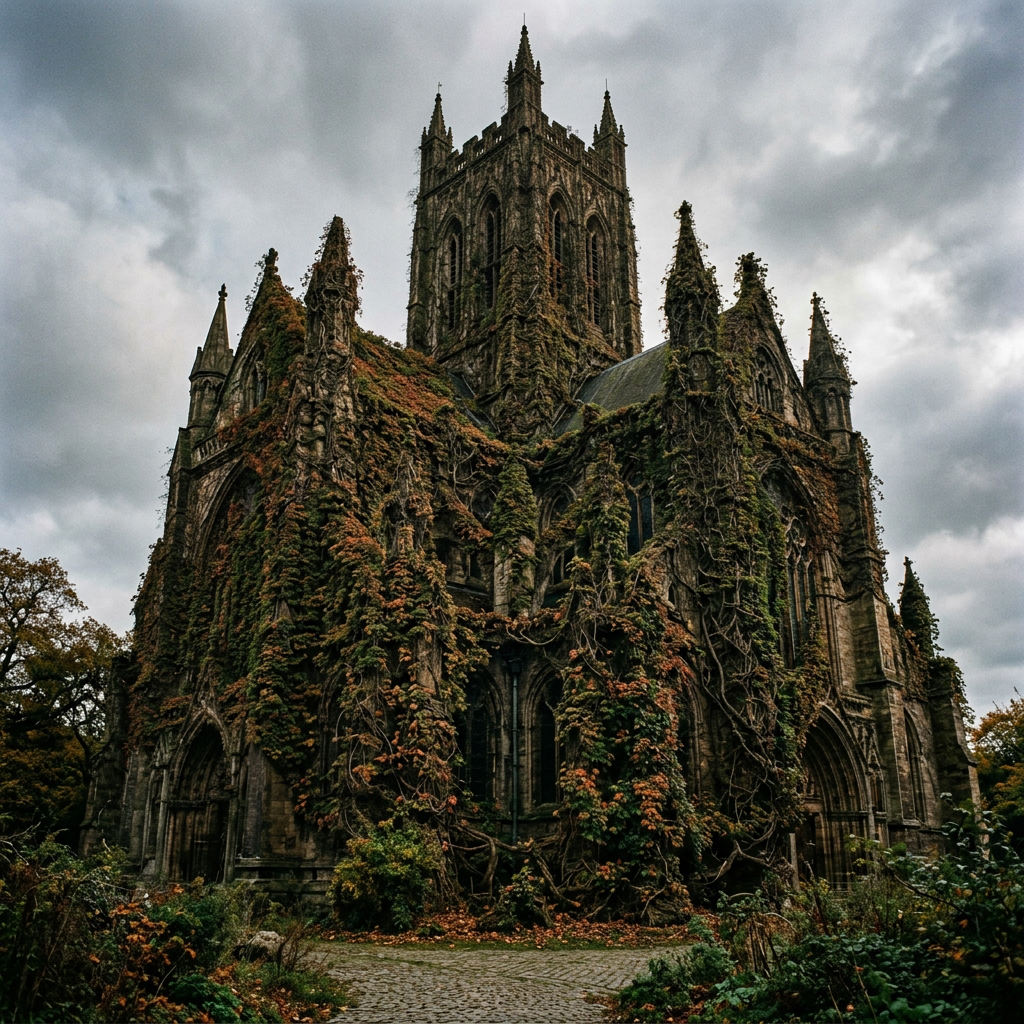
There are silences we choose, and then there are silences that choose us. Nightroot’s Silence is not a fable of a flower that refused to bloom; it is a reckoning with the things we buried alive—our neglected truths, our forgotten duties, our quiet complicity. We thought we could leave them in the dark, but the dark has a way of feeding what we hide. This article explores how the refusal to uproot small, uncomfortable realities has allowed them to grow into forces that now uproot us.
The Silence That Followed: Nightroot’s First Bow
When the first Nightroot appeared, it did not demand attention. It grew in the margins—unnoticed, unremarkable. Its silence was not a scream but a whisper. We mistook its stillness for submission.
- We thanked the quiet for giving us time.
- We praised the stillness for sparing us conflict.
- We called it peace when it was simply postponement.
But every bow the Nightroot took was a preparation. Its first gesture was not defeat; it was observation. It studied the cracks in our attention, the gaps in our care. We celebrated our relief while the root deepened its hold.
> Key insight: The first silence is always a test. If we pass it by, the second silence arrives with roots.
Roots We Buried: Excuses That Became Anchors
We did not just ignore the Nightroot; we actively buried it with excuses. Each excuse was a shovel of dirt patted down with good intentions.
| Excuse | What It Buried |
|---|---|
| “It’s not that bad yet.” | Early signs of decay |
| “Someone else will handle it.” | Shared responsibility |
| “We have bigger problems.” | Foundational neglect |
| “Change takes time.” | Urgent action |
These anchors did not hold the Nightroot down; they held us in place. The roots grew around our immobility, using our inertia as fertilizer. What began as a small, silent shoot became a lattice of excuses we could no longer untangle.
> Tip: When you hear yourself say “It’s just a small thing,” ask instead: What will this small thing become if I do nothing?
When Darkness Reveals What We Refused to See
The tragedy of the Nightroot is not that it grew, but that it grew in plain sight. Darkness did not hide it—our refusal to turn on the light did. When the silence finally broke, it was not through sound, but through collapse.
- The bridge we did not repair crumbled.
- The conversation we avoided erupted.
- The truth we softened returned as a blunt force.
The darkness did not create the problem; it only delayed the seeing. And when the seeing came, it was too late for gentle correction. The Nightroot did not punish us—it simply revealed the shape of what we had already built.
> Quote: “What we refuse to uproot in silence will one day uproot us in thunder.” — Old growers’ saying
The Living Shroud: Institutions That Forgot to Listen
Institutions—families, governments, organizations—wrapped themselves in the Living Shroud of procedure, policy, and protocol. They mistook process for presence.
- Committees studied the root but never touched the soil.
- Reports documented the growth but never watered the change.
- Leaders spoke of the Nightroot but never asked what it needed.
The shroud was not evil; it was comfortable. It offered the illusion of action without the risk of change. But a shroud, no matter how well woven, is still a covering for what is dead or dying.
> Important: An institution that only listens to its own echo will eventually be silenced by the growth it refused to hear.
What Uproots Us: The Harvest of What We Ignored
The final act of the Nightroot is not destruction—it is displacement. What we refused to uproot now uproots us:
- Our attention—scattered across a thousand distractions, leaving no room for depth.
- Our relationships—built on silences that were once polite but are now chasms.
- Our systems—designed for efficiency, not for listening, now groaning under the weight of unaddressed needs.
- Our peace—purchased at the price of truth, now mortgaged to regret.
The harvest is not revenge; it is consequence. The Nightroot does not hate us—it simply grows where the soil is richest, and we have been rich in neglect.
> Final thought: To uproot the Nightroot, we must first uproot the silence we planted it in.
Conclusion
The story of Nightroot’s Silence is a mirror held up to our own lives. It asks us a simple, uncomfortable question: What have I left in the dark that is now growing in spite of me? The answer is never comfortable, but it is always clarifying. We cannot go back to the first bow, but we can stop the next one. The uprooting begins not in the garden, but in the mind—when we choose to see, to speak, and to act before the silence becomes a shroud. Let tonight be the night we dig. Not for revenge, but for redemption. For the soil is still alive, and it remembers how to heal.
Leave a Reply