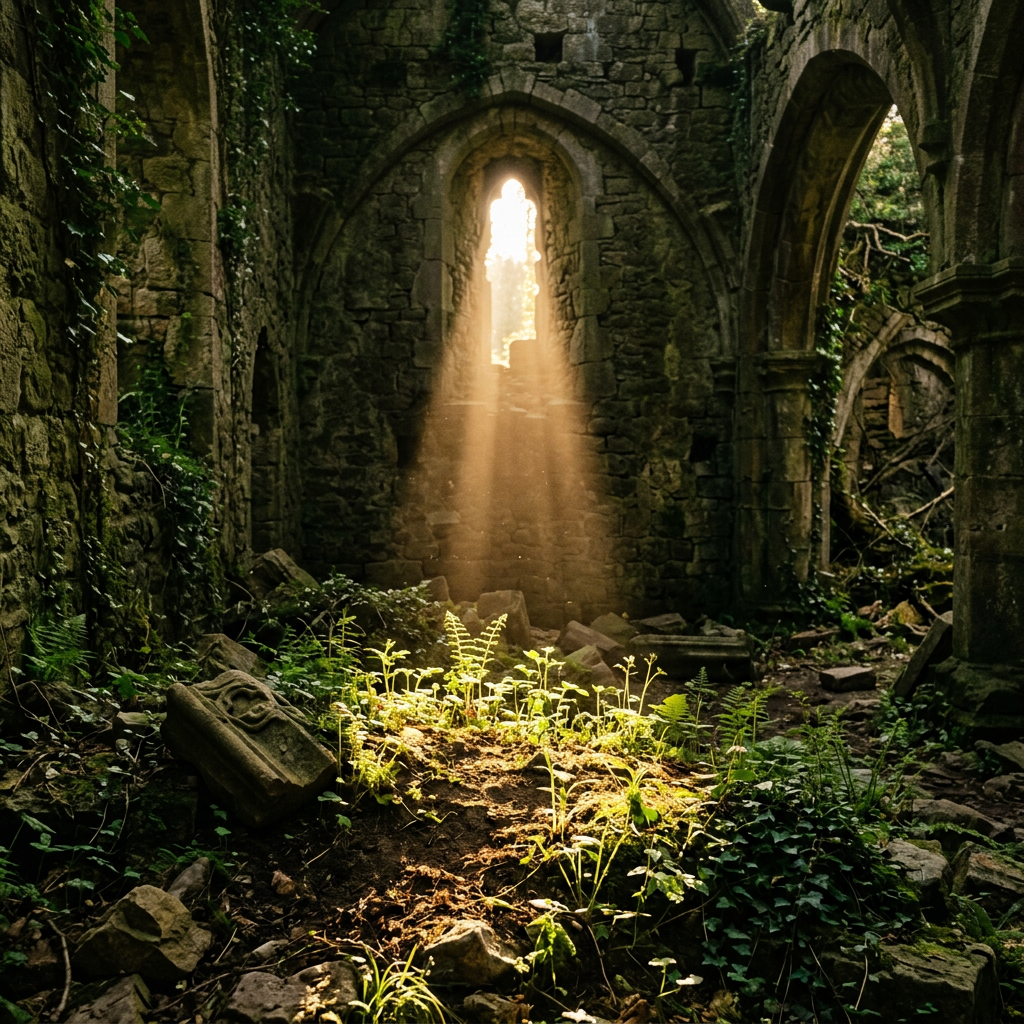
Imagine a world where silence has become so heavy that it feels like stone. Cities lie in broken heaps, and the air is still—not the stillness of peace, but the stillness of something waiting. Then, without warning, a single breath stirs the dust. That is the moment we are about to explore: the first sign of renewal after collapse.
The Silence After the Eighth Thunder
The ancients often spoke of seven thunders as symbols of complete destruction. But here, we consider the eighth—a thunder that does not come to break, but to announce the end of breaking. In the aftermath of the eighth thunder, the silence is different. It is not the silence of death, but the silence of a held breath. Key observations about this silence:
- It carries no echoes of panic or lament.
- It feels like a pause in the heartbeat of the world.
- It allows small sounds—like a pebble falling—to become monumental.
This silence is the canvas upon which the first sign will appear.
A Breath Returns to the Ruins
Out of that overwhelming quiet, a breath emerges. It is not a gale or a storm; it is soft, almost hesitant, like the first exhale of someone waking from a long dream. This breath is significant because:
- It moves through cracked marble and twisted steel, finding paths where no life should flow.
- It carries with it the scent of damp earth, not smoke.
- It is warm, contrasting the cold stillness of the rubble.
The breath does not try to rebuild immediately. Instead, it simply reminds the ruins that air can still move. This is the first sign: motion where motion was thought impossible.
What the Scroll Witnessed in the Wind
Imagine an ancient scroll, half-buried under a collapsed pillar, unrolling by accident in that gentle breeze. The text on it is faded, but the wind seems to read it aloud in whispers. The scroll’s message reveals three truths:
> What was broken by force can be mended by patience. What was silenced by fear can speak again in a whisper. The wind does not discriminate between the grand and the small—it touches every stone equally.
From these lines, we learn that the first sign is not a dramatic miracle, but a natural reinstatement of the laws of life. The wind witnesses that the world has not forgotten how to begin again.
The Remnant Stirred by Human Truth
Among the ruins, a remnant of people—those who survived by hiding and waiting—begin to feel the breath on their skin. They have spent days in terror, but this breath feels different. It stirs a human truth long buried: the truth that connection is stronger than isolation. Consider these reactions from the remnant:
- A child laughs for the first time since the thunders ceased.
- An elder, who had not moved in days, stands up and opens their palms to the wind.
- Strangers look at each other, not with suspicion, but with shared wonder.
This is the moment the first sign becomes tangible. It is not just a meteorological event; it is a psychological awakening. The breath has stirred not only the dust, but the hearts of those who remain.
Awakening the Market of the Breath-Born
As the initial shock fades, the survivors begin to gather. Where once there was only anarchy, a new kind of marketplace emerges—the Market of the Breath-Born. Here, trade is not in coins or gold, but in skills and memories. Features of this nascent market:
- One person offers the knowledge of purifying water from the ruins.
- Another shares songs that were nearly lost.
- A third trades the simple act of listening, which becomes more valuable than any gem.
The first sign—that single breath—has triggered a shift from survival to community. The ruins are not rebuilt with hammers and stone alone, but with the invisible architecture of trust and shared purpose. The market is a living testament that the breath was never about restoring the old world, but about birthing a new one.
Conclusion
The breath that stirred the ruins was more than a puff of air. It was a declaration that life wants to continue, even when the structures of the past lie in dust. From the silence after the eighth thunder to the awakening of the Market of the Breath-Born, we see that the first sign is not loud or demanding. It is patient, warm, and filled with the possibility of human connection. The ruins may remain for a time, but the breath has already written a new story into the wind.
Leave a Reply