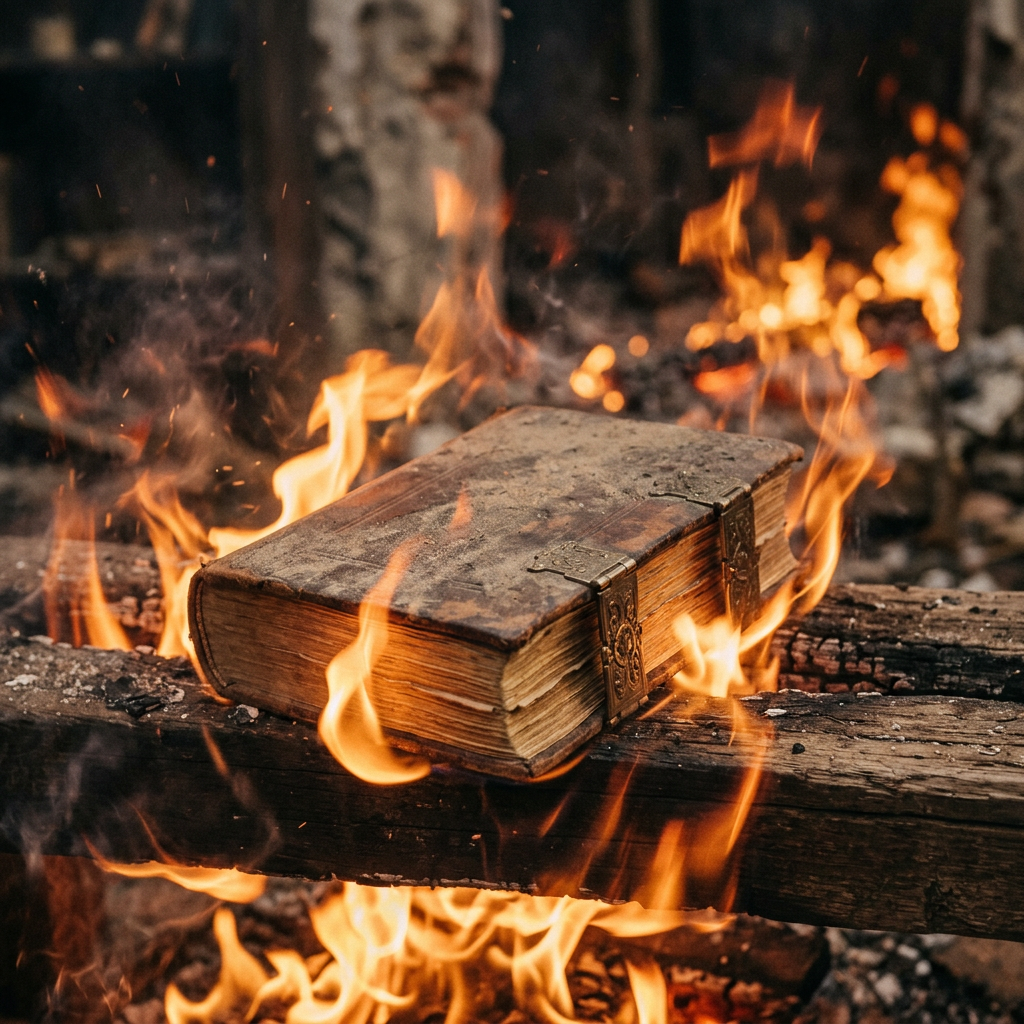
The Rising of the Twenty-Ninth Bowl
The world has witnessed countless cycles of destruction and renewal. From the ash-choked skies of Pompeii to the firebombed cities of the twentieth century, infernos have reshaped civilizations. Yet history whispers a strange truth: some flames refuse to die. Not the literal firestorm, but the defiant flicker of persistence that survives when everything else crumbles. This is the Remnant Flame—a spirit that outlasts the inferno, untouched by the very forces that devour all else.
In the final accounting of disaster, it is not the fire that defines us, but what remains after the last ember fades. The twenty-ninth bowl, as ancient metaphors suggest, represents a tipping point where expected destruction instead yields resilience. It is the moment when survival becomes something more than luck—it becomes meaning.
When Cities Melt and Idols Turn to Ash
Material civilization is fragile. Concrete buckles under heat. Steel warps into abstract sculptures. Monuments—the proudest works of human hands—become slag and memory. History offers brutal examples:
- The Library of Alexandria reduced to a whisper of papyrus dust.
- Pompeii entombed in pyroclastic flow, its frescoes preserved by the very ash that killed.
- Hiroshima’s shadow-patterns on stone, marking where life once stood.
What do these ruins teach us? That every empire builds its own funeral pyre. But more importantly, they reveal that the flame that consumes is not the flame that endures. Idols of stone, bronze, and ideology may turn to ash, yet something immaterial often slips through the cracks—uncaptured, unharmed, waiting.
> “When the last temple falls, the spirit of the worshiper becomes the sanctuary.”
This is not a lesson in despair. It is an invitation to look beyond the physical. The Remnant Flame does not require brick or mortar. It lives in what cannot be burned.
A Single Flame in the Heart of the Inferno
Every disaster narrative includes a survivor who carries a torch—sometimes literal, always symbolic. They are the ones who dig through rubble with bare hands, who carry water to strangers, who whisper prayers in collapsed shelters. They are the human flame.
Consider these essential traits of the enduring spirit:
- Adaptability – The ability to transform loss into a new foundation.
- Community – Shared memory and mutual aid that outlasts any single life.
- Narrative – Stories passed through generations, shaping identity beyond catastrophe.
- Hope – Not naive optimism, but the stubborn choice to act as if dawn will come.
In the heart of the inferno, a single flame does not illuminate the whole sky—but it prevents complete darkness. It is enough to guide one step, then another. That flame is the Remnant, and it is more powerful than any firestorm because fire can only consume what is tangible.
> Key survival tip: When the flames close in, protect the stories first. Everything else is replaceable.
The Book That Bowed to No Firestorm
Among the most enduring symbols of the Remnant Flame is the book that survived fire. Not through invulnerability—paper is notoriously fragile—but through replication. When one copy burns, another exists elsewhere. When that copy is lost, the text lives in memory, in translation, in oral tradition.
- The Diamond Sutra, printed in 868 CE, survived fire, flood, and empire collapse, hidden in a cave for centuries.
- Anne Frank’s diary, rescued from a Nazi-conquered attic, embodies a voice that refused to be silenced.
- The Sarajevo Haggadah, drenched in wine and blood, hidden from fascist troops, reemerged as a testament to cultural endurance.
These books did not survive by hiding alone. They survived because people believed in their worth enough to risk everything. The Remnant Flame is not a passive ember. It is a conscious act of preservation—a choice to carry the book, recite the poem, sing the forbidden song.
> “A book that burns is tragedy. A book that is remembered is revolution.”
The firestorm cannot consume what has already been planted in the human heart.
Enduring Beyond the Consuming Flames
What, then, does it mean to endure beyond the inferno? It means recognizing that the flame within is not the same as the one without. The fire that destroys is hungry, chaotic, and temporary. The Remnant Flame is steady, deliberate, and eternal.
To embody this endurance, practice these principles:
- Cultivate inner immaterial wealth. Skills, memories, and relationships cannot be scorched.
- Create redundancy. Share knowledge across many minds and places.
- Honor the small flames. The survivor who plants a garden, the elder who tells a story, the child who learns a forgotten craft—these are the keepers.
- Refuse to let the fire define you. You are not the ashes of what you lost. You are the ember that remains.
In the end, every civilization faces its Twenty-Ninth Bowl—a moment of trial by fire. Some are consumed entirely. Others emerge transformed. The difference is not in the intensity of the flames, but in the depth of the flame within.
> Final wisdom: The inferno may reshape the landscape, but it cannot reshape what you carry in your soul.
Conclusion
The Remnant Flame is not a relic of the past. It is a living force, available to anyone who chooses to endure. It does not require grand monuments or armies. It requires only a single conscious spark, passed from hand to hand, generation to generation. When the fires of destruction rage—and they will rage again—remember that you are not the fuel. You are the flame that fire forgot to claim. Carry it wisely. Carry it forward. And let it outlast every inferno.
Leave a Reply