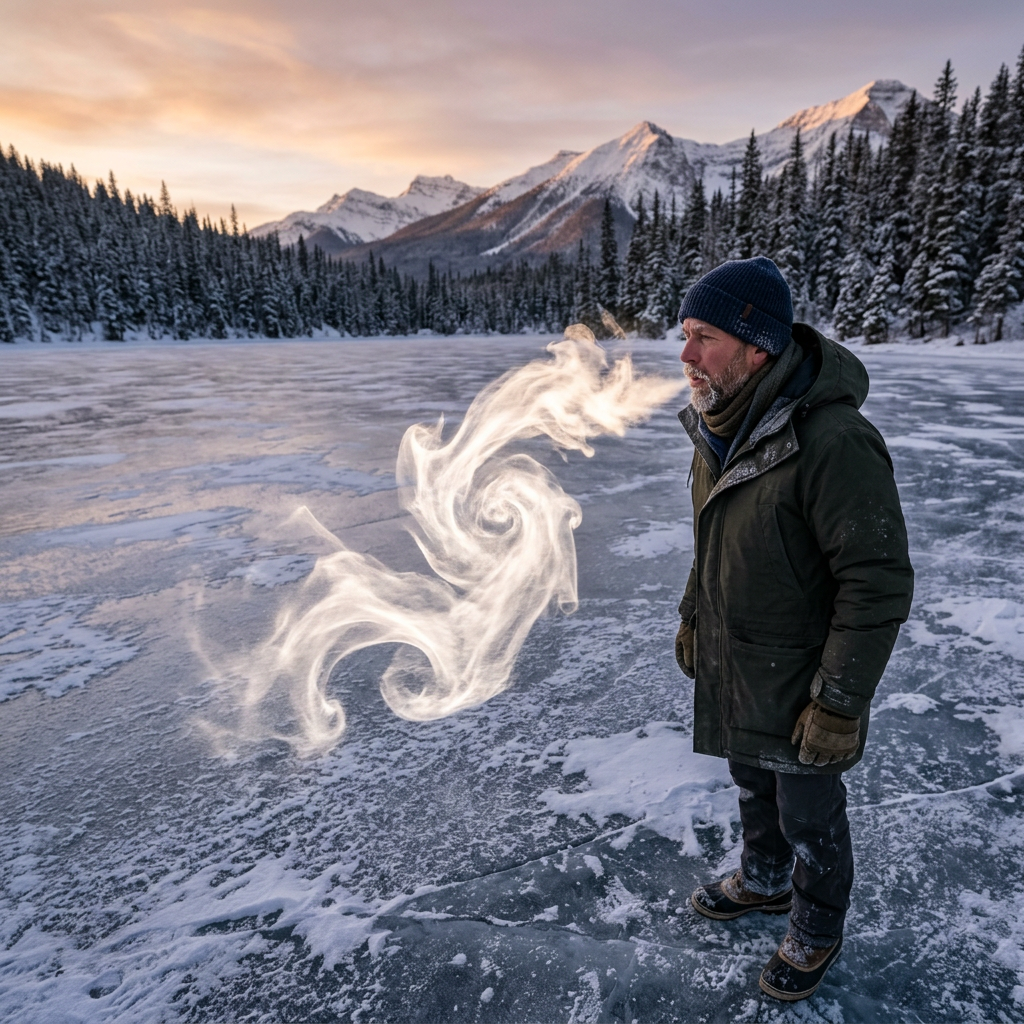
The Day Our Town Forgot How to Inhale
It started with a choke, not on a fishbone or a gasp of sea spray, but a slow, collective tightening in the chest of our little harbor town. Sisimiut, Greenland, nestled between frozen fjords and a sky that darkened for months at a time, had always known cold. But this was different. This was a silence in the schoolyards, a slump in the shoulders at the fish-processing plant. The mines had slowed, the cod had moved further out, and the quiet was louder than any storm. We didn’t just feel sad; we felt as though the very air had thickened, turning each day into a struggle for a single, full breath.
A Coach’s Whisper Above the Frozen Ice
Into this heavy quiet came a man named Nils. Not a doctor, not a shaman, but a hockey coach with a battered pair of skates and a voice that rarely rose above a murmur. The local rink, a patch of cracked ice in the town center, had been abandoned. Kids walked past it with their heads down. But Nils saw something else. He stood at the center of the rink one Tuesday evening, his breath fogging in the -20°C air, and he didn’t shout for a crowd. He just whispered to a single boy who had wandered over.
> “In a game of inches, your breath is the first inch. If you can’t control that, you can’t control anything else on the ice.”
It became his mantra. He taught them that a team that couldn’t breathe together would fall apart. The drills were slow at first. He didn’t care about slapshots. He cared about box breathing — a technique where you inhale for four seconds, hold for four, exhale for four, hold for four. They did this standing still on the ice, the only sound a chorus of soft, coordinated breaths. For a town that had forgotten how to inhale, this was revolutionary.
Drills That Became Our Last Steady Breath
Gradually, the team grew. Under Nils’s quiet guidance, the practice became a ritual of rhythm and resilience. The drills were deceptively simple but profoundly effective:
- The Fog Lap: Skating slowly around the rink while reciting a single word from a Greenlandic poem on each exhale. It taught pacing and presence.
- The Silent Shift: Two-minute shifts where players could not speak, only breathe in sync and read each other’s movements. Trust replaced panic.
- The Blizzard Drill: With a loud fan blowing fake snow in their faces, they had to stop, close their eyes, and take five deep, slow breaths before moving again. This wasn’t about hockey; it was about mastering the chaos of a winter that never ended.
Parents began to notice. Their sons and daughters came home smelling of frost and sweat, but with eyes that were clear, not dull. Instead of retreating to screens, they’d talk. They’d describe the feeling of a perfectly timed exhale as they passed the puck. The rink, once a monument to neglect, became the town’s new heart—pumping oxygen back into our communal veins.
Gambling’s Short Gasp Before the Fall
Not everyone found the path to the ice. A shadow lingered at the edge of town, in the warm, dimly lit back room of a café. Gambling had become a desperate gasp for hope. Men and women, hollow-eyed, would sit for hours, betting what little they had left on cards or dice. It was a promise of quick air—a sudden win that felt like a breath of relief—but it always ended in a longer, darker suffocation.
The contrast was stark. At the rink, we learned that breath is a cycle, not a sprint. You cannot hoard it. You cannot win it. You must share it. One of our best young players watched his father lose their savings in that café. The boy didn’t shout. He just took his father’s hand, led him to the rink, and made him stand on the ice.
> “Dad, just listen to me. Inhale. Hold. Exhale. Hold. The ice doesn’t lie. It just waits.”
The father never gambled again. The ice took the space where the fast money used to be.
Teaching Sisimiut to Breathe Again
The lesson spilled out from the rink into the streets. The entire town began to adopt the hockey team’s breathing rhythm. Fishermen used it before heading out into treacherous waters. Shopkeepers used it when the tourists were few and far between. Teachers started class with a minute of collective silence and breath work. It was not a cure for our economic problems, but it was a cure for the feeling of drowning.
- Community breathing circles formed in the town hall, where people would sit in a circle and just breathe together for ten minutes.
- The hockey team, now winning games, became known less for their goals and more for their calm under pressure. Visiting teams noted how they never seemed to panic.
- Mental health advocates from Nuuk came to study what we called the “Sisimiut Method”—a blend of physical movement, communal trust, and controlled respiration.
We did not rebuild the mine. The cod may never return in the numbers they once did. But we have something more essential. We learned that breath is not automatic; it is a choice you make, again and again, together. The hockey team did not save our town with a trophy. They saved it with a slow, steady exhale on a frozen patch of ice, teaching us all that as long as we can breathe together, we can face any storm.
And so, this is how a hockey team taught a town to breathe again: not by winning, but by rediscovering the one thing we all share but had forgotten—the simple, sacred rhythm of air moving in and out of our lungs. Inhale. Hold. Exhale. Hold. The town is still quiet, but now it is the quiet of peace, not the quiet of a held breath.
Leave a Reply