When the Hardwood Started Fighting the Odds
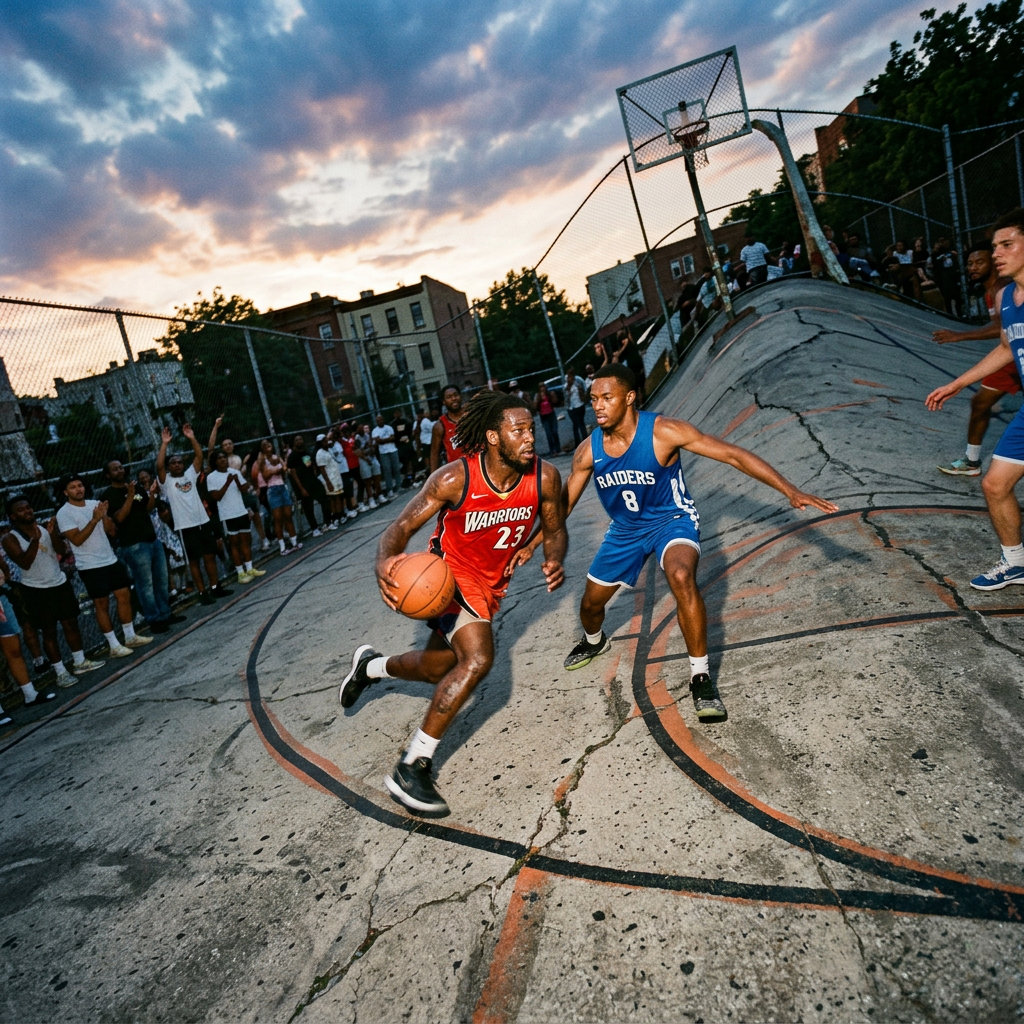
It began on a Tuesday night, during the third quarter of a game no one would remember. The bleachers were half full, the scoreboard was stuck at 57–52, and the only tension came from the floor itself. Old Memorial Gymnasium had seen better decades. Its sweetgum planks were warped by water damage, and the foundation had settled unevenly over the years. But that night, something felt different. The floor wasn’t just old—it was moving.
Players described it as a sensation underfoot, like the court was slowly tilting toward the visiting team’s bench. A loose ball rolled away from our point guard. A shooter lunged for a rebound and stumbled off balance. The referee paused mid-whistle, looked down, and shook his head. The stadium floor, long ignored by the town’s budget committee, was now teaching us a brutal lesson: inertia isn’t just a physics concept—it’s a competitor.
We were not supposed to win that season. Our school had been written off as a has-been program, too small, too broke, too unlucky. But when the hardwood itself began fighting the odds, something strange happened. We started fighting back.
Feeling the Floor Lean Into Every Bet We Made
In the weeks that followed, the wobble got worse. Someone propped a piece of plywood under the south corner. The janitor laid down duct tape over a raised seam. The floor didn’t care. It groaned, it shifted, it seemed to bet against us every time we set foot on it. The center circle became a valley. The free-throw lane tilted downhill like a slide. Every dribble had to account for a subtle drift.
We learned to read the wood. You could feel the micro-movements in your shoes: a slight roll to the right near the baseline, a dip in the paint that swallowed your pivot foot. Our drills adapted. Instead of perfect form, we practiced recovery—how to find balance after the floor betrayed you. We learned that sometimes the biggest obstacle isn’t the opponent, but the ground beneath you.
> “You can’t fix a wobbly floor with better sneakers. You fix it by learning to wobble with it.” — Coach Harris, during a particularly heated practice
That became our mantra. The wobble wasn’t a defect; it was a signal. It told us where the weakness was, and it forced us to build strength around it. Every stumble taught us to plant our feet wider. Every tilt taught us to lower our center of gravity. We stopped fighting the floor and started dancing with its imperfections.
Rebuilding Our Routine to Keep the Town Level
The wobbling floor wasn’t just a physical problem—it was a metaphor for our town. Manufacturing had left years ago. The main street had three empty storefronts for every open one. People said the town was leaning, too, and no one knew how to prop it up.
Our team decided to make the floor part of who we were. We scheduled practice at odd hours to catch the worst of the settling. We invited the local hardware store owner to help us shim the joists. We started a floor log: a notebook where players recorded where the floor felt most unstable each day. It became a ritual, a shared act of attention. The team that had been expected to lose now had a secret weapon: intimate knowledge of instability.
- We moved our warm-up drills to the sloped baseline to build ankle strength.
- We practiced inbound passes from the wobbliest corner, where the floor dipped two inches.
- We changed our defensive stance—wider base, lower hips, constant small adjustments.
- We invited the student body to come watch “floor hours” as a community event, turning a defect into a symbol.
The floor taught us that routines built on denial collapse fast. Routines built on truth—even ugly, lopsided truth—can hold.
The Coach’s Theory: Disorder Shakes the Foundation
Coach Harris had a philosophy that made the math teacher nervous. He believed that disorder—if acknowledged and harnessed—could be more powerful than perfect structure. “A floor that stays flat forever never teaches anyone how to balance,” he’d say, pointing to the warped wood. “It just lets you get lazy.”
He called it the Wobble Principle: when the foundation is unstable, everything reveals its true nature. The lazy player falls. The clever player adjusts. The great player uses the wobble as a springboard. In practice, he would deliberately shift the mats under our feet during drills. He’d dim the lights, play static through the speakers, and shout adjustments mid-play. He wanted us to be uncomfortable because the house—the court, the season, the odds—was always betting against us.
> “If you only practice when everything is perfect, you’re only prepared for perfect. And perfect never shows up to a game.” — Coach Harris, team meeting
The theory worked. Our opponents couldn’t adapt. They came in expecting a standard high school gym and found a moving puzzle. They missed shots they’d never miss at home. They tripped over invisible thresholds. Meanwhile, we moved like we’d been born on that warped wood. We weren’t just beating the odds—we were rewriting the definition of what a winning season could look like.
How a Wobbly Stadium Taught Us to Beat the House
The season ended with a conference championship that no one predicted. The trophy sits in a glass case near the entrance of Memorial Gymnasium, but the real reward was the lesson scratched into every player’s muscle memory: the wobble is the path.
We beat the odds not by fixing the floor, but by embracing its flaws. The house—the stadium, the town’s decline, the skepticism of outsiders—was never truly against us. It was just telling us where to stand. Every tilt was a clue. Every groan a warning. Every unsteady second a chance to plant our feet deeper.
Now, when I walk through that gym, I still feel the slight roll under my shoes. But I don’t wish for a flat floor anymore. I wish for more wobbles. Because if the floor is moving, it means the game is alive. And if we learned anything, it’s this: the odds only win when you stop reading the ground beneath you.
In the end, that wobbly stadium floor didn’t break us. It built us. It taught us that beating the house isn’t about having a perfect hand—it’s about knowing how to stand when the world tilts.
Leave a Reply