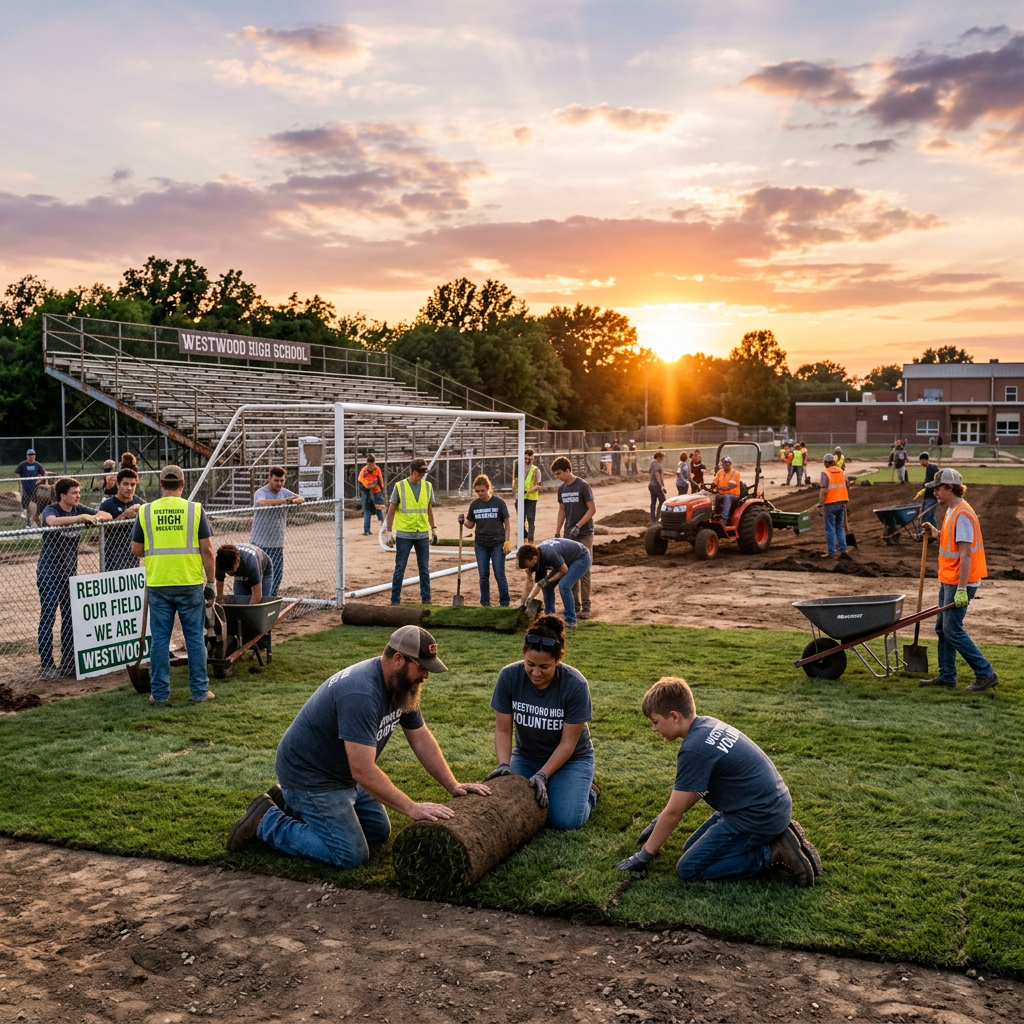
Our little town’s high school football field wasn’t just a patch of grass—it was the heart of our community. Every Friday night, we’d pack the bleachers to cheer on the team, buy hot dogs from the booster club, and watch our kids become heroes under the lights. But over the years, that field began to sink. Drainage failed, weeds overtook the turf, and the bleachers started to wobble. Worse, the town’s spirit seemed to sink right along with it. Businesses closed, families moved away, and the only thing we had left was a crumbling field that mirrored our fading hope. Then something unexpected happened: we learned that investing in sports—not gambling on them—could lift both the field and our town back up.
The Pitch That Sank with the Town’s Soul
The field had always been a gathering place. Generations had played on that dirt, sweat, and promise. But by the time I joined the town council, the field was a liability. The sprinkler system was ancient, costing more to repair than replace. The goalposts leaned like tired soldiers. And the locker rooms smelled of mold and defeat.
Our town’s budget was stretched thin. Tax revenues had dropped, and every dollar seemed to be swallowed by emergency repairs to roads and sewers. The field was last on the list. I remember one particularly rainy season when the field turned into a mud pit. The kids slipped and slid, their uniforms soaked with more muck than pride. Parents stopped coming. The band played to an empty bleachers. The soul of our town was draining away through that broken turf.
When Gambling Dug Our Foundation Deeper Down
In a moment of desperation, some folks proposed a quick fix: a sports gambling operation. They argued that if we allowed betting on games, we could rake in tax dollars fast. A few towns nearby had tried it, and their coffers swelled overnight. But I saw the dark side. Gambling doesn’t build; it exploits. It preys on hope and turns it into debt.
We researched the impact. Towns that embraced sports gambling saw:
- Short-term revenue spikes, but long-term addiction costs.
- Increased crime, from petty theft to loan sharking.
- A fractured community, where neighbors became rivals over bets.
- Neglected infrastructure, as money went to casinos instead of fields.
One town council member shared a story: “We thought we were striking gold. Instead, we dug a hole. Families lost savings, kids went hungry, and the field we wanted to save became a parking lot for a betting parlor.” We knew then: gambling would dig our foundation deeper down, not lift it.
Learning to Invest in Games, Not Gamble on Luck
We needed a different approach—sports investing. Instead of betting on outcomes, we invested in the process: the players, the facilities, and the community. True investing is about creating value, not chasing chance.
Here’s what we did:
- Purchased high-quality, native grass seed that thrived in our climate and required less water.
- Installed a modern drainage system with French drains and permeable soil layers.
- Partnered with local businesses to sponsor field upgrades in exchange for signage and naming rights.
Key tips for any town considering this path:
> Invest in people first. Train volunteer groundskeepers and offer scholarships for sports management courses. A maintained field is a field that lasts. > Use data, not luck. Track attendance, weather patterns, and equipment lifespan. Make decisions based on evidence, not emotion. > Leverage community sweat equity. Organize workdays where families help paint bleachers or lay sod. Ownership builds pride.
Lifting the Turf by Restoring Community Structure
The physical work was hard, but the real transformation was social. As the field improved, so did our town’s spirit. Here’s how it unfolded:
- Volunteer turnout soared. People who hadn’t spoken in years worked side by side, shoveling dirt and planting grass. The field became a neutral ground for unity.
- Local youth sports programs exploded. With a safe, beautiful field, kids from neighboring towns asked to join ours. Registration tripled in two seasons.
- Businesses reinvested. A new diner opened across from the field, and the hardware store started stocking turf-care supplies. The economy didn’t just bounce back—it grew.
One memorable Saturday, a 70-year-old retired coach showed up with a wheelbarrow full of his own flowers to plant around the goalposts. He said, “I’ve seen this field cry for too long. Now it’s time to let it smile.”
A Groundskeeper’s Vision Rebuilt Field and Future
The mastermind behind it all was Maria, our town’s groundskeeper. She had worked at the field for 20 years, watching it decay. When the town offered her a tiny budget, she didn’t complain—she invested. She sourced reclaimed wood for bleacher repairs, taught herself irrigation design on YouTube, and convinced the high school engineering club to build new goalposts as a class project.
Maria’s vision was simple: “Treat the field like a living asset, not a liability.”
She established a Field Fund—a transparent account where donations and sponsorship money went directly into maintenance. She created a rotation schedule for usage to prevent overwork. She even planted native wildflowers along the fence line to attract bees and butterflies, turning the field into an ecosystem.
The result? Two years later, our field hosted the regional championship. The stands were packed. The hot dog stand ran out. And when the team won, the ovation echoed through the town square. That night, I stood on the sidelines and realized: we hadn’t just saved a field. We had rebuilt our community’s foundation—with sweat, foresight, and the courage to invest rather than gamble.
> The final lesson: When you invest in your town’s heartbeat—its fields, its people, its shared spaces—you don’t just lift turf. You lift everyone who stands on it.
Conclusion
So here’s the truth we learned: sports investing isn’t about money. It’s about hope become tangible. Our sinking field taught us that the fastest way to raise a town is not through lucky bets or quick fixes. It’s through steady, patient, and collective investment in the games we love and the places we gather. Today, that field glows green under Friday night lights. The stands are steady, the locker rooms smell like liniment and victory, and our town feels whole again. If you’re staring at your own sinking field, don’t gamble. Dig deep, invest smart, and watch your community rise.
Leave a Reply