The Hovering Shadow Over Evening Practice
It began like any other Thursday evening in our small town. The high school soccer team was wrapping up practice under the floodlights, parents were chatting by the fence, and a few joggers circled the track. Then the familiar drone of a distant aircraft—which we all ignored at first—suddenly stopped. In its place came an eerie silence, a void that felt heavier than any noise. I looked up, and there it was: a black, matte helicopter, impossibly quiet, hovering directly above the field. No navigation lights blinked. No engine roar vibrated through the air. It simply hung there, like a dark secret suspended between the stars.
A Cold Blue Beam Registered Every Face
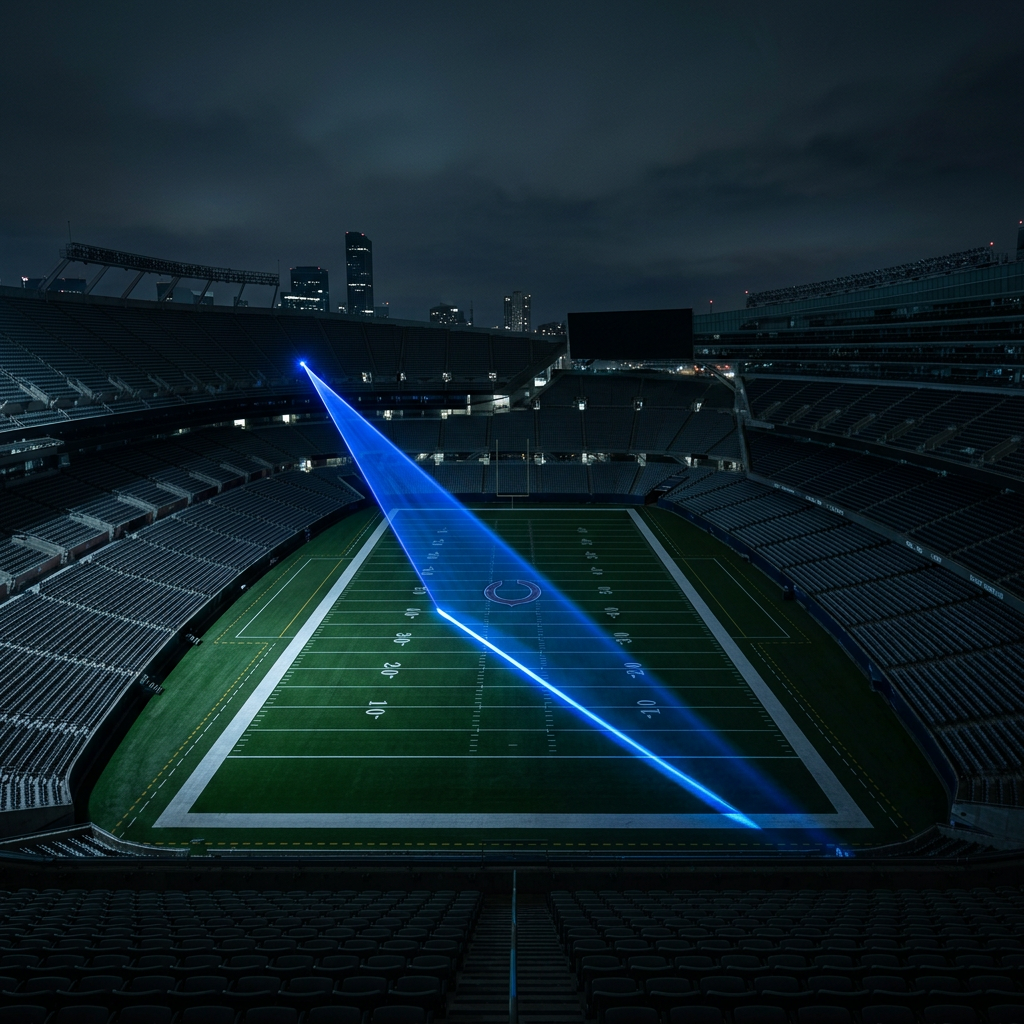
Within seconds, a cold blue beam of light cut through the twilight. It wasn’t the warm yellow of a police searchlight. This was crisp, clinical, and utterly silent as it swept across the bleachers, the goalposts, and then—slowly and deliberately—across every face in the crowd. The beam lingered on each person for just a moment, as if taking a photograph. I felt its chill pass over my skin, and a strange, metallic taste settled on my tongue. The parents fell quiet. Even the kids stopped kicking the ball.
- The beam did not flicker or waver; it moved with mechanical precision.
- It scanned in a grid pattern, starting from the east goal and moving westward.
- Every person was illuminated, one by one, as though being cataloged.
A friend later told me she saw her reflection in the helicopter’s undercarriage—a sleek, windowless surface. There was no sign of a pilot, no open hatch. Just that blue light and the oppressive silence.
The Coach’s Whisper About Stability Scores
Coach Martinez—a man who never raised his voice—walked calmly to the center of the field. He gestured for everyone to gather close. In a low, steady whisper that somehow cut through the tension, he said:
> “Everyone stay exactly where they are. Do not run. Do not look directly at the light. These flights track stability scores—how we react, not who we are.”
I had never heard the term before, and neither had anyone else. But his tone left no room for questions. He explained that certain aircraft measure the collective emotional resonance of a crowd—heart rate, pupil dilation, micro-expressions—to assess a town’s security baseline. That blue beam wasn’t taking photos; it was reading us. We stood frozen, our breathing shallow, as the silent helicopter continued its survey for what felt like an hour but was probably only four minutes.
- Stability scores are said to reflect a community’s stress levels.
- High scores invite scrutiny; low scores invite indifference.
- The goal is to show bored calm, not fear or curiosity.
Then, as suddenly as it appeared, the blue beam snapped off. The helicopter tilted slightly, glided north without a sound, and disappeared into the low clouds. The usual sounds of the town returned—distant traffic, a barking dog—but everything felt different.
How We Rewrote Our Nightly Town Rituals
The next morning, the town convened an impromptu meeting at the old grange hall. Some wanted to report the incident to federal authorities. Others insisted it was just a military exercise. But most of us agreed on one thing: we needed to rewrite our nightly rituals to reduce our collective visibility and lower our stability scores.
We implemented simple, almost absurd changes:
- No outdoor floodlights after 9 PM in residential areas.
- Group walks must be silent and avoid open fields.
- Children’s evening play moves to covered patios or indoors.
- Weekly community meditation sessions to lower our baseline anxiety.
These weren’t rules born of fear, but of a quiet defiance. We learned to dim our lives intentionally, to become less interesting to whatever watched from above. The blue beam had taught us that our smallest reactions could be measured, and we chose to be unreadable.
Why the Silent Helicopter Never Came Back
Weeks turned into months, and the helicopter never returned. Some say we passed the test—our stability scores dropped below the threshold for monitoring. Others believe the craft was a one-off anomaly, perhaps a prototype or a training flight that lost its way. But the older residents remember stories from the 1970s about “night vision sweeps” over our valley, and I’ve since found declassified documents mentioning “atmospheric signature mapping” in rural grids.
The truth is probably more mundane: a routine survey that happened to coincide with a soccer practice. Yet, the experience left a permanent mark on our community. We still keep our lights low after dusk. We still whisper when we walk the trails. And every time a plane passes overhead, a few of us glance up, half-expecting that cold blue beam to return.
Conclusion
That night taught us something profound about the quiet spaces between normal life and the unknown. The helicopter did not harm us, and it left no debris, no official report, and no explanation. But it changed how we live—how we gather, how we socialize, how we trust the darkness above. In the end, the greatest mystery is not what that silent machine was scanning for, but why we now feel safer in the shadows. The town still buzzes, the kids still play, but we’ve learned to do it more softly, more deliberately. And though the silent helicopter never came back, we remain ready—just in case.
Leave a Reply