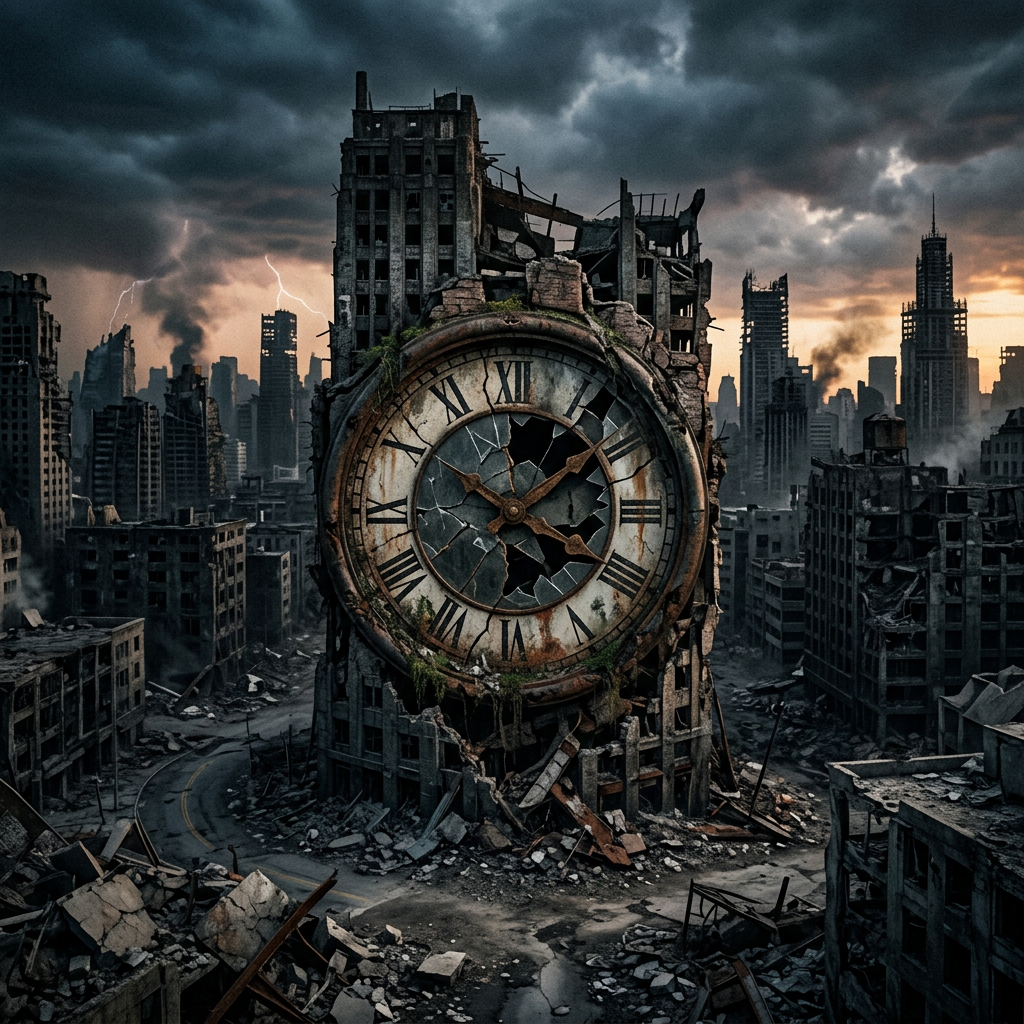
It began, as most great illusions do, with a sense of harmless novelty. We were a civilization drunk on progress, oblivious to the ticking timer embedded in our own scoreboard. The stadium lights of our society blazed, the crowds roared, and we mistook the countdown for a feature, not a warning. This is the story of how a simple number on a screen became the prophecy of our unraveling.
The Unfamiliar Numbers on the Scoreboard
At first, no one knew what they meant. Hovering in the corner of every public display—the stadium jumbotron, the stock exchange ticker, the news chyron—was a stark, black number counting down. It started at 36,000, then dropped to 35,999, then 35,998. The digits were cold, clinical, and utterly alien.
- No explanation was given by the governments or corporations.
- No one knew when it began or who programmed it.
- Theories ran wild: a countdown to a global event, a new year’s joke, a piece of modern art.
We chuckled at it. We shrugged. The number became a conversation starter, a meme, a way to pass the time. We didn’t realize it was measuring the time we had left. The unfamiliar sequence was the first tremor of a coming earthquake, but we were too busy taking selfies with the scoreboard to feel the ground shake.
When the Coach Named It the Civilization Meter
The turning point came during the World Cup final. The scoreboard showed the match clock, the score, and that persistent, descending number. When a reporter asked a legendary soccer coach about it during halftime, he stared into the camera and said, with brutal clarity:
> “That’s not a countdown for the game, my friend. That’s the Civilization Meter. It’s measuring how long we can keep lying to ourselves.”
The world went silent. The term stuck overnight. Suddenly, the number wasn’t a curiosity; it was a diagnosis. The Coach, a man who built his career on reading the momentum of a match, had named our collective anxiety. We saw the number for what it was: a reflection of our cultural decay, our environmental debt, and our fractured trust. The game that day seemed trivial. The real match was on the screen above, and we were losing.
How Gambling Surges Made the Clock Tick Faster
We didn’t just watch the Civilization Meter; we interacted with it. Desperate for control, people began betting on the numbers. An underground market emerged, trading on the speed of the countdown.
- Micro-gambling algorithms were designed to predict “drops.”
- Sensationalist media realized that fear made the clock tick faster—more panic, more clicks, more drops.
- Political chaos fed the beast: each lie from a leader shaved off ten seconds.
The irony was devastating. Our attempts to profit from the countdown only accelerated it. We were like arsonists buying insurance on a burning house. The ticker became a feedback loop of despair. Every surge in gambling, every “hype trade” on the countdown, drained the number. The clock didn’t just measure our downfall; it fed on it.
Our Desperate Fight to Slow the Countdown
When the number hit 5,000, panic turned into action. We realized the only way to slow the countdown was to stop feeding the beast. Grassroots movements emerged. People began practicing radical slowness:
- Communities disconnected from the 24/7 news cycle.
- Neighborhoods held “digital fasts” where phones were locked away for days.
- Truth and transparency became the only currency that mattered—leaders who lied were immediately ostracized.
For a glorious month, the countdown slowed. It hovered at 4,872 for what felt like an eternity. We held our breath. We believed we had outrun the prophecy. We had learned that the meter responded to authenticity, not spectacle. But the lesson came too late.
The Final Seconds That Changed Everything
The last minute was quiet. No screams. No frantic broadcasts. Just a collective, global stillness. The number hit 10, then 9. A child in a small town looked up at a screen in a park and started counting out loud. Others joined, a whisper that became a chorus.
- 3…
- 2…
- 1…
The screen went black. For a moment, nothing happened. Then, the stadium lights flickered and died. The internet groaned and fell silent. The constant hum of civilization cut out. But the silence was not dark; it was clean. The countdown that predicted our downfall didn’t end in an explosion or a flood. It ended in a collective reset.
We lost the electricity, the fame, the gambling highs, and the relentless noise. But in that final second, we finally saw each other. The stadium countdown hadn’t predicted our destruction; it had predicted the end of our distraction. And what was left, in the quiet, was something we had forgotten existed: ourselves.
Leave a Reply