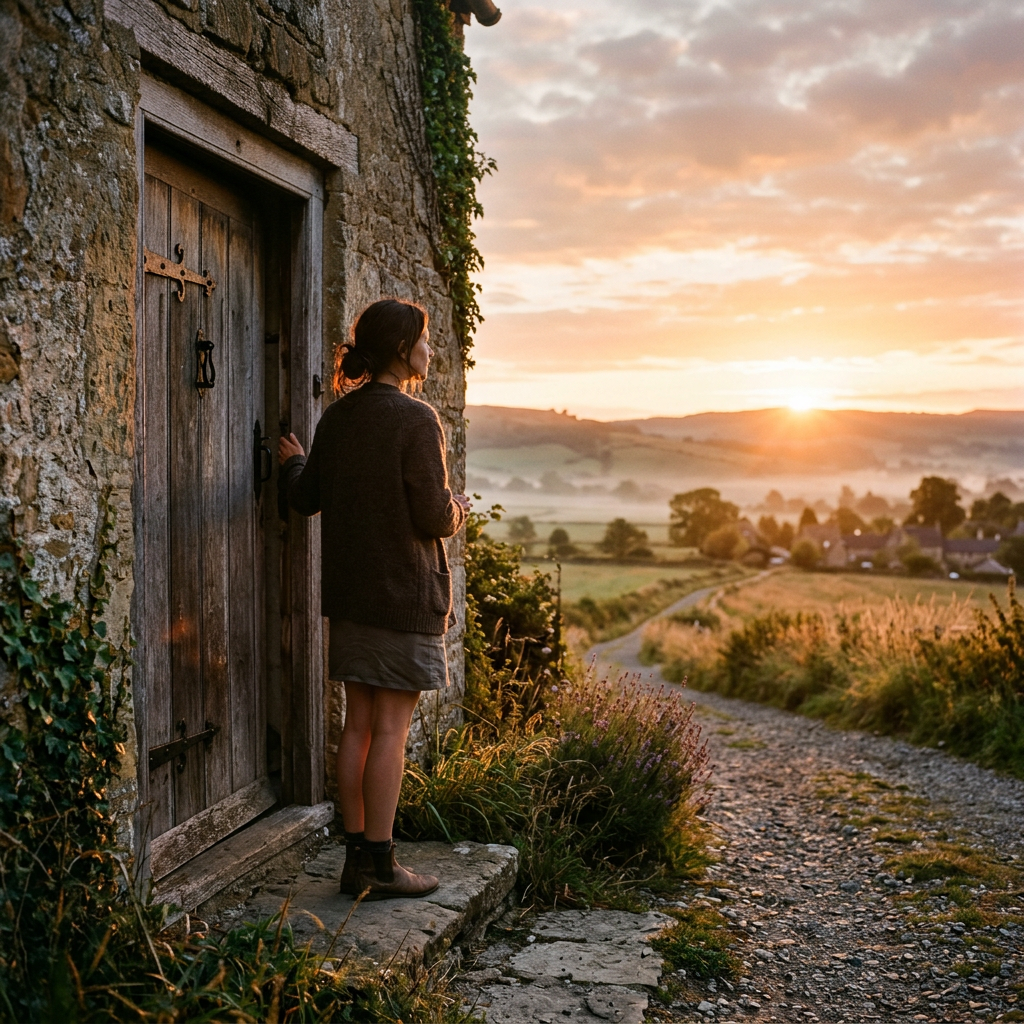
The Hour When Light Became a Stranger
There are moments in life when the familiar turns foreign, and the sun itself feels like an unwelcome guest. For most, night is a respite—a curtain drawn over the day’s chaos. But for those who have lived through the darkness we chose, night becomes a permanent residence. It begins with a single decision, often born from desperation: to step away from the light, believing that the shadows hold answers the daylight refuses to give.
This shift isn’t dramatic. It does not announce itself with thunder or a sudden eclipse. Instead, it creeps in like a slow tide. You start by closing curtains tighter, dimming lamps earlier, and avoiding streets that feel too bright. The light, once a source of comfort, becomes a stranger—harsh, exposing, and untrustworthy. You learn to love the dark because it asks no questions and demands no explanations.
> “We do not stumble into darkness; we tip-toe, convincing ourselves that the moon is enough.”
Choosing the Shadow We Thought Would Save Us
Why would anyone choose a night that seems endless? The answer lies in the illusion of control. When the world outside feels overwhelming—when grief, guilt, or fear press against your chest—the darkness offers a sanctuary where nothing can hurt you because nothing can find you.
Here’s what the shadow promises—and what it actually delivers:
- A false sense of safety: The dark hides your flaws, but it also hides your exits.
- An escape from judgment: No one sees your tears, but no one sees your hand reaching for help either.
- A numbing quiet: The noise of life fades, but so does the sound of your own heartbeat.
- Permission to wither: You can stop fighting, but you also stop growing.
The moment you choose the shadow, you make a pact with stillness. You tell yourself it’s temporary, a brief hideout until the storm passes. But the storm never passes because you’re the one keeping the clouds heavy. The darkness becomes a chosen burden, a locked door you hold shut from the inside.
What the Darkness Revealed About Our Secrets
Here, in the unending night, secrets surface. They are not the shocking, life-altering revelations we brace for in daylight. Instead, they are the small, quiet truths we buried under routine and small talk.
The darkness reveals:
- The weight of unspoken words: Conversations you never had, apologies you swallowed, loves you let wither. The dark gives them a voice.
- The shape of loneliness: It is not an empty room; it is the absence of someone who should be there. The dark makes every silence echo.
- The cost of pretending: Every mask you wore under the sun becomes heavy. In the dark, you must either remove it or suffocate.
- The map of your regrets: The shadows trace the paths you didn’t take, the moments you froze when you should have run.
This exposure is raw, but it is also honest. The night does not lie. It does not soften its edges or paint hope where none exists. It holds up a mirror and says, “Look. This is what you’ve been carrying.” And in that reflection, you see not a victim of circumstance, but an architect of your own isolation.
> “In the darkness, we stop performing. And that is the most terrifying freedom of all.”
A Dawn We Buried, a Night We Embraced
There was a dawn once—a morning full of possibility and golden light. But somewhere along the way, we buried it. Perhaps we were too tired to reach for it, or too convinced that brightness would burn us. Instead, we embraced the night, wrapping it around our shoulders like a familiar coat.
Embracing the night is an active choice. It is not surrendering; it is curating your own damnation. You learn to find comfort in the routine of darkness:
| Dawn’s Offerings | Night’s Substitutions |
|---|---|
| Hope for change | Certainty of stagnation |
| Vulnerability | Protective armor |
| The risk of joy | The safety of numbness |
| Connection with others | Solitude without intimacy |
The table above shows what we traded. And for a time, it feels fair. The night demands no effort, no courage. It asks only that you stay still. But stillness is a slow poison. The dawn you buried does not decompose; it waits, patient and stubborn, for you to remember that light exists.
The Inheritance of an Unending, Chosen Night
What do we pass on when we choose a night that will not end? We think our suffering is ours alone, but it leaks through the cracks. The people around us—children, partners, friends—inherit our shadows.
They inherit:
- Our silence, which teaches them that some things are better left unsaid.
- Our fear of the sun, which warns them that hope is dangerous.
- Our resignation, which whispers, “This is just how life is.”
- Our loneliness, which becomes a blueprint for their own relationships.
The unending night is not just your story; it becomes the prelude to someone else’s. But here is the twist: the night is a choice, and choices can be unmade. The door is not locked from the outside. You are the one holding the bolt. And while there is no shame in resting in the dark, there is profound strength in remembering that the dawn is not gone—it is merely buried.
Conclusion
The darkness we chose is real, and it is heavy. It has taught us things the sun never could: the texture of solitude, the grammar of grief, the architecture of our own souls. But an unending night is not a destiny; it is a detour. The horizon does not disappear just because we refuse to look at it.
To choose the night is to understand the full weight of the word “choice.” And to choose again—to reach for a dawn you thought you buried—is not to betray the darkness, but to complete its lesson. The night does not need to end. It only needs to be joined by a morning.
So if you find yourself in the long, chosen darkness, remember this: you are not lost. You are just in the deepest part of the story. And the only way out is to decide that you are ready for the light to return—not as a stranger, but as an old friend you forgot you missed.
> “The end of a chosen night is not a failure. It is a graduation.”
Leave a Reply