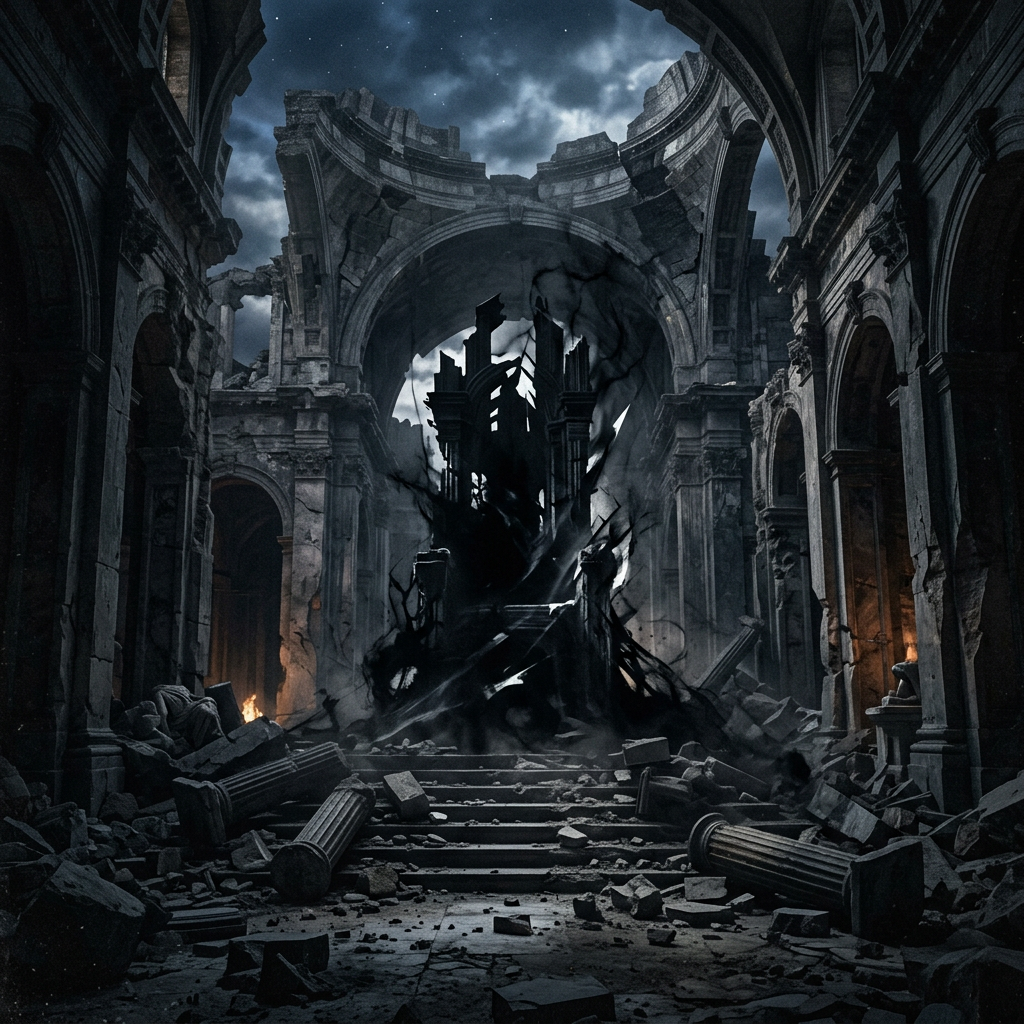
The Throne We Built in Shadow
Every civilization, and indeed every person, erects a throne in the dark corners of their soul. We do not speak of it openly. It is the seat of our unspoken agreements, the place where we store the compromises we made for comfort, convenience, or control. We built this throne from the brittle timber of suppressed truths, the cold stone of convenient lies, and the gilded paint of performative virtue. We told ourselves it was a necessary structure, a shelter from the chaos. We preserved it, polished it, and fed it with our silence.
What did we store there?
- Old grievances we refused to resolve.
- Systemic injustices we chose to ignore for the sake of peace.
- Personal failings we masked with blame.
- Environmental debts we passed to future generations.
We called this preservation wisdom, pragmatism, or maturity. But a throne built in shadow is not a foundation—it is a prison waiting for a warden.
When the Empire of Luck Collapsed
For a time, the structure held. We called it the Empire of Luck, a golden age where the bill for our collective shadow work seemed indefinitely deferred. The stock market rose. The weather held. The fragile peace between nations and neighbors continued, propped up by a fragile consensus of avoidance. We mistook good fortune for permanent stability.
Then the cracks appeared. A pandemic. A political rupture. A climate tipping point. A personal crisis that arrived without warning.
The Empire of Luck did not fall overnight; it dissolved. The scaffolding of denial gave way. Suddenly, the throne we had so carefully preserved was no longer hidden in the shadows—it was standing in the center of the agora, illuminated by the harsh light of consequence. And it was not empty. Someone or something was sitting on it, and its gaze was terrifying.
The Idols We Worshiped Turn Against Us
We did not build this darkness with malice alone. We built it with devotion. We worshiped idols that promised us safety without sacrifice:
- The idol of Constant Growth—which demanded we consume the future.
- The idol of Moral Superiority—which let us judge others without examining ourselves.
- The idol of Control—which gave us the illusion that we could manage all variables.
- The idol of Comfort—which whispered that discomfort was an enemy, not a teacher.
These idols were not evil in themselves, but they became demanding gods. They required regular offerings of attention, money, and silence. When the empire collapsed, these idols did not come to our aid. They turned, and their demands became accusations.
> “You worshiped my fire, but never asked what I burned.” — The Idol of Growth
> “You used my name to shame others, yet hid your own shame beneath my robes.” — The Idol of Morality
The judgment came not from an external deity, but from the echo of our own choices.
The Darkness We Preserved Now Judges
This is the central, brutal revelation: the darkness we preserved is now the judge. It is not a separate entity. It is the accumulated weight of every little lie, every deferred apology, every environmental outrage we pretended not to see, every moment of cruelty we rationalized as necessary.
When judgment arrives, it speaks in a voice we recognize:
- It says: “You knew the cost, but you paid it anyway.”
- It says: “You had a chance to speak, but you were silent.”
- It says: “You could have changed, but you chose stagnation.”
This judgment is not a punishment in the traditional sense. It is a clarifying mirror. It reveals the raw accounting of our preserved shadows. The debts we thought were hidden are now due, and the interest is compounded.
Key tools for facing this judgment:
- Radical Honesty: Stop defending the throne. Acknowledge the specific darkness you preserved.
- Uncomfortable Listening: Do not argue with the judge. Listen to what it reveals about your complicity.
- Genuine Reparative Action: Not performative apology, but tangible change in behavior and systems.
- Acceptance of Collapse: Understand that some things must die—reputations, comforts, structures—for something new to be born.
Through the Ruins of the Fifth Bowl
The image of the Fifth Bowl is one of final reckoning—the last great plague poured upon the throne of the beast. In our current context, this is the moment when the accumulated darkness reaches its critical mass. The bowl is not being poured upon us; we are living inside it. The ruins are all around.
> “The judgment of the shadow is not its end, but its exposure. And in exposure, there is a terrible, liberating light.”
Walking through these ruins requires a new kind of faith—not in the idols of old, but in the possibility of transparent reconstruction. We must:
- Dismantle the throne by speaking the unspeakable truths.
- Mourn the Empire of Luck without nostalgia.
- Refuse new idols that promise easy escapes.
- Let the judgment be complete so that the lesson is not repeated.
Conclusion
The darkness we preserved does not hate us. It has become the honest scribe of our history, writing the final chapter of an age built on denial. To be judged by our own shadow is the most intimate and terrifying form of accountability. Yet, it is also the only path to genuine freedom. We can no longer hide. The throne is broken. The judge has spoken. The question that remains is not who will rebuild, but what will they build—and will they finally leave the lights on?
Leave a Reply