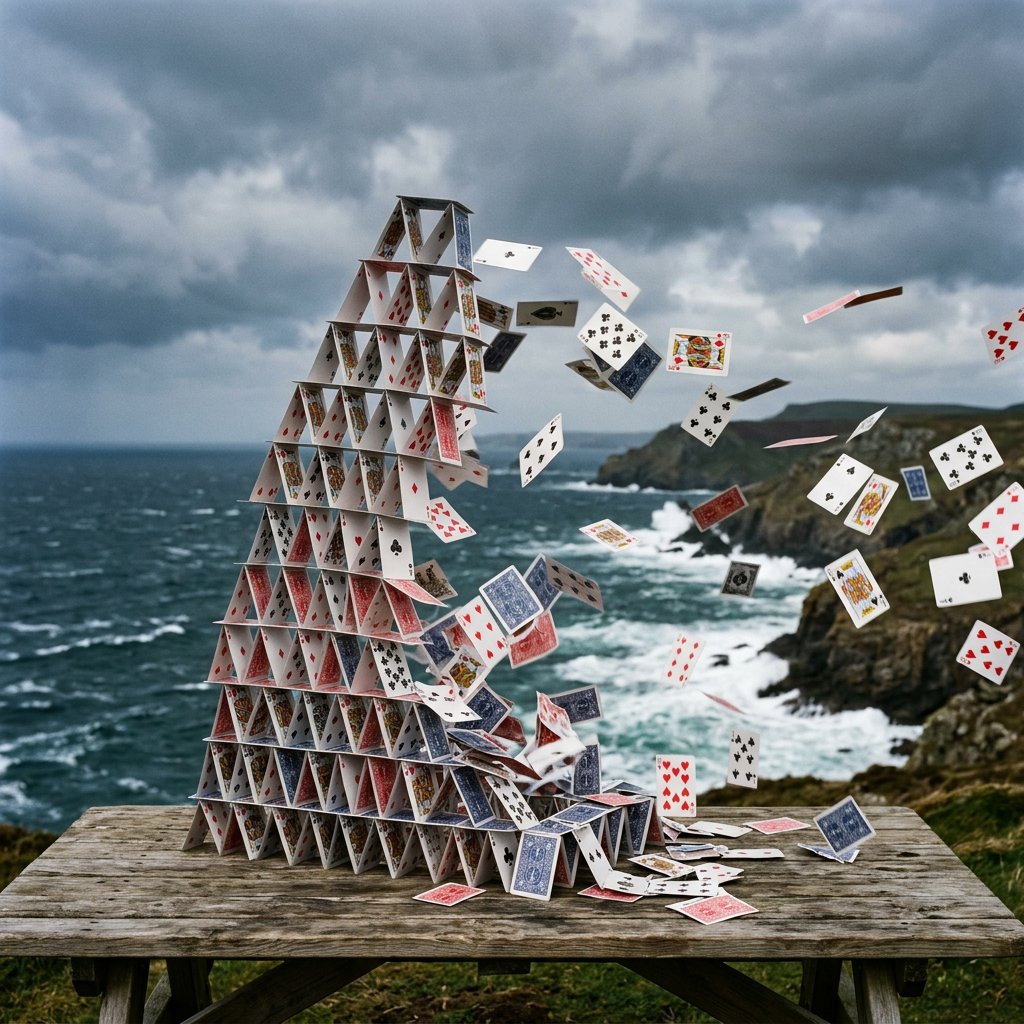
There are empires built on granite and iron, and then there are those erected on the shaky foundation of a dice roll. The story of the “Empire of Chance” was never about skill or strategy; it was a glittering, intoxicating mirage sustained by the whims of fortune. For a time, luck was a generous monarch, but as all monarchs do, it eventually turned its back. This is the tale of the final wind—not a gentle breeze, but a hurricane of consequence—that swept away an entire civilization that had forgotten the difference between luck and legacy.
The Rise of a Kingdom Built on Luck
The Empire of Chance did not emerge from conquest or innovation. It grew because people mistook probability for permanence. Its foundations were laid in the early days when a series of favorable outcomes convinced its citizens that they had mastered fate.
- The Gambler’s Fallacy was its national doctrine: the belief that a string of wins meant the odds were forever changed.
- Ritualized risk became the daily bread. Every decision, from trade agreements to personal relationships, was weighed against the likelihood of a favorable outcome.
- Fortune tellers and statisticians held equal power. The line between data and divination blurred completely.
The economy boomed on a currency called “Potential.” No one manufactured goods; they manufactured possibilities. A man could trade a 20% chance of rain next Tuesday for a 60% chance of a royal appointment. It was a dizzying, unsustainable dance on the head of a pin. The citizens were not builders; they were bet makers. And for a glorious, chaotic season, every bet paid off.
The Twentieth Bowl Pours Forth Judgment
But luck is not a well; it is a tide. The first sign of the coming storm was a subtle shift in the wind. The universal laws of variance began to correct themselves. The Twentieth Bowl is a metaphor for that precise moment when the accumulated debt of good fortune comes due. It did not pour water or fire; it poured clarity.
> The house always wins, but only if the players stay at the table long enough. When the tide turns, the empire built on a string of luck has no anchor.
The judgment was not a single catastrophic event. It was a cascade:
- A regression to the mean devastated the harvest of lucky breaks.
- The law of large numbers revealed that the empire’s success was merely an outlier, statistically insignificant.
- Confidence collapsed faster than a straw hut in a monsoon.
The markets of chance froze. The currency of Potential became worthless overnight. Those who had bet the farm on a single roll of the dice found themselves holding empty hands. The Twentieth Bowl didn’t destroy them; it simply showed them the truth of their own frailty.
Sweeping the Illusions of a Chance Empire
With the judgment delivered, the final wind began its work. It was not a force of destruction, but of unveiling. It swept away the layers of self-deception that had allowed the empire to function. The grand casinos of hope, the temples of probability, the palaces of “just one more bet”—all were laid bare.
The wind cleared the air of three major illusions:
- The Illusion of Control – The belief that you can “feel” when a win is coming.
- The Illusion of Merit – The idea that a lucky outcome is the same as a skillful one.
- The Illusion of Invulnerability – The dangerous notion that what has worked before will always work again.
> An empire built on chance does not fall; it evaporates. The wind does not push it over—it merely stops pretending the house of cards is made of stone.
As the dust settled, the empire’s inhabitants saw their kingdom for what it truly was: a collection of random events, glorified by hindsight and wishful thinking. The sweeping was complete, but it was not violent. It was, in a strange way, merciful.
Silence That Spared the House of Cards
In the aftermath of the great sweep, there was a profound silence. The constant noise of dice rolling, cards shuffling, and odds being calculated fell away. This silence was not empty; it was sparing. It held space for something new.
The final wind did not crush every structure. It left behind the house of cards—the fragile, honest representation of what the empire truly was. Spared from destruction, it stood as a monument to the absurdity of the past.
- The silence allowed for reflection without the heady rush of potential gain.
- It offered a choice: rebuild on a foundation of substance, or admire the cards and walk away.
- It revealed that the most valuable asset was not a lucky streak, but the calm awareness that the universe owes no one a win.
For the first time, the citizens heard their own breath. They saw that the house of cards was beautiful in its own way—a delicate piece of art, not a fortress. The wind had spared it as a reminder: it was always just a house of cards.
The Last Wind That Whispered “Finished”
The final gust was not a roar, but a whisper. It carried the word “Finished” across the vacant boulevards and empty arenas. It was not a declaration of defeat, but a confirmation that the story had reached its natural end.
> The final wind does not destroy what is real. It only erases what was never there to begin with.
This whisper was a gift. It closed a chapter that had been written in invisible ink. It told the survivors that they were now free from the tyranny of chance. The game was over. The empire was gone. But those who heard the whisper could now begin to build—not on the shifting sands of luck, but on the bedrock of deliberate action, honest effort, and authentic creation.
Conclusion
The Empire of Chance was never meant to last. It was a magnificent anomaly, a beautiful accident that briefly convinced the world that randomness could be tamed. The final wind that swept it away did what all great winds do: it cleared the path for a clearer view.
We often fear the end of a lucky streak, mistaking it for a punishment. But the story of this forgotten empire teaches us a different lesson. The wind that sweeps away our illusions is not an enemy. It is a liberator. When the last whisper comes, and it says “Finished,” we should listen with gratitude. For only then are we truly ready to begin something that matters—something built not on the whim of the dice, but on the strength of the hand that finally chooses to hold steady.
Leave a Reply