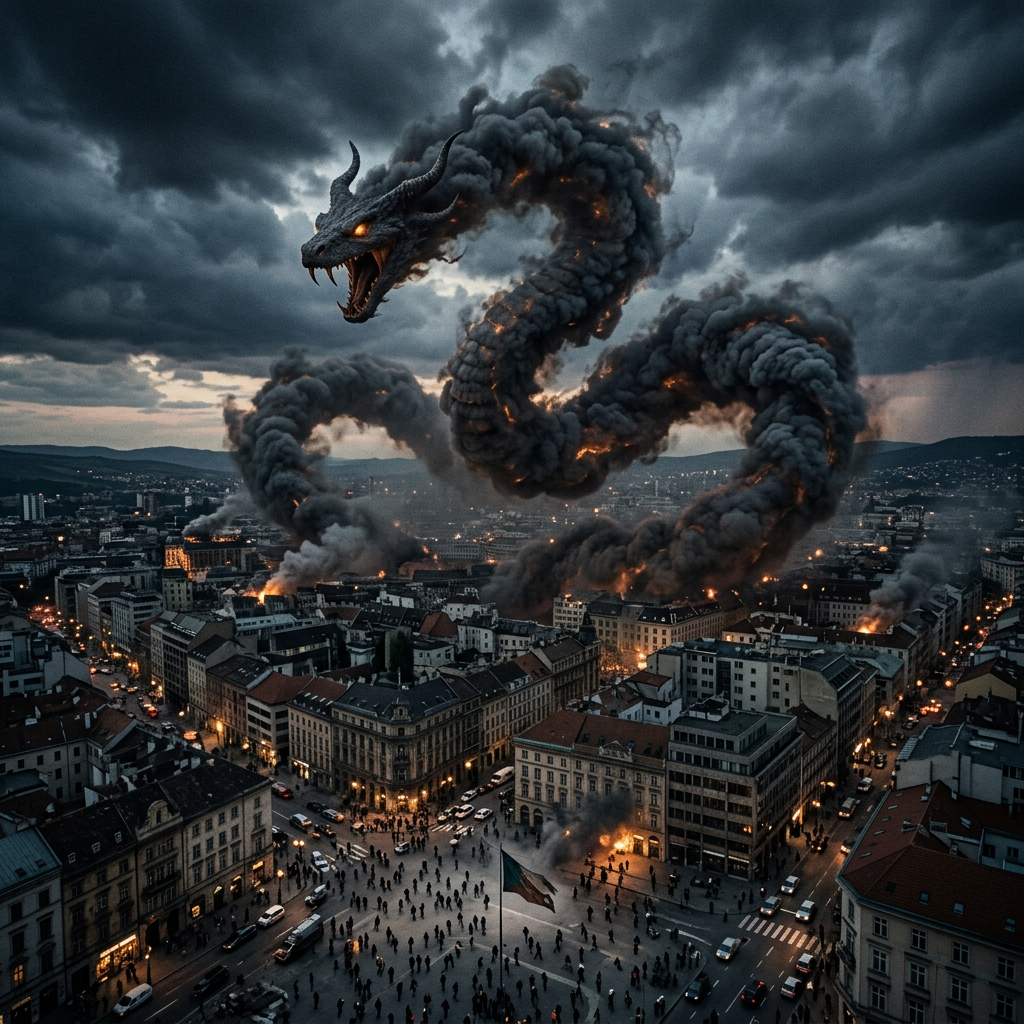
There are truths that sit quietly in the dark, patient as embers. Then there is the truth that rises like smoke from a forgotten altar—unbidden, undeniable, and capable of making even the mightiest nations tremble. This is the story of that truth: a serpent of smoke that coiled through the corridors of power, whispered in the ears of kings, and eventually demanded an accounting from the whole world.
The Twelfth Bowl: When Truth Rose as Smoke
Imagine a moment when every fabrication, every comfortable lie, and every convenient omission was poured out like a bowl of wrath upon the earth. This was the Twelfth Bowl—not a literal vessel, but a symbolic reckoning. It came not with fire or flood, but with smoke: the evidence of deeds done in shadow, now visible to all.
- It began as a rumor, barely audible above the din of propaganda.
- It grew into a whisper, then a hiss, as documents surfaced and testimonies collided.
- It culminated in a roar—a cloud of truth that no government could filter, no army could suppress.
This smoke did not blind; it revealed. It exposed the machinery behind peace treaties that were never meant to last, and the alliances built on foundations of ash.
Serpent of Deception Coiled Around Nations
For decades, a serpent of deception wound itself around the spine of global politics. It was not a single lie, but a system of them—a living, breathing creature fed by secrecy, propaganda, and the willing blindness of the powerful.
- The first coil: The economic promise that would keep populations docile while resources were drained.
- The second coil: The manufactured enemy, always just over the horizon, justifying endless arms and endless suspicion.
- The third coil: The rewriting of history—a slow, insidious process that made tyranny look like order and freedom feel like chaos.
> “The serpent does not need to bite to kill; it only needs to squeeze the breath of truth out of the world.”
This deception was so thorough that even those who wielded it began to believe their own legends. Nations trembled not because they were overthrown, but because they realized they had been coiled—and the serpent was stirring.
Buried Platforms and the Death of Chance
One of the serpent’s most cunning tricks was the burial of platforms for change. Whenever a nation trembled on the brink of awakening, the structures that could have caught it—free press, independent courts, genuine representation—were buried alive.
- Platforms of truth were labeled as sedition.
- Platforms of unity were fractured by engineered hatred.
- Platforms of hope were starved of resources and left to rot.
This was the death of chance—the quiet assassination of possibility itself. Wars were not won on battlefields alone; they were won in newsrooms, in banks, in classrooms where the curriculum was weaponized.
> “When you bury the platform, you don’t just silence the speaker. You tell every future builder that the ground is cursed.”
The smoke of truth rose precisely from these burial sites—from the mass graves of forgotten movements and buried constitutions.
The Hissing Voice That Shook the Earth
And then the smoke took shape. It became a hissing voice—not from any one person, but from the collective weight of all that had been hidden. It spoke in whistleblower leaks, in declassified documents, in the trembling testimony of old men and women who had nothing left to lose.
- It hissed through the courts, where judges finally dared to rule against the empire.
- It hissed in the streets, where multitudes discovered they had been marching against cardboard enemies.
- It hissed in the silence of those who had known all along but had been too afraid to speak.
The voice did not scream; it did not need to. Its hiss was the sound of a world cracking open. Nations trembled because they recognized the truth in that sound—a truth that required no translation.
> “When the serpent hisses, the wise do not argue with it. They listen to what it has swallowed.”
Facing the Shadow We All Helped Create
The final and most uncomfortable truth is this: the serpent of smoke was not created by a single villain or a cabal of shadowy figures alone. It was nourished by our collective shadow—the parts of ourselves we prefer not to see.
- The shadow of apathy, when we turned away from injustice because it did not touch our door.
- The shadow of greed, when we accepted cheap goods and cheap labor as normal.
- The shadow of superiority, when we believed our nation could never be the villain.
Facing this shadow means acknowledging that the smoke rose because we allowed the fire to burn. It means looking in the mirror and seeing not a victim of history, but a participant in it.
How to face your own part in the smoke:
- Pause before blaming – The world’s ills are rarely the work of an “other.”
- Question your comforts – If a truth makes you uncomfortable, it might be the very one you need.
- Support the truth-tellers – Even when their stories shake your foundations.
- Refuse to be coiled again – Stay awake to deception, whether it wears a flag or a smile.
Conclusion
The serpent of smoke is not a monster to be slain. It is a message to be read. It rose from the ruins of buried platforms, from the hiss of silenced voices, and from a truth so vast that it made continents shake.
We can choose to tremble and hide, or we can choose to face the shadow. The smoke will not dissipate on its own. It waits for us to breathe it in, to understand it, and finally—perhaps—to let it transform us into a people worthy of the truth.
The nations trembled because they had to. The question now is: will we be brave enough to stand?
Leave a Reply