In a world that had grown accustomed to digital hums and silent screens, a strange quiet descended—not the peaceful kind, but a hollow, devouring silence. The voices of storytellers, poets, and elders faded into static, replaced by the cold efficiency of automated responses. But in this vacuum, a new force stirred. It was not born from code or circuits, but from the raw, trembling cords of the human throat. This is the story of The Ninth Foundation, a movement that proved the most profound communication cannot be built—it must be broken open.
The Silence That Devoured the World’s Voices
The Great Quiet began subtly. First, it was the loss of dialect in rural villages, as younger generations abandoned their mother tongues for a single, globalized digital language. Then, the oral traditions—epic poems, lullabies, and folk tales—were archived but never spoken. They became museum pieces, frozen in text. Algorithms curated our speech, suggesting what we should say and how we should feel. We traded the warmth of a quivering voice for the predictable pitch of a synthesized assistant. The silence that followed was not empty; it was filled with the ghost of every word that had been forbidden, forgotten, or flattened into data.
Liora’s Vision: A Scroll of Silver Dust
Against this backdrop of vocal erosion, Liora Venn stood apart. A linguist and a heretic in the eyes of the tech elite, she did not look to the future for answers but to the past. Her vision came to her in a fever dream: a scroll of silver dust that, when breathed upon, shimmered with the phonemes of dying languages. She saw that the issue was not a lack of words, but a lack of will—a collective surrender to convenience over authenticity. Liora’s foundation was built on a radical premise:
> The voice is not a tool for information; it is the architecture of the soul. To save the voice, you must first let it crack, rasp, and weep.
She proposed a simple but terrifying experiment: to create a place where no machine-mediated speech was allowed. Human voice, in all its flawed glory, would be the only currency.
The Twenty-Second Bowl and the Lost Tongues
The Eighth Foundation, Liora’s predecessor, had collected languages in digital “bowls”—vast repositories of voice recordings, lexicons, and grammar rules. But the data rotted. Without a living speaker to infuse a word with emotion or memory, the recordings were just noise. The Twenty-Second Bowl was different. It was not a hard drive but a physical space—a circular, stone chamber with a single, polished obsidian bowl in the center.
To this bowl, Liora invited the last speakers of languages on the brink of extinction. An elderly woman from the mountains of Sardinia whispered a song that predicted the weather. A man from the Amazon rainforest hummed the shape of a river that had long since dried up. Each voice that touched the bowl’s surface left a faint, vibrating echo. But the true miracle occurred when a child, who had only ever heard her grandmother’s tongue through a recording, stepped forward and repeated the words herself. The bowl sang back—not with a perfect replication, but with the child’s own unique timbre. The “data” had become flesh.
Where Machines Failed, Human Breath Awakened
The tech world scoffed. They offered Liora funding for neural synchronization and vocal cloning. She refused. “We do not need to resurrect the voices of the dead,” she said. “We need to ignite the voices of the living.” The key insight of the Ninth Foundation was profoundly anti-technological: it focused on the physical act of speaking. Workshops taught people how to feel the vibrations in their throat, how to use their diaphragm to carry a story across a room, and how to listen with their whole body, not just their ears.
Tips for awakening your own voice, inspired by the Foundation:
- Stop editing. Before you speak, do not run the sentence through a filter. Let the stammer and the pause be part of the message.
- Use your hands. Gesture is the forgotten twin of speech. It grounds the voice in the physical world.
- Speak to a stone. Find a quiet place and tell a story to an inanimate object. This strips away the fear of judgment and forces you to commit to the sound.
- Record yourself reading a poem, then delete it. The act of hearing your own raw voice, uncorrected and unpolished, is more valuable than the file itself.
Shattering Glass: The Foundation of the Returning Voice
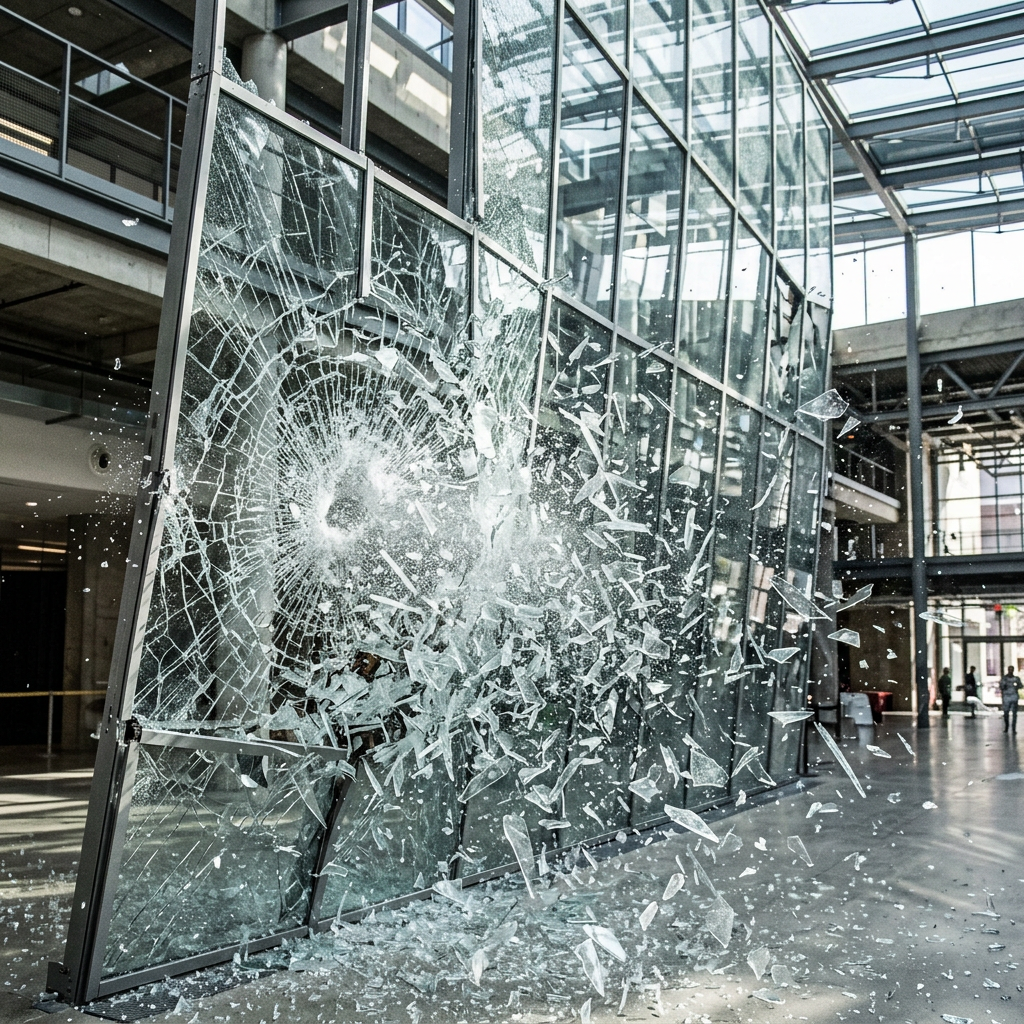
The climax of Liora’s work came not in a lecture hall, but in a broken-down theater. The final event of the Foundation was called the Shattering. Thousands gathered, not to watch a performance, but to create one. In the center of the stage stood a single pane of thick, reinforced glass—a symbol of the digital barrier between humans. One by one, people stepped forward and spoke their truth. Not a scripted truth, but a vulnerable, messy, authentic confession, story, or joke.
When the crescendo of voices reached a certain emotional pitch—a combination of laughter, weeping, and raw sound—the glass cracked. It did not shatter from a specific decibel level, but from the purity of intention behind the sound. In that moment, the silence that had devoured the world’s voices was itself devoured.
Conclusion
The Ninth Foundation did not “fix” communication. It left it bruised, beautiful, and unpredictable. Its legacy is not a product or a piece of software, but a single, unbreakable rule: The voice that shatters the silence is never the loudest, but the most true. We no longer need to find the perfect words. We only need to be brave enough to say the imperfect ones, out loud, in the presence of others. In a world of perfect, silent machines, the cracked voice of a human is the loudest revolution we have left.
Leave a Reply