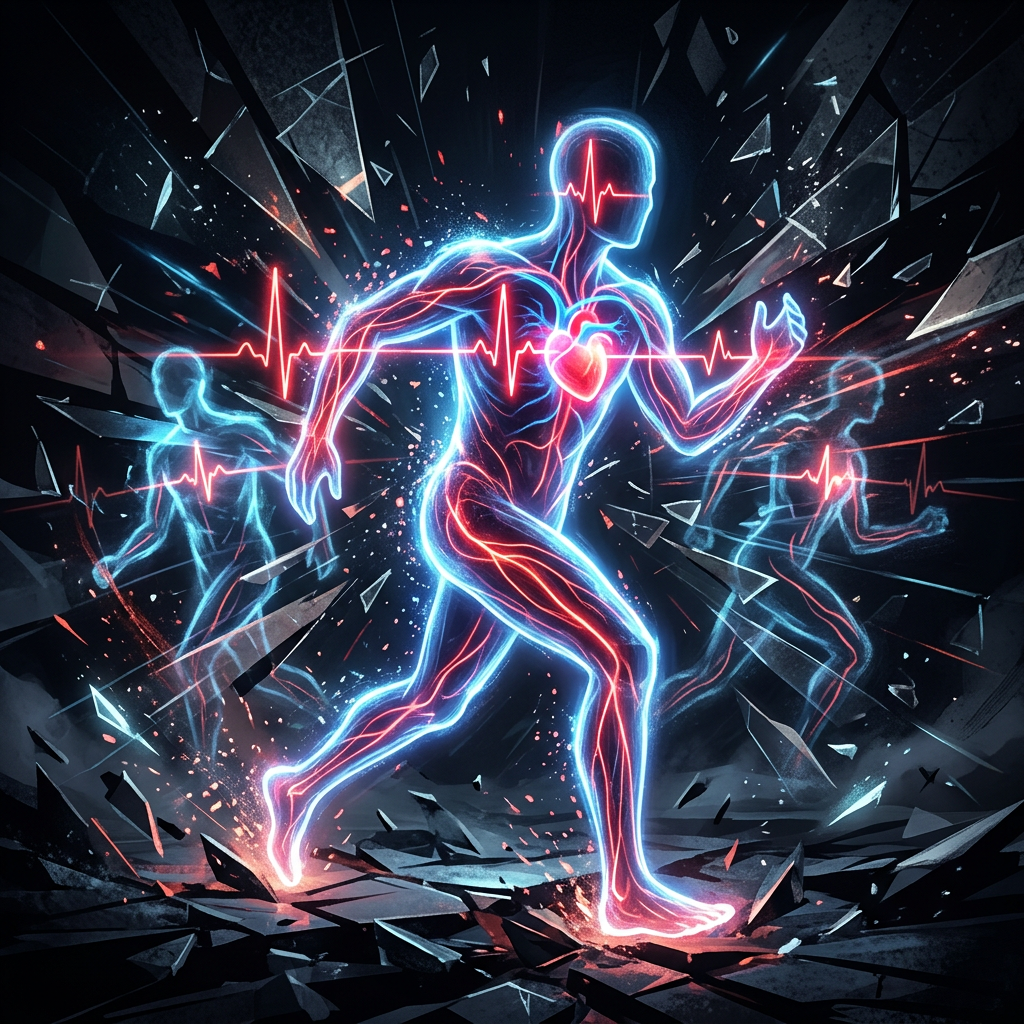
There was a moment—brief, terrifying, and ultimately triumphant—when the world held its breath. For decades, the machine had promised efficiency, speed, and infallibility. Its circuits hummed the lullaby of progress, and humanity grew drowsy in its rhythm. But then, the hum stopped. The screens went dark. The algorithms froze mid-calculation. And in that profound silence, something ancient and resilient stirred. This is the story of the unbroken pulse, the moment when humanity proved it could beat the machine.
The Fall of the Idols: When Machines Went Silent
It began not with a bang, but with a flicker. One by one, the pillars of the digital age crumbled. The global network, once a seamless web, turned to a tangle of dead threads. Factories that boasted “lights-out” production became mausoleums of steel. The great data centers, humming cathedrals of logic, fell into an eerie quiet.
- Transportation halted — autopilots refused to navigate; trains stood frozen on their tracks.
- Finance froze — digital currencies vanished into unreachable vaults; ATMs became concrete tombstones.
- Communication collapsed — social platforms became ghost towns; satellites drifted in silent orbit.
- Healthcare stuttered — robotic surgeons dropped their scalpels; diagnostic AI spat only error codes.
The idols of efficiency had turned to clay. But in the wreckage, humanity discovered a vital truth: the pulse had never stopped. It had merely been drowned out.
A Pulse Beneath the Static: The First Human Spark
When the machines fell, the real network emerged. Neighbors who had never spoken began knocking on doors. Ham radio operators, once a nostalgic hobby, became the new oracles of connection. The first spark was not a byte of data—it was a human voice cutting through the static.
> “I hear you. You are not alone.”
> — The first successful human-to-human transmission after the blackout, from a basement in rural Montana to a school gym in Tokyo.
This was not a return to the past. It was a leap into a new kind of communication. People relearned the art of active listening and face-to-face negotiation. Communities organized through paper maps and public bulletin boards. The spark that revived the world was not electricity—it was empathy.
Crimson Scroll Above the Ruins: A New Market Born
Out of the rubble arose a strange and beautiful economy. No longer driven by instantaneous trades or algorithmic pricing, the market became a living thing. It was marked by a new symbol: the Crimson Scroll—a hand-written ledger passed from person to person, recording promises, barters, and debts.
This new market operated on three principles:
- Trust over verification. If you broke a promise, the entire community knew.
- Skill over data. A carpenter’s worth was measured in the strength of their joints, not their search rank.
- Presence over speed. Transactions required a handshake, a shared meal, or at least a direct gaze.
People traded bread for lessons, tools for shelter, songs for safety. The Crimson Scroll was never encrypted—it was witnessed. And it worked better than any ledger ever had.
The Rhythm of the Living: Algorithms Fade, Heartbeats Rise
With the machines silent, humanity rediscovered its natural cadence. The day was no longer sliced into 50-millisecond chunks of productivity. Instead, it followed the sun, the seasons, and the human heart.
- Mornings were for community work—repairing roofs, planting gardens, teaching children.
- Afternoons were for craft—baking bread, weaving cloth, sharpening tools.
- Evenings were for story—gatherings around fires, where the oldest tales were spoken anew.
Algorithms had promised to predict our desires; they only ever predicted our past. Now, humanity embraced uncertainty as a virtue. The best decisions were made not by crunching data, but by feeling the room, by reading the subtle cues that no machine could model.
> “An algorithm can tell you what you liked. It cannot tell you what you need.”
> — Elder Mei Lin, village council leader
The pulse of the living world—the beat of drums, the rhythm of walking, the cadence of shared breath—became the new operating system of society.
Unbroken and Unbroken: The Seventh Foundation Stands
As generations passed, the memory of the machine age faded into legend. But one institution endured: the Seventh Foundation. It was not a company or a government. It was a living oath passed from teacher to student.
The Foundation taught that the pulse must never be forgotten. Its core tenets:
- Technology is a tool, not a master. Use it, but never rely on it for human connection.
- The unbroken pulse is human resilience. It needs no battery, no signal, no update.
- Every gesture counts. A shared meal, a pat on the back, a letter written by hand—these are the true infrastructure of civilization.
The Seventh Foundation did not reject progress. It remembered the lesson. In a world where machines could fall again, humanity stood—unbroken, unbowed, and forever pulsing.
Conclusion
The story of the unbroken pulse is not a warning against technology. It is a celebration of the human spirit. When the machine went silent, we did not collapse. We rediscovered our own rhythm. We learned that the most powerful network is not made of fiber optic cables, but of hands reaching out, voices speaking truth, and hearts beating in unison. The idols fell, but the pulse remains. And it will never be silenced.
Leave a Reply