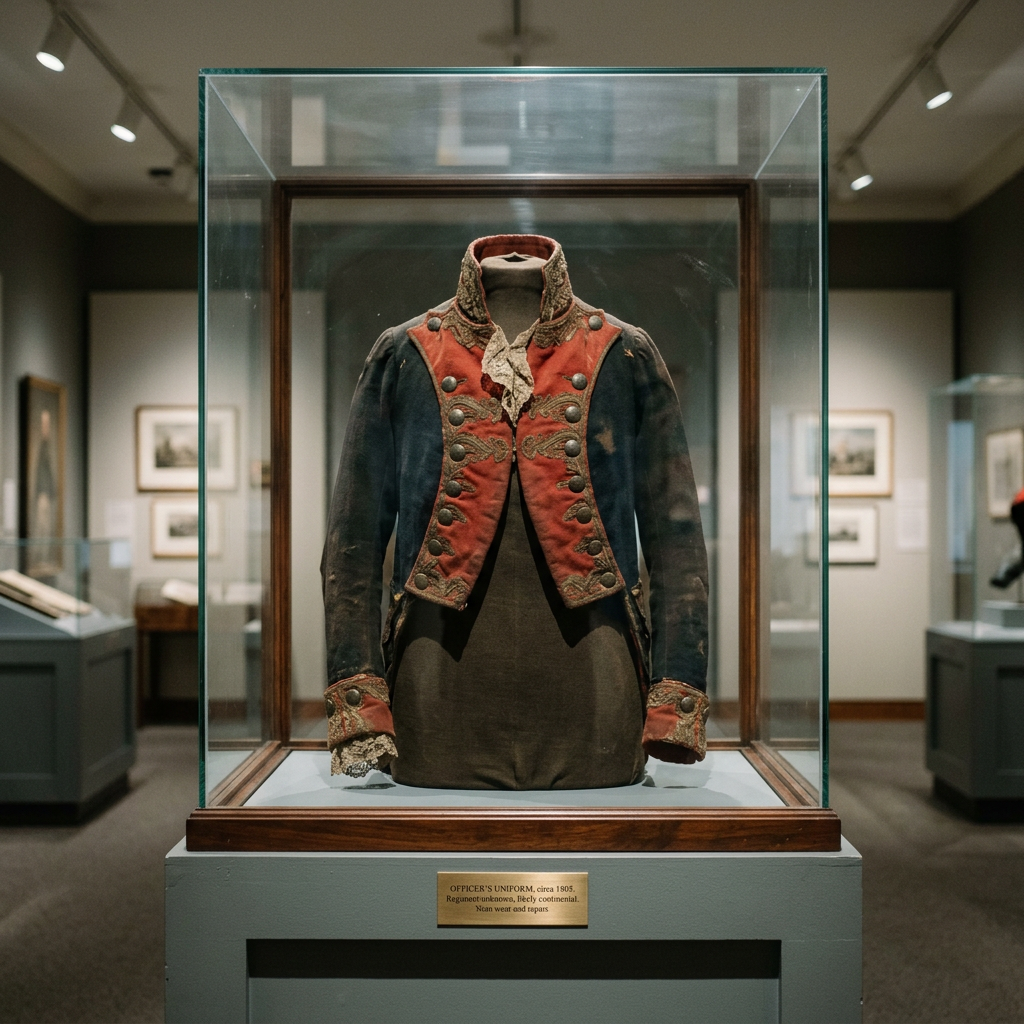
In the shadow of a world on the brink of collapse, the most unlikely heroes often emerge from the quiet corners of history. One such figure was a humble seamstress, her hands calloused from years of threading needles, who became the keeper of a secret so potent it could either end a war or doom millions. This is not a story of generals or politicians, but of a faded jacket, a roll of microfilm, and a revolutionary idea that linked the fates of nations to the world of sports.
The Jacket with a Hidden War‑Ending Secret
The jacket looked like any other piece of worn clothing from the mid‑20th century—threadbare at the elbows, a single brass button missing. But inside its lining, carefully stitched into a tiny pocket, lay a microfilm canister. The seamstress, known only as Clara, had received the jacket from a stranger who collapsed at her doorstep. His last words were a desperate whisper: “Keep it hidden. If this gets out, they’ll stop the war—or start a worse one.”
The microfilm contained data from a top‑secret meeting between rival intelligence agencies. It revealed that for two years, a shadow network of scientists, diplomats, and athletes had been crafting a plan to use an international sports‑investing system to de‑escalate military conflicts. The logic was simple yet radical: if global financial markets were tied to athletic victories, war would become economically unthinkable.
> “War is just a failure of economics,” the lead architect wrote in the memo. “Make peace profitable, and no general can afford a bullet.”
A Seamstress and the Stranger’s Final Words
Clara had spent her life mending clothes for soldiers and refugees. She knew the cost of war better than any diplomat. When the stranger died in her arms, she faced a choice: burn the jacket and forget the secret, or unravel the truth. Her decision was guided by one of his parting phrases: “The needle sews together more than cloth—it mends what is broken.”
She carefully unpicked the lining. The microfilm was tiny, almost invisible. She had no projector, so she held it up to the light of a gas lamp. The images were faint, but the words “Operation Elysium” stood out. This was not a military operation. It was an economic conspiracy to end war by turning every stadium into a negotiation table.
How the System Was Supposed to Work:
- Global Sports Index: Every nation’s gold, silver, and bronze medals would be converted into financial points.
- Peace Dividends: Countries with zero active conflicts would earn bonus investment from a shared fund.
- Automatic Sanctions: Any nation that started a war would see its sports investments frozen, triggering mass unemployment.
- Athlete Ambassadors: Star athletes would become neutral mediators, traveling between hostile states.
Unraveling the Microfilm’s Shocking Proof
Clara eventually found a sympathetic journalist who helped decode the microfilm. The documents included signed agreements from officials in three warring nations, engineering blueprints for a neutral “peace stadium,” and financial ledgers showing billions in hidden accounts—“the Peace Treasury.” The proof was irrefutable.
But there was a darker layer: the same documents revealed that several governments had already tried to sabotage the system. They feared that if peace became more profitable than war, their power would dissolve. The microfilm also contained a list of names—the dead men who knew too much, including the stranger who had sought Clara’s help.
> “The system works,” the final document stated. “But people are afraid of a world without enemies.”
The Sports‑Investing System That Could End War
The core of the plan was deceptively simple. Imagine a world where every Olympic medal, every World Cup match, and every championship bout directly influenced stock markets. Nations would compete not on battlefields, but on fields of play. War would become bad for business—literally.
Here are the key mechanisms that were proposed:
- Peace Bonds: Citizens could buy bonds that paid higher returns when their country had zero military conflicts for a decade.
- Athlete Trusts: Top athletes would manage funds where countries could invest in sports infrastructure instead of weapons.
- War‑Loss Triggers: If a nation launched an attack, its sports‑related stocks would crash within hours, affecting pensions and savings worldwide.
- Neutrality Prizes: Countries that hosted peace summits during major sporting events would get tax breaks and preferential trade deals.
> “Think of it as economic disarmament through competitive athletics,” the memo explained. “The world needs a game more important than war.”
A World Terrified of Peace Through Athletics
When Clara and the journalist tried to publish the story, they faced immediate resistance. Newspapers refused, citing “national security.” Her house was ransacked—but the jacket was already hidden in a different seamstress’s shop across town. The system was never implemented. Why? Because the very people who could have launched it were terrified of its success.
A world that invested in peace would no longer need arms manufacturers, military contractors, or the vast apparatus of conflict. The $1.8 trillion military industry would collapse. Leaders who thrived on fear would lose their grip. And ordinary citizens, suddenly wealthy from peace bonds, might demand a permanent end to all wars.
Lessons from Clara’s Story:
- Secrets are fragile: A single stitch can hide a revolution or bury it forever.
- Fear is the enemy of change: Even a perfect solution fails if people are too afraid to try it.
- Ordinary people matter: A seamstress, a journal, and a needle can outlast entire armies.
Conclusion
The jacket Clara mended is now preserved in a small museum, its microfilm displayed in a glass case—a footnote to history. But the idea of sports‑based peace investing remains a tantalizing “what if.” In an age of renewed conflict, perhaps we should revisit the seamstress’s secret: sometimes the best way to end a war is not to fight it, but to make peace a more profitable game.
> “The needle went through the fabric like hope through despair,” Clara wrote in her journal. “We all have the power to stitch a better world—even if no one ever sees the thread.”
The story of the seamstress, the microfilm, and the secret is a reminder that the most powerful tools for peace are often hidden in plain sight, waiting for someone brave enough to unravel them.
Leave a Reply