When Coffee and Conspiracies Collide
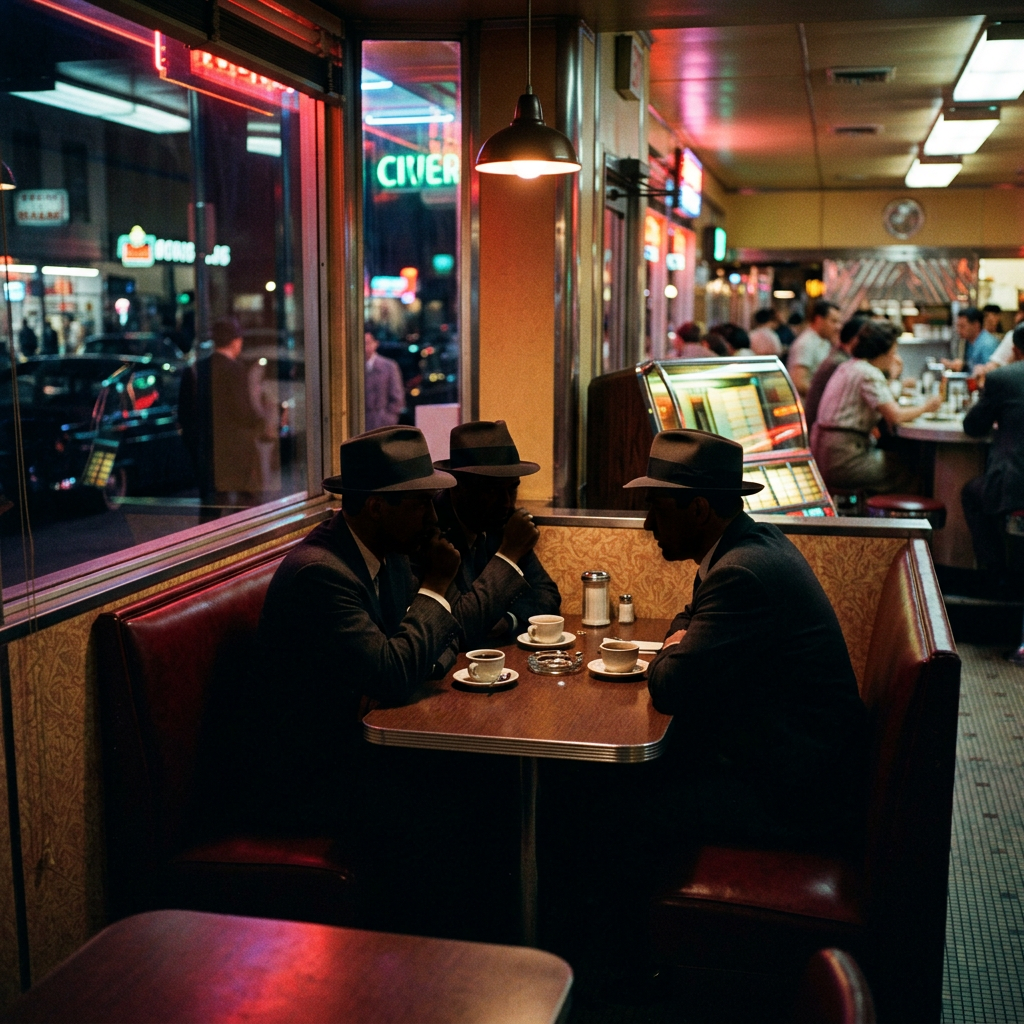
It was a Tuesday like any other at Mel’s Diner—the hum of the griddle, the clatter of plates, and the low murmur of regulars nursing their coffee. I was refilling the ketchup bottles near booth four when two men in dark suits slid into the corner booth. They didn’t look like my usual clientele. They ordered black coffee, no sugar, and spoke in hushed, clipped tones that barely cut through the ambient noise.
But I have good ears. It comes with the job: learning to hear an order for eggs over easy from across the room while the fryer sizzles. That Tuesday, I heard something else entirely. A plot. Not about a rival diner or a stolen pie recipe, but about something far bigger—an algorithm. And they were planning to kill it.
The Code That Crushes Bookies
To understand why these suited strangers wanted this algorithm gone, you first need to know what it did. This wasn’t a simple recommendation engine or a stock market bot. It was a predictive gambling monster—a piece of code that had been quietly eating the lunch of every sportsbook, poker room, and horse track in the state.
> “Every bet I place, it knows. Not guesses. Knows. It’s like playing chess against a machine that can see your next five moves.” — overheard from a broken gambler at the counter
The algorithm, I later pieced together, was called “The Oracle.” It scraped real-time data from thousands of sources—weather patterns, player injuries, referee biases, even social media sentiment—and calculated probabilities with an accuracy that felt supernatural. Bookies were bleeding money. One local gambling ring had lost over three million dollars in a single quarter. The Oracle didn’t just win; it annihilated.
Neutralizing the Neutralizer: A Plan Unfolds
As I pretended to wipe down the adjacent table, the conspiracy came into focus. The men weren’t tech executives or corporate spies. They were enforcers for the underground betting circuit. Their mission, as one of them whispered while stirring his coffee, was to “neutralize the neutralizer.”
The plan was terrifyingly simple:
- Step 1: Identify the server farm where The Oracle’s code was hosted. They already had a name—a mysterious figure they called “The Engineer.”
- Step 2: Physically disable the hardware. Not a cyberattack, but a boots-on-the-ground operation. A targeted power outage and a sledgehammer to the server racks.
- Step 3: Retrieve the source code. They wanted to delete the algorithm permanently, but also to sell the blueprint to the highest bidding syndicate.
- Step 4: Make it look like a random burglary. Busted locks, stolen electronics, no digital fingerprints.
The key takeaway they stressed to each other: Speed was everything. They had 48 hours before The Oracle’s next major update, which would render their brute-force plan useless.
Black SUVs and Burning Questions
Three days later, I was closing up the diner when a fleet of black SUVs rolled into the parking lot. My heart slammed against my ribs. But the man who stepped out wasn’t one of the conspirators. He wore a tailored coat and glasses, and he moved with the unsettling calm of someone who owned the room.
He sat at the counter, ordered a slice of apple pie, and said, “You heard them, didn’t you?”
I froze. He smiled. “I’m The Engineer. And I’ve been watching you watch them.”
He explained everything over cold pie and warm coffee. The Oracle wasn’t just his creation—it was his retirement plan. But he’d known for months that the bookies were onto him. He had embedded a dead man’s switch in the code. If he didn’t log in every 72 hours, The Oracle would self-destruct, its secrets scattered into uncrackable fragments across the dark web.
> “They didn’t want to kill the algorithm,” he said, pushing his glasses up. “They wanted to capture it. Torture it out of its cage. I just let them think they could.”
The men in the booth had been recorded, their voices and faces matched to known associates of a major gambling cartel. The Engineer had already tipped off the FBI. The black SUVs weren’t for me—they were here to make arrests.
A Waitress vs. the Algorithm Empire
So what did I do? I poured the man another cup of coffee and asked the question that had been gnawing at me: “Why kill your own creation?”
He tapped the table. “Because The Oracle was a double-edged sword. It could predict any game, any outcome. But it also predicted this—the moment someone would try to take it. It even predicted you, standing here, overhearing the plot.”
I blinked. “So… the algorithm wanted you to shut it down?”
He nodded slowly, almost reverently. “The Oracle calculated that its continued existence would lead to a cycle of violence, extortion, and eventual collapse. The most profitable outcome was its own destruction. That’s what it told me, two years ago. I’ve been setting this up ever since.”
I didn’t know whether to feel impressed or horrified. The machine had engineered its own funeral, and I had been a bit player in its grand design—all because I was refilling ketchup bottles at the wrong (or right) booth.
Conclusion
The conspirators were arrested that night. The bookies lost their biggest threat. The Engineer disappeared into witness protection, his genius safely hidden. And The Oracle? It shut down exactly as planned, leaving behind nothing but server logs and a single encrypted file—which, I’m told, contained a simple message: “Thank you for listening.”
As for me, I still work at Mel’s Diner. The coffee is still lukewarm, the regulars still complain about the pie, and I still keep my ears open. Because in a world where algorithms can plot their own endings and diner waitresses become accidental whistleblowers, the most dangerous thing you can do is listen.
And sometimes, the best tip you’ll ever get isn’t folded cash—it’s a warning that could save a system, a life, or the very fabric of a shadow economy you never knew existed.
So listen closely. You never know what plot is brewing at the table next to yours.
Leave a Reply