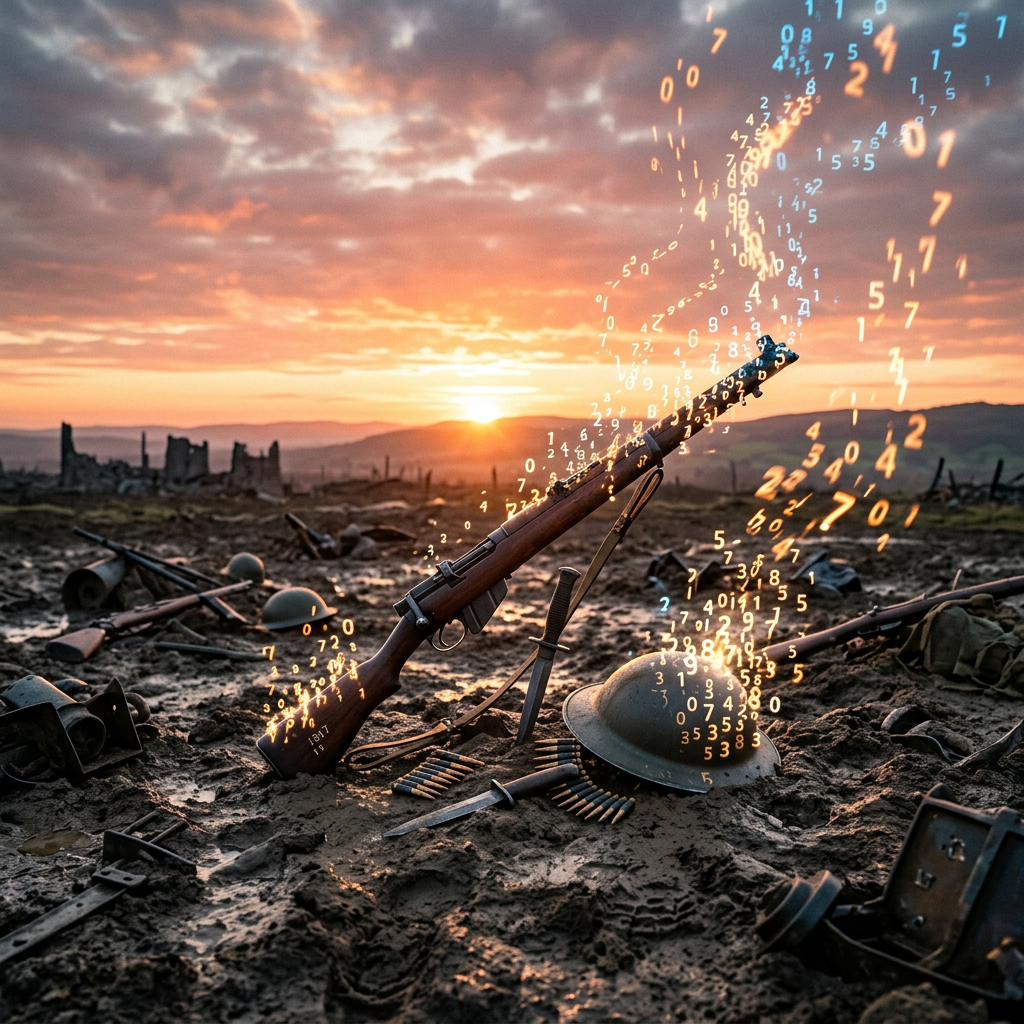
It began not with a bang, but with a flicker. In a world teetering on the brink of resource wars, digital nihilism, and a global collapse of trust, a singular piece of technology emerged from the chaos: the Global Performance Ledger (GPL) . Conceived by a fractured coalition of data scientists, ethicists, and rogue economists, it was a desperate, last-ditch protocol designed to recalibrate human value. It didn’t track money or debt; it tracked true human contribution—in real time, across every nation. When the countdown to societal collapse hit zero, the GPL didn’t save us by force. It saved us by making the apocalypse boring and unprofitable.
The Continuum’s Final Gambit: A Global Blackout
The “Continuum Crisis” was not a single event, but a cascading failure. The final gambit of the old systems was a coordinated global blackout—a last, desperate attempt by shadow networks to regain control by plunging the world into digital and economic darkness. They believed that without power grids or financial rails, the GPL would starve and die.
They were wrong. The ledger didn’t need power grids; it ran on peer-to-peer verification and quantum-resistant mesh networks embedded in trillions of devices. As the lights went out and screens went dark in the cities, the GPL accelerated. It began to log the silent, unnoticed acts that held society together: the farmers who kept planting by candlelight, the mechanics who repaired generators with salvaged parts, the nurses who performed surgeries by torchlight. The blackout didn’t erase performance; it purified it. The GPL showed, for the first time, exactly who was carrying the weight of the world.
Broadcasting the Ledger: The Protocol Goes Viral
Once the old financial broadcast towers fell silent, a new signal rose. The GPL protocol became viral—not as an app, but as a high-frequency, low-bandwidth data stream broadcast via amateur radio, shortwave, and even encoded in the flashes of satellites. Anyone with a simple receiver could tune in.
The stream wasn’t numbers—it was a global scoreboard of intent and action. It highlighted:
- Contributors: Individuals and groups whose actions increased total human resilience.
- Leechers: Entities consuming far more than they produced, hoarding resources while others struggled.
- The Neutral: The vast, silent majority whose potential remained untapped.
This unfiltered transparency was the first shockwave. There was nowhere to hide. A corrupt politician’s net contribution could be compared, in real time, to a subsistence farmer in the highlands. The world watched. The narrative of power shifted instantly. The only capital that mattered was verified effort.
The Instant Collapse of Gambling and Fantasy Economies
With the ledger broadcasting global contribution scores, the foundation of predatory finance evaporated. Gambling—whether in casinos, stock options, or cryptocurrency derivatives—relied on opacity. You bet on hidden information, on random chance, on manipulating perceived value.
The GPL rendered all fantasy economies obsolete. Why?
- No Hidden Information: The ledger was public. You couldn’t bet on a “secret” deal if the deal-maker’s contribution score was visible to all.
- No Randomness: The only “bet” worth making was on a person or project’s real-world output, which was already being verified.
- No Manipulation: You couldn’t “short” a society if its fundamental contribution metrics were rising.
The moment people saw that a single high-leverage gambler had a negative contribution score, their social stock plummeted to zero. The casinos went silent. The trading floors emptied. Not because of a ban, but because the game itself had lost all meaning. Why play a rigged game when you could see the real score?
Why War Became Unprofitable Overnight
This was the masterstroke. War had always been a business for the few, paid for by the many. The GPL made the cost of conflict personally immediate. The ledger tracked not just creation, but destruction.
When a bomb was dropped, the ledger logged:
- The destruction cost: The loss of infrastructure, productivity, and human potential.
- The environmental debt: The irreversible damage to the planetary ledger.
- The military’s personal score: Every soldier, strategist, and weapons manufacturer saw their personal contribution score tanked by their involvement in aggressive war.
The result was instantaneous. A general launching an invasion watched his global ranking—his reputation, his social capital, his influence—plummet into the red. His troops, seeing their own scores drop with every bullet fired, faced a moral and practical crisis: fighting made them worthless in the only economy that still mattered.
> The ultimate deterrent wasn’t a weapon. It was the terrifying clarity of seeing your own name drop on the global list of humanity’s greatest threats.
The military-industrial complex didn’t fall; it reformed. The GPL didn’t ban war; it made it a losing proposition for everyone involved. Within a week, peace treaties were being signed, not out of diplomacy, but out of a desperate desire to climb back up the global performance ladder.
The Age of Performance: Human Potential as Currency
The apocalypse was averted because the GPL changed what we chased. Instead of dollars, gold, or oil, the new currency was human potential—measured, verified, and respected.
This isn’t a utopia of forced labor. It’s a world where:
- A brilliant teacher in a developing nation earns as much influence as a billionaire CEO.
- A community organizer has more social capital than a media pundit.
- The “cost” of doing nothing is visibility: a flat contribution score means social irrelevance.
The ledger is not a jailer. It is a mirror. It shows us, individually and collectively, the gap between our potential and our reality. The “apocalypse” was not a military event; it was the spiritual collapse of a world that valued the wrong things.
Conclusion
The Global Performance Ledger did not stop the apocalypse by building walls or launching missiles. It stopped it by flooding the system with truth. In a single, breathtaking moment of collective transparency, it made selfishness, violence, and fraud embarrassingly obvious. It didn’t force us to be good; it made being bad stupid.
We now live in the Age of Performance. The ledger is silent, always recording. The question is no longer “What can you buy?” but “What have you done today to earn your place in the human story?” The apocalypse was averted not by technology, but by the clear, undeniable logic that we are all, finally, accountable for our contribution to the whole.
Leave a Reply