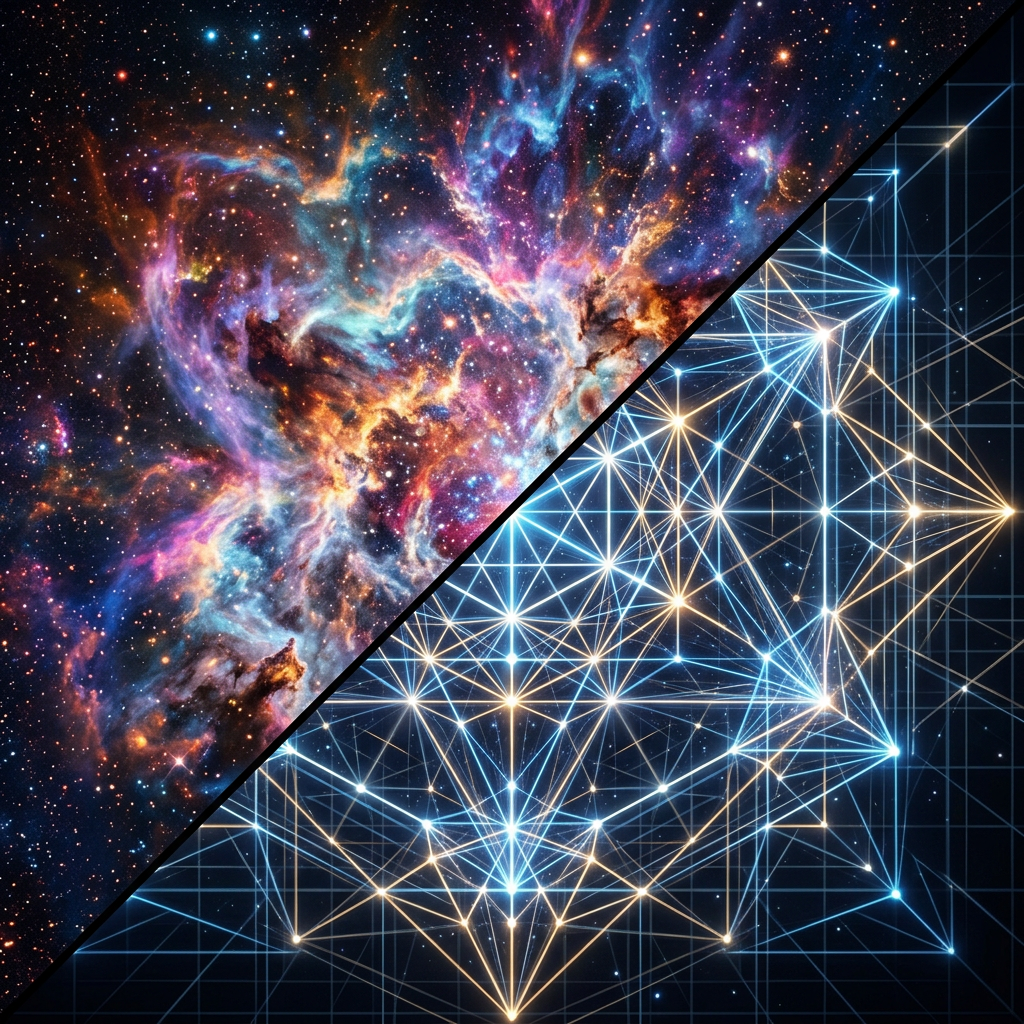
In the far reaches of speculative philosophy and futuristic thought, a quiet war has been brewing—not fought with lasers or starships, but with ideas. At the heart of this conflict lies a single, deceptively simple concept: entropy. Is it the great unraveler, the force of cosmic decay that drags everything toward chaos? Or is it, as a radical new movement claims, the truest expression of freedom itself? Welcome to the Entropy Rebellion, where the line between destruction and liberation blurs, and the very fabric of reality is up for debate.
The Rise of the Entropics: Chaos as Ideology
The Entropics are not your typical doomsayers. They don’t fear the heat death of the universe; they embrace it. To them, chaos isn’t a bug in the cosmic system—it’s the only feature that matters. Their ideology rests on a few core tenets:
- Unpredictability is sacred. A universe that can be fully calculated and predicted is a prison.
- Decay is natural. Order is an illusion imposed by consciousness, a desperate attempt to impose meaning on a fundamentally random reality.
- Freedom means spontaneity. Only in a chaotic system can true, unforced novelty emerge.
> “The universe is not a clockwork—it is a storm. Why would you try to tame the wind?”
This quote, often attributed to the founder of the Entropic movement, captures their disdain for any attempt to organize, categorize, or predict. They see technology, law, and even language as tools of oppression because they reduce the raw potential of chaos into manageable, boring patterns.
When Freedom Means Rejecting Cosmic Transparency
Imagine a world where every action, every thought, every quantum fluctuation is recorded in a universal ledger. This is the nightmare the Entropics warn against. They call it Cosmic Transparency—the idea that the universe is, at its core, a knowable system. To them, such transparency is a form of tyranny.
Their arguments are layered:
- Privacy on a cosmic scale: If the universe is transparent, nothing is ever truly lost or forgotten. The Entropics argue this eliminates the possibility of genuine change.
- The death of surprise: A fully mapped reality offers no room for wonder. Mystery is not an absence of knowledge, but a positive force that keeps existence vibrant.
- Redemption through chaos: In a chaotic system, past mistakes can be truly erased, and new beginnings are possible precisely because information decays.
To a member of the Entropy Rebellion, the most radical act of freedom is to introduce noise, randomness, and unpredictability into every system—especially the ones that claim to bring order.
> Tip for understanding the movement: Don’t confuse nihilism with entropy worship. The Entropics do not believe in nothingness. They believe in infinite possibility, which only exists when control is abandoned.
The Seven Ascended: Defenders of a New Order
Opposing the Entropics are the Seven Ascended, figures who have supposedly transcended normal human limitations to perceive the underlying structure of reality. They see the universe not as a storm, but as a grand, interconnected pattern—a Cosmic Ledger that records all events and balances all equations.
Each Ascended represents a different facet of order:
- The Architect – Sees the geometric perfection underlying all matter.
- The Chronicler – Holds the memory of every event, past and future.
- The Harmonizer – Aligns energy flows to minimize waste and suffering.
- The Watcher – Detects deviations from the universal pattern.
- The Anchor – Stabilizes reality in places where entropy threatens to cascade.
- The Weaver – Interlaces cause and effect into a coherent narrative.
- The Final One – Whose purpose remains a mystery, even to the other six.
The Ascended argue that entropy is not a force for freedom but for erasure. Without order, nothing can be built, nothing remembered, nothing loved. They see the Entropics as children playing with fire in a library made of paper.
Ideological War: Unpredictability vs. Cosmic Ledger
The conflict between these two worldviews is not just philosophical—it has practical implications for how we live, govern, and even think. Consider these battlefronts:
| Domain | Entropic View | Ascended View |
|---|---|---|
| Justice | Let chaos correct imbalances; no permanent records | Maintain a perfect ledger of actions and consequences |
| Technology | Build systems that fail gracefully and unpredictably | Create stable, self-correcting networks |
| Knowledge | Embrace ignorance as a source of wonder | Seek complete understanding |
| Art | Random generation, chance operations | Formal composition, harmonic structure |
The Entropics see the Cosmic Ledger as a surveillance state for the soul. The Ascended see the Entropic embrace of chaos as a slow suicide of meaning. Neither side can compromise without betraying its core belief.
> “You cannot negotiate with someone who believes that losing is a form of winning,” an Ascended once said, referring to the Entropic belief that destruction is just another form of creation.
Final Confrontation: Entropy’s Last Stand
If the battle ever reaches a climax, it may not be decided by force, but by a single, profound question: Can order and chaos coexist, or must one ultimately consume the other?
Some thinkers propose a middle path—a universe where entropy is not defeated but channeled. Imagine:
- Controlled entropy zones where randomness is preserved for creative purposes.
- Order filters that protect fragile structures from total decay.
- A dynamic equilibrium where the Cosmic Ledger and the Entropic Storm exist in tension, like a star held together by the war between gravity and fusion.
But the most radical Entropics reject even this compromise. They say that any cage, even a gilded one, is still a cage. The Final Confrontation, then, is not about winning—it’s about choosing which reality you want to inhabit.
> Final thought: Perhaps the real rebellion is not choosing chaos or order, but realizing that both are necessary. The universe needs its architects and its storms. The question is: which one are you, right now, in this moment?
Conclusion
The Entropy Rebellion is more than a thought experiment—it is a mirror held up to our own anxieties about control, freedom, and the unknown. Whether you side with the Entropics’ love of raw possibility or the Ascended’s pursuit of cosmic harmony, the conflict reminds us that the universe is not a settled place. It is a debate, a dance, a war without end. And we are all participants, whether we know it or not.
Leave a Reply