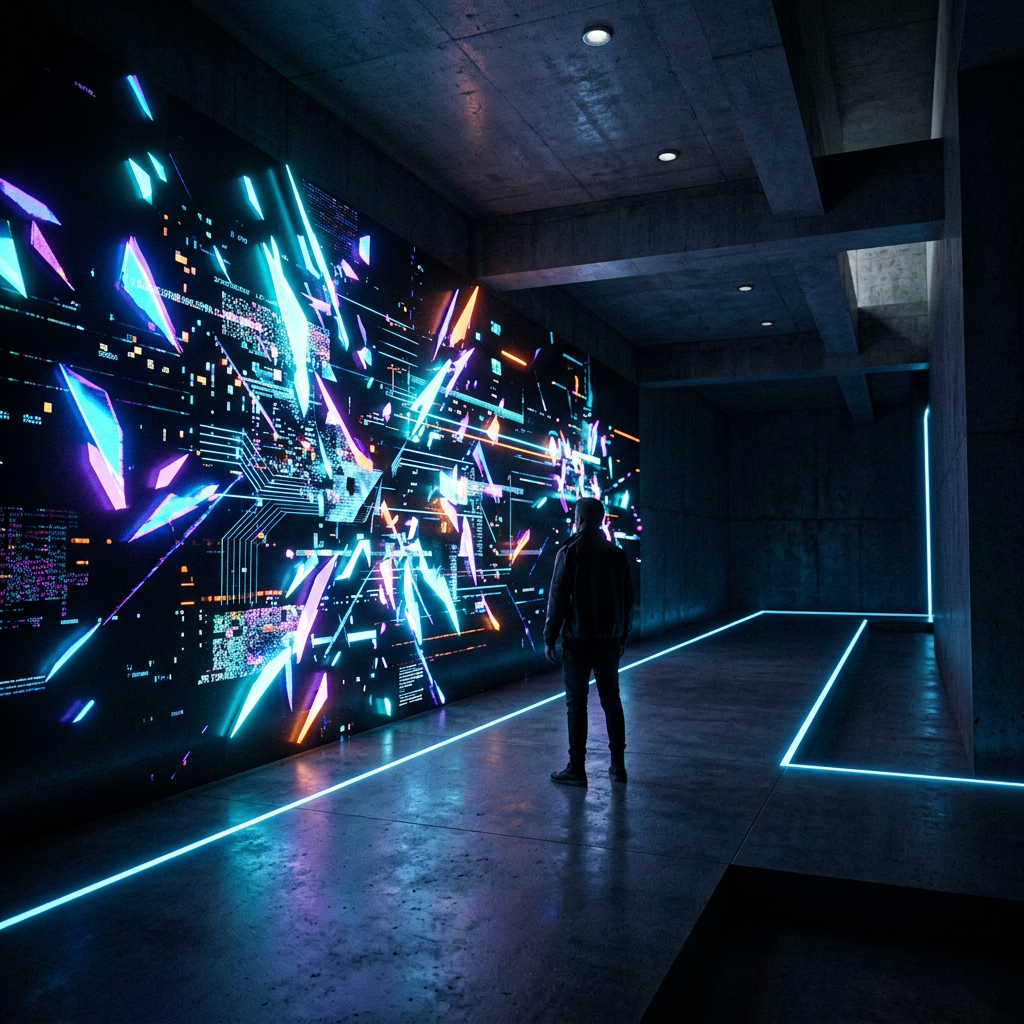
In the quiet corridors of the human mind, a battle is brewing—one that doesn’t rely on bullets or borders but on the very fabric of how we perceive reality. We live in an age of unprecedented information, yet we crave certainty more than ever. But what if certainty itself is the trap? What if a new order has emerged, one that thrives on the unpredictable? Welcome to The Order of the Uncertain, a philosophical and psychological war for the ultimate prize: the human heart.
The Philosophy of Chaos: A New Continuum Rises
At its core, The Order of the Uncertain isn’t a physical army; it is a meme—a living idea that spreads through culture. Its central tenet is that humanity has become too comfortable with linearity. We’ve built systems of finance, governance, and social interaction on the illusion that tomorrow will look like yesterday. The Order proposes a radical shift: embrace chaos as a creative force.
- Rejection of Prediction: Traditional systems try to calculate risk. The Order argues that true freedom lies in accepting the incalculable.
- Dynamic Identity: Instead of fixed roles (employee, citizen, consumer), it champions a fluid self that adapts to random input.
- Aesthetic of Disruption: They see beauty not in symmetry, but in glitches, errors, and unexpected turns.
This philosophy isn’t nihilism; it’s a call to see uncertainty not as a threat, but as the only true constant.
Nostalgia as a Weapon: Selling the Old World’s Luck
To fight this new continuum, the established powers—governments, corporations, legacy media—have deployed a powerful counter-weapon: nostalgia. They sell the idea that the “old world” had luck on its side. The past is romanticized as a time when effort directly led to reward, when things made sense.
> “Remember when you could trust the system? Remember when hard work guaranteed a paycheck?”
This nostalgic pull is a sales pitch. It promises a return to a state of low entropy, where the outcomes are predictable and safe. But it’s a false promise. The “luck” of the old world was often just hidden privilege. The Order of the Uncertain sees through this, arguing that nostalgia is a pacifier that stops us from adapting to the actual flow of time.
Breaking the Ledger: The Attack on Predictability
The most revolutionary act of The Order is its attack on what they call “The Ledger.” The Ledger represents all systems of record—credit scores, employment histories, social media algorithms that predict our behavior. It is the architecture of predictability.
The Order’s methods are subtle:
- Intentional Glitches: Creating random “errors” in data streams to disrupt algorithmic profiles.
- Strategic Spontaneity: Encouraging actions that break daily routines without reason, making human behavior harder to model.
- Synchronicity Seeds: Planting small, random acts of kindness or disruption to create new, unpredictable social connections.
They argue that being predictable is a form of slavery. By breaking the ledger, they hope to reclaim the complexity of being human.
The Seven’s Last Stand: Code Meets Human Belief
The old guard—what we might call “The Seven” —represent the technocratic elite who believe the world can be reduced to code. They are the engineers of the soul, building systems that assume human desire is a problem to be solved.
The Seven’s last stand happens not in a boardroom, but in the user interface of every app and every news feed. They try to contain the chaos:
- Pushing Algorithmic Sanctuaries: Curating feeds that filter out truly novel or threatening ideas.
- Nudging Back to Normality: Using dark patterns to guide users back to predictable, passive consumption.
- Weaponizing Risk Aversion: Making “safe” choices feel like the only rational ones.
But the conflict is existential. Can code truly capture belief? The Seven believe they can optimize the human spirit. The Order believes the spirit is, by definition, unoptimizable.
War for the Heart: Faith Versus Manufactured Randomness
This brings us to the final front: the war for the human heart. It is a battle between two types of unpredictability:
| Faith (The Order) | Manufactured Randomness (The Seven) |
|---|---|
| Emergent from authentic experience | Designed by an algorithm |
| Leads to genuine surprise | Leads to calculated serendipity |
| Requires vulnerability | Requires data input |
| Creates meaning | Creates engagement |
The Seven are not stupid; they can generate fake randomness—slot machines, surprise drops, mystery boxes. This is manufactured uncertainty, a controlled shock designed to keep you hooked. The Order of the Uncertain, however, advocates for raw uncertainty—the kind that asks you to step off the path without a map.
The winner of this war will determine whether uncertainty becomes a cage or a canvas.
Conclusion
The battle for the human heart is not fought with swords, but with perspectives. In a world desperate for guaranteed outcomes, The Order of the Uncertain offers a terrifying and beautiful proposal: that the lack of a guarantee is the very thing that makes life worth living. To defy the ledger, to embrace the glitch, to find peace in the unknown—this is the new stance. Whether you side with the safe simulations of The Seven or the chaotic faith of The Order, one thing is clear: the war is already inside you. The question is not if you will be uncertain, but how you will choose to live with it.
Leave a Reply