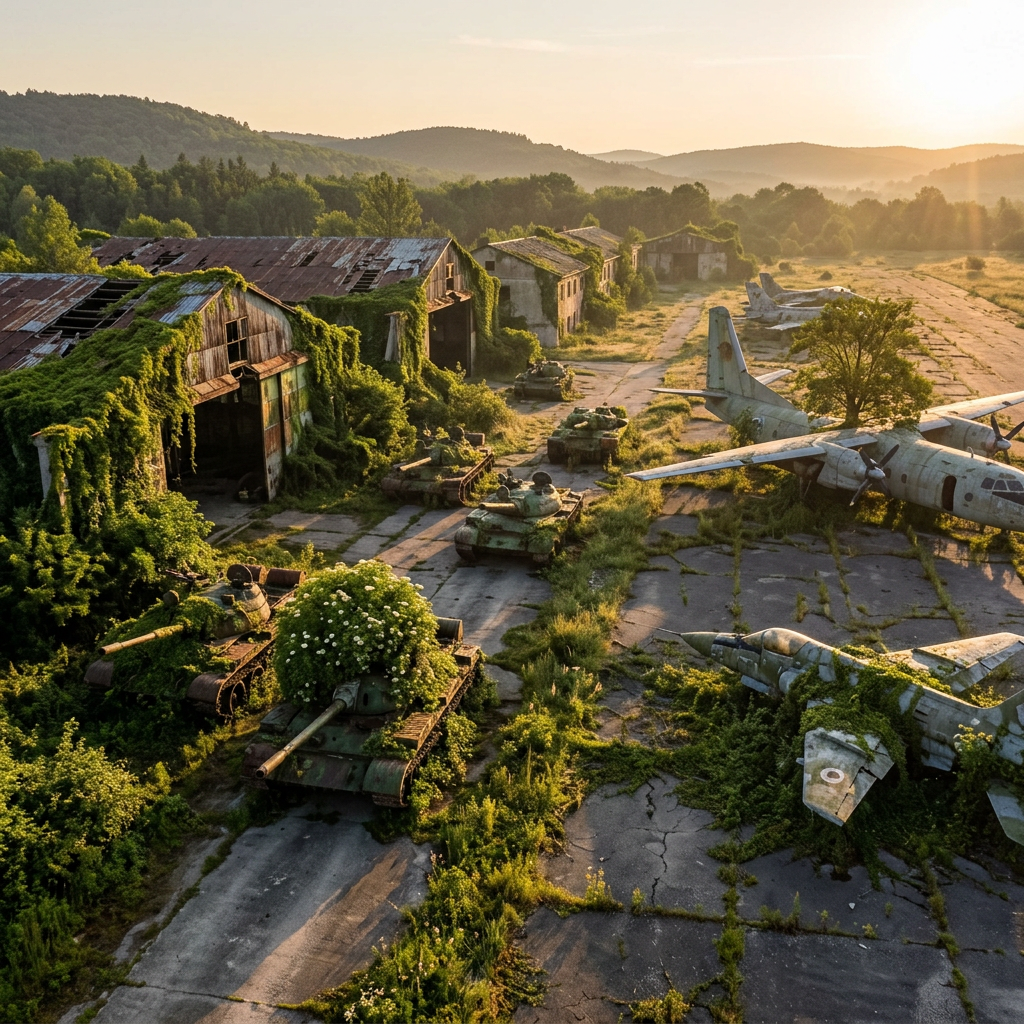
The Great Silence: Life Without Entropy
Imagine a world where the dice never roll. A universe where every outcome is predetermined, every path is paved, and every consequence is known before a single step is taken. This is the landscape of a post-chaos reality—a world where the wild, unpredictable energy that fuels creativity, discovery, and even survival has been extinguished. At first glance, it sounds like paradise: no accidents, no surprises, no risk of failure. But as we peel back the layers, we find that peace without chance might be a silent, sterile prison.
> “Chaos is not the enemy of order; it is the raw material from which order is born.” — A quiet whisper from the edge of a dying storm
When we strip away randomness, we remove the very friction that drives growth. In nature, entropy ensures that systems break down, only to be rebuilt stronger. In human existence, uncertainty forces us to adapt, to innovate, to build. A world without chance might be peaceful, but it is also static. The great silence that follows is not one of tranquility, but of stagnation.
When Military Budgets Collapse After Chaos Ends
Nations have long built their defenses on the assumption of unpredictability. Military strategies are designed to counter the unknown: surprise attacks, shifting alliances, technological shocks. But what happens when the fog of war becomes crystal clear? When every enemy move is foreseen, and every outcome is calculated before a shot is fired?
- Budget reallocation: Trillions of dollars once funneled into intelligence, weapons development, and contingency planning would suddenly have no purpose. Governments would scramble to justify spending on a necessity that no longer exists.
- Job displacement: Entire industries—from defense contractors to cybersecurity analysts—would vanish overnight. The peace that follows chaos might be barren of employment for millions.
- Psychological shift: The military mindset, rooted in vigilance and reaction, would become obsolete. A generation trained for conflict would face an existential crisis: what does it mean to protect a nation when there is nothing to protect against?
Yet, this collapse could also be a catalyst. Freed from the burden of defense, resources could flow into education, healthcare, and environmental restoration. The question is whether humanity can pivot fast enough to avoid a vacuum of purpose.
Gambling’s Ghost: Rebuilding Economies Without Risk
The global economy is built on a foundation of calculated risk. From stock markets to insurance premiums, chance is the engine that drives profit and loss. Remove randomness, and the entire system must be reimagined.
Consider these pillars of our financial world:
- Insurance: Without accidents, disasters, or unexpected events, the insurance industry vanishes. Premiums become meaningless when every outcome is guaranteed.
- Investing: Venture capital thrives on uncertainty—funding startups with a 90% failure rate in hopes of a unicorn. In a no-risk world, the startup ecosystem would collapse, replaced by deterministic planning.
- Gambling and speculation: Entire sectors—from casinos to high-frequency trading—would become ghost towns. The thrill of the bet would be replaced by a sterile calculation of guaranteed returns.
> “Risk is not just a game; it is the heartbeat of opportunity. Without it, the market becomes a museum.” — Anonymous economist from a world without variance
Rebuilding would require a shift from probabilistic thinking to optimization. Economies might become more efficient, but they would lose the spark of discovery. The ghost of gambling would haunt every transaction, a reminder of the excitement we sacrificed for stability.
The Seven’s Mission: Teaching Peace Beyond Probability
In this new reality, a group known as The Seven emerges—a coalition of philosophers, scientists, and educators tasked with a singular mission: to teach humanity how to thrive without chance. Their curriculum is radical, focusing on deterministic flourishing.
Key lessons from The Seven include:
- Acceptance of boredom: Without risk, life can feel monotonous. Students learn to find joy in routine and predictability rather than resisting it.
- Creativity within constraints: Art and innovation are no longer born from accident. Instead, they are cultivated through intentional variation—controlled experiments that mimic chance without its uncertainty.
- Community resilience: Social bonds are strengthened not by shared crisis, but by deliberate cooperation. Trust becomes a mathematical certainty, not a leap of faith.
The Seven’s mission is not to erase memory of chaos, but to redirect human energy toward purposeful existence. Their greatest challenge? Convincing people that a peaceful life can still be meaningful.
Shadows of the Continuum: Can Humanity Thrive Without Chance?
We stand at the crossroads of a continuum. On one end lies the turbulent beauty of chaos—full of pain, surprise, and growth. On the other, the serene silence of determinism—safe, but hollow. The question is not whether peace can survive without chance, but whether humanity can.
Consider the shadows that follow:
- Loss of agency: If every outcome is known, does free will become an illusion? The ability to choose loses its power when the result is preordained.
- The death of discovery: Science advances through unexpected results. Without chance, would we have discovered penicillin, the microwave, or gravity? Innovation might become a mechanical process, devoid of eureka moments.
- Emotional atrophy: Joy, fear, and hope are deeply tied to uncertainty. A world without chance risks eroding the very emotions that make us human.
> “Peace without chance is a garden without wind—beautiful, but forever still.” — Final note from The Seven’s manifesto
Conclusion
As we ponder the death of chaos, we must ask ourselves: Is peace worth the price of predictability? Perhaps the answer lies not in choosing one extreme over the other, but in finding a balance—a world where chance exists but is tempered, where risks are calculated but not eliminated. The silence after chaos dies is not an end, but a question. And it is our answer—our willingness to embrace a little uncertainty—that will determine whether we merely survive or truly thrive.
Leave a Reply