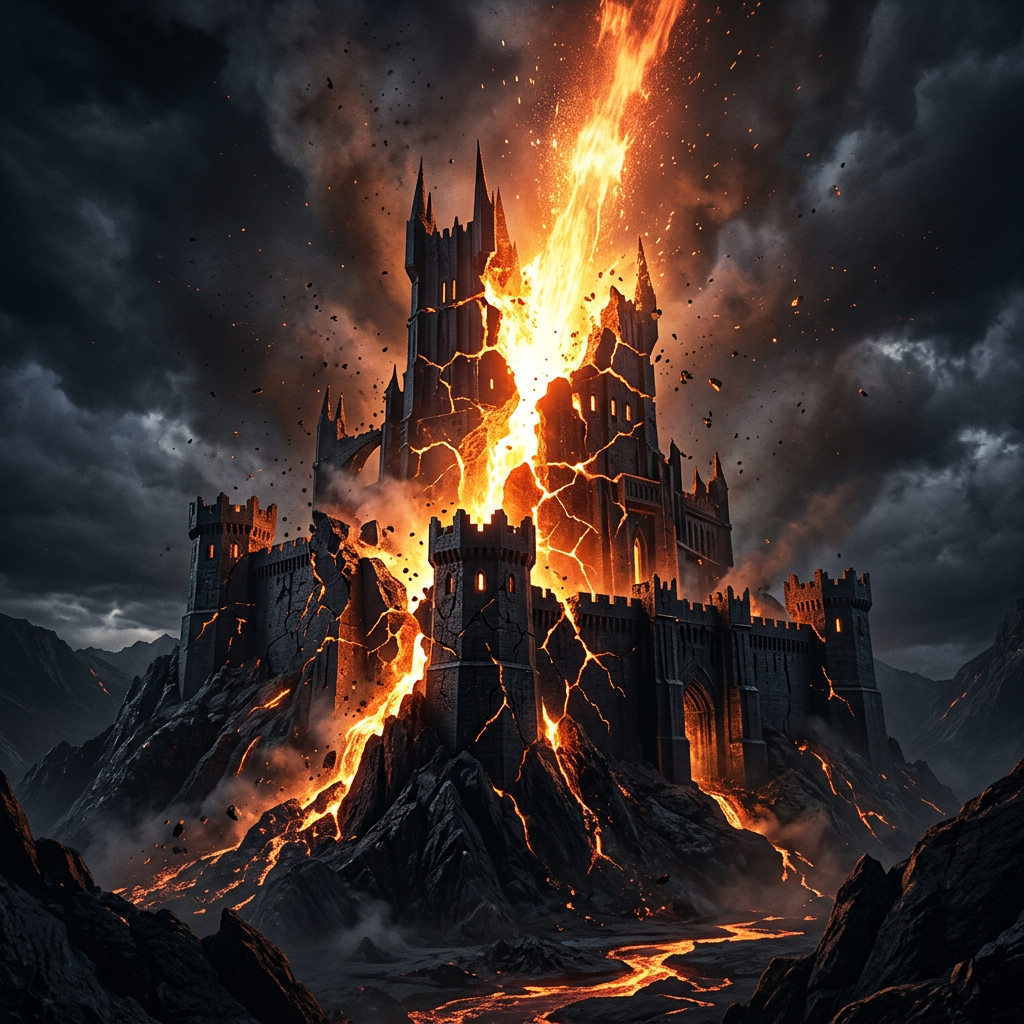
In the volatile realm where fate and fire converge, few names echoed with as much dread and reverence as The Ember Citadel. For generations, this fortress of chance stood as a monument to risk and reward, a place where fortunes were made and unmade in the blink of an eye. But every legend has its twilight, and the Citadel has breathed its last. What follows is the chronicle of its spectacular, fiery downfall.
The Ember Citadel’s Final Breath
The collapse was not a subtle affair. It was a symphony of cracking stone, roaring flame, and the collective gasp of a thousand witnesses. The Ember Citadel—once a towering stronghold built from obsidian and molten will—crumbled inward, consumed by the very element that gave it life. The air turned thick with ash, and the ground trembled as the Wager’s heart, the Furnace of Fortune, finally choked on its own design.
- Structural Integrity Failed: Support pillars, etched with unstable runes of luck, shattered simultaneously.
- The Furnace’s Meltdown: The core wager engine overheated, triggering a chain reaction.
- The Glassriver Flood: A river of molten glass, once the building’s lifeblood, breached its containment and engulfed the lower halls.
Witnesses reported a final, blinding flash—a gamble that paid the ultimate price. The Citadel did not just fall; it immolated itself in a final, defiant act of chance.
Selene Witnesses the Wager’s Collapse
Among the survivors, Selene, a professional risk-weaver and long-time patron, stood at the observation terrace when doom arrived. Her account is chilling. She described the moment not as a disaster, but as a reckoning.
> “The dice in the main hall didn’t stop rolling. They kept tumbling, even as the ceiling rained fire. It was as if the building itself refused to admit it had lost. Then, with a sound like a god sighing, it let go.”
Selene’s testimony highlights a cruel irony: the same mechanics that created incredible wins—the cascading runes, the heated probability engines—were the very systems that spelled the Citadel’s doom. She escaped with only a scarred arm and a bag of ashes she swears was once a winning hand of cards.
- Key Observation: The floorboards of the Hall of Pacts buckled before the flames reached them.
- Survival Tip: Selene advises always knowing the nearest crush-zone exit, not just the fire escapes.
- The Loot: A single, unbroken Dragonbone Die was recovered from the rubble. It now rests in a museum, forever showing the number 1.
Ashen Scrolls Foretell the Stronghold’s Doom
But was the fall truly an accident? Ancient ashen scrolls, recovered from the Citadel’s deepest vault, suggest a prophecy. These forgotten documents, brittle with age and written in a dialect of fire-script, detail a “Stronghold of One Final Bet.”
The scrolls state:
> “When the House of Embers refuses to honor a loss, the Furnace will demand the greatest payment. The Wager will consume its own walls, and only the silent dice will remain.”
This cryptic text was dismissed as myth for decades. The Citadel’s masters believed they could cheat fate by constantly re-forging their luck matrices. The scrolls, however, were explicit: the Stronghold was always a temporary bet against the inevitable. The collapse was not a malfunction—it was the settlement of a debt older than the building itself.
Crumbling Foundations of Chance and Fire
Let’s break down the engineering and esoteric failures that led to the disaster. The Citadel was built on two pillars: arcane chance-magic and geothermal fire-runes.
Reason 1: The Runestone Overload The Wager Stronghold relied on Lodestones of Probability to tilt luck in the house’s favor. These stones required constant cooling. When the cooling system failed:
- The runes grew too “hot” with potential.
- Probability became unstable, generating physical heat spikes.
- The stones shattered, releasing wild, uncontrolled magic.
Reason 2: The Glassriver Backdraft The Molten Glassriver was the Citadel’s circulatory system, used to display winnings and heat the rooms. When the primary furnace breached:
- The river reversed flow, flooding the core chambers.
- Glass met unstable rune dust, creating an explosive slurry.
- The resulting blast propagated upward, shearing the tower’s spine.
Reason 3: The Debt Spiral The house had been losing for a full cycle of the moon. To compensate, they doubled down on risk-leaching—draining luck from the building itself. This left the foundations brittle and spiritually hollow.
The Furnace’s Last Exhale: A Citadel Falls
In the end, the Ember Citadel did not fall to an enemy army or a saboteur’s blade. It fell to the very nature of a wager: eventually, every bet is called. The Furnace’s last exhale was a hot, shimmering cloud of ash that settled over the land like a grey snowfall.
A list of what was lost in the collapse:
- The Infinite Deck, a library of all possible card hands.
- The Golden Ratio Railing, a banister said to guide winners to prosperity.
- The Whisper Vault, where failed bets were stored as echoes.
And what was gained? A stark reminder: strongholds built on luck are always one roll away from ruins. The site is now a pilgrimage for gamblers and historians alike, a smoking monument to the moment when chance itself decided it was time to fold.
> “Never build a house on a promise you can’t keep,” Selene whispered, looking at the glowing rubble. “Especially not a promise made with fire.”
The Ember Citadel is gone, but its lesson burns brighter than ever: every wager ends. The only question is how the crater will look when the smoke clears.
Leave a Reply