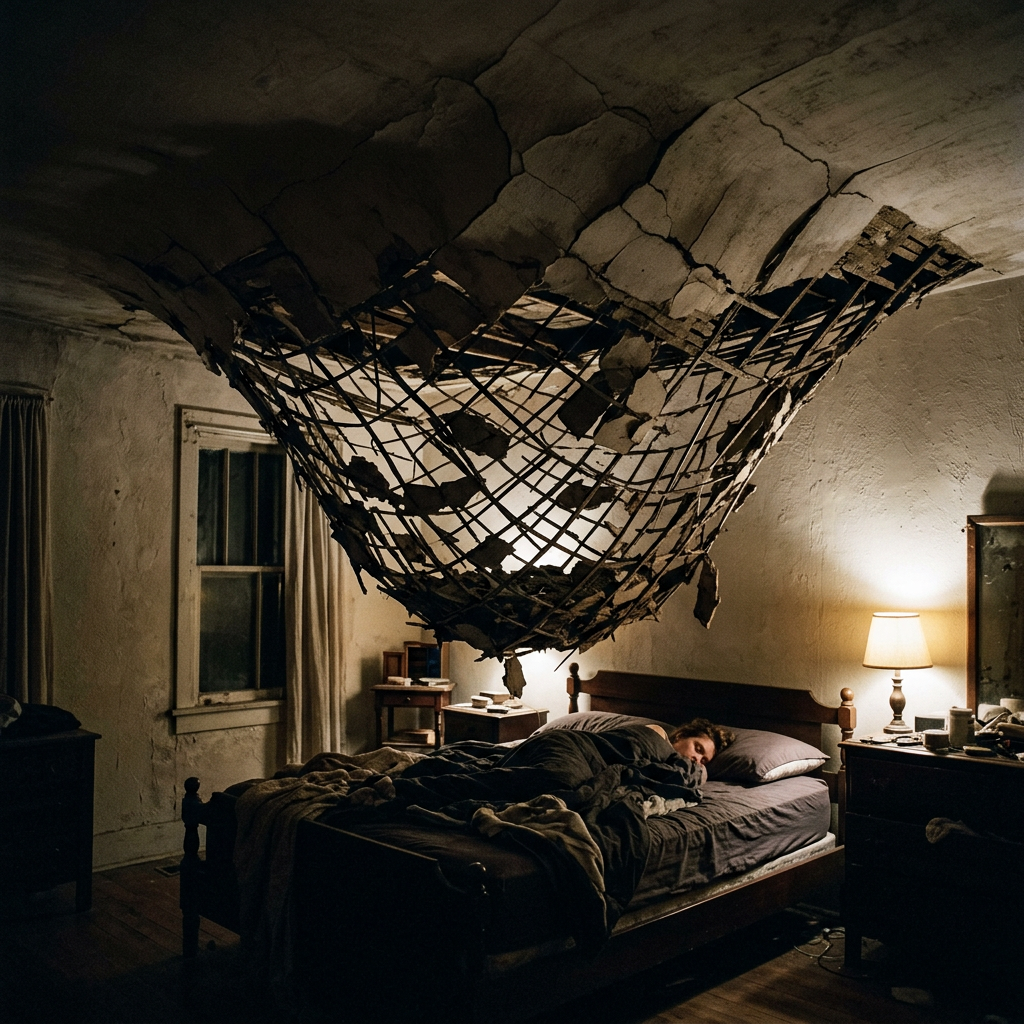
It was supposed to be just another night on the road—a forgettable stopover in a mid-tier hotel with beige carpets and a humming air conditioner. But by dawn, I had learned something I never wanted to know: the walls can hold secrets, and sometimes, air itself can become a currency you cannot afford to lose.
The Silent Collapse of Room 214
I checked in late, around 11:30 PM. The lobby was dim, and the clerk barely looked up from his phone as he slid the key card across the counter. “Room 214. End of the hall. Elevator’s broken.” I took the stairs.
The room smelled faintly of bleach and mildew—a strange combination that should have been my first warning. The bed was stiff, the pillows flat, and the thermostat was stuck at a humid 78°F. I cracked the window open an inch, hoping for a breeze. Nothing.
I lay down. At first, it was just a tickle in my throat. Then a faint chemical taste, like sucking on a penny. I told myself it was just the stale air. I tried to sleep.
When the Ceiling Became a Cage
By 1:00 AM, my chest felt tight. I sat up, dizzy. The room seemed smaller than before. I turned on the bedside lamp, and the light revealed something I had missed: a dark, spreading stain on the ceiling above the bed. It pulsed slightly, as if alive. Droplets of moisture clung to the wallpaper near the corner.
I felt a sudden, irrational panic—like the room itself was shrinking. I stood up, but my legs felt heavy. Each breath became a calculation: in, hold, out, wait. The air was thick, almost syrupy.
I tried to open the window wider, but it wouldn’t budge. The lock was painted shut. The vent near the floor wheezed but pushed out nothing but a gust of hot, dusty air. I realized then: the room was sealed. Every crack, every gap, was plugged by time and negligence.
Buried Secrets, Stolen Air
Here is what no one tells you about hotel rooms: they are not just rooms. They are consequences of thousands of decisions made and unmade. That black mold behind the wallpaper? It came from a leaky pipe that nobody fixed. The faint smell of formaldehyde? That’s the cheap furniture off-gassing in a confined space. And the sealed windows? A safety policy that became a deathtrap.
According to the EPA, indoor air quality can be two to five times more polluted than outdoor air. In a sealed hotel room with poor ventilation, volatile organic compounds, carbon dioxide, and mold spores accumulate quickly. You don’t need a gas leak to suffocate—sometimes, you just need a room that has forgotten how to breathe.
I started coughing. A deep, rattling cough that didn’t stop. I grabbed my phone. The screen showed 3:42 AM.
Judgment at 3:42 AM
In the dark, the truth is stark. I realized I had two choices: stay and hope my lungs would adapt, or leave and face the shame of a 3 AM checkout. I chose survival.
I pulled the sheets off the bed, soaked them in the bathroom sink, and pressed them around the door frame. I wrapped my face in a damp towel. I sat on the floor, low where the air felt slightly cleaner, and called the front desk.
The clerk answered groggily. “Room 214? Yeah, we’ve had complaints about that room. People say it feels tight. We’ll have maintenance check it tomorrow.”
Tomorrow. I was supposed to be breathing tonight.
I packed my bag in under two minutes. I didn’t care about my shoes or my laptop cord. I just wanted air.
The Whispers of My Final Exhale
I stumbled into the hallway. The air there felt like a gift—cold, moving, alive. I didn’t wait for the elevator. I took the stairs, three at a time, and burst through the lobby doors at 4:07 AM. The parking lot was empty. The stars were out. I leaned against my car and took the deepest breath of my life.
> Here’s the truth I want you to remember: your room should never suffocate you. If it smells wrong, if the air feels thick, if your chest tightens—listen. The walls are whispering something. Get out.
That night, Room 214 stole my breath. But it also taught me a lesson I’ll never forget: safety is not just about locked doors and smoke alarms. It’s about being able to breathe freely.
Conclusion
We trust hotels to host us, to shelter us. But that trust should never mean closing our eyes to the signs that something is wrong. Check the vents. Check the ceiling. Leave a window cracked if you can. And if your lungs tell you to run, do it—without apology.
Because there is no sleep so deep that it is worth your last breath.
Leave a Reply