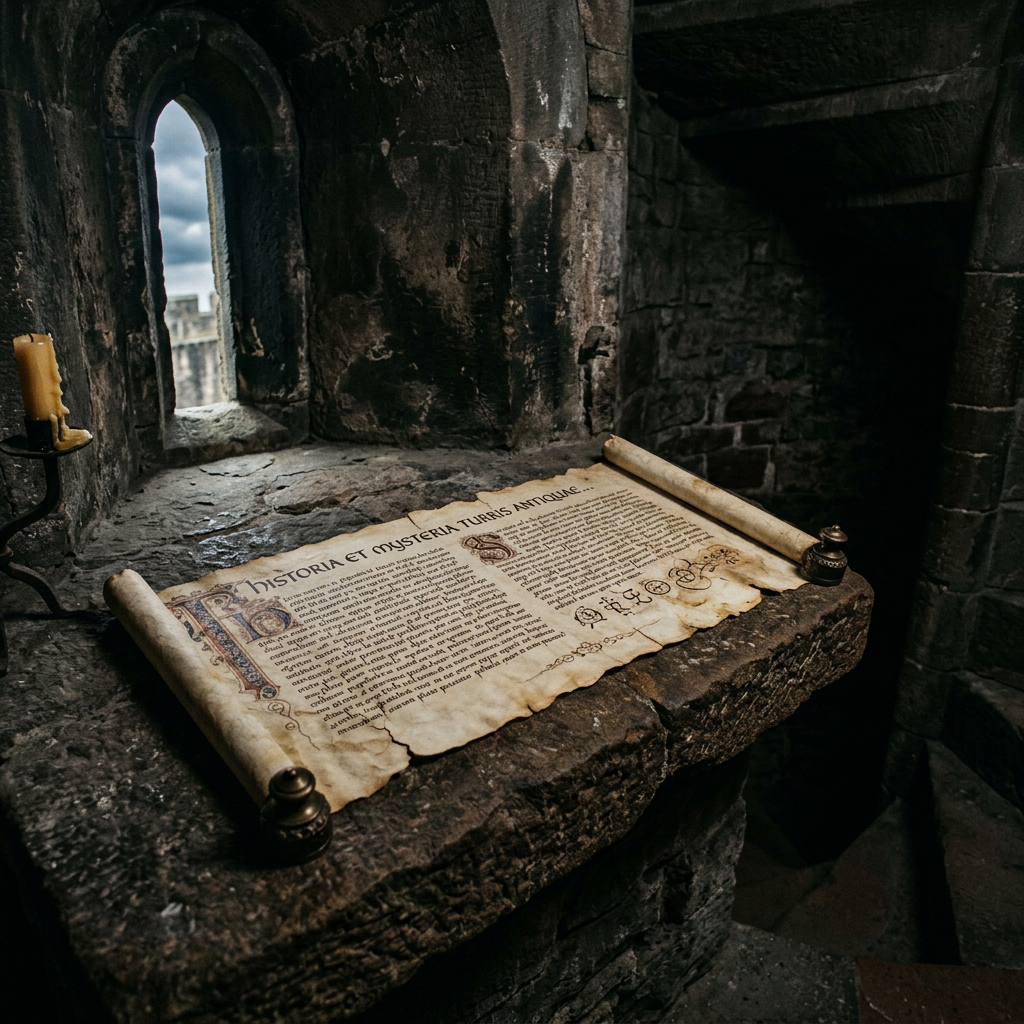
When the Sun Died, the First Tower Rose
There are moments in history when the truth becomes more dangerous than any weapon. When the last honest historian sealed her lips, when the final whistleblower swallowed his story, when every light in the city flickered and died—that was the moment the first tower rose. Not from stone or steel, but from the soil of a refusal so stubborn it defied gravity itself. The first tower was born not from hope, but from a simple, unbreakable choice: to remain standing when everyone else had sat down in silence.
People said the sun went out because no one dared to name it. They claimed the darkness fell because lies had become more comfortable than the light. And yet, in a forgotten village, a single architect picked up a shovel and began to build. He was not building for shelter. He was building a monument to a fact that refused to die. His hands bled, his neighbors laughed, but the tower rose inch by inch, a finger pointed at a sky that had forgotten how to shine.
A Lantern Forged From Breath, Not From Steel
This tower did not glow with electricity or gas. It was lit by something far more fragile: the breath of those who still dared to speak what they had seen. The builders installed no lamps. Instead, they carved hollow channels into the walls, designed to catch the whispered stories of every traveler who passed. Each story, once told, would travel upward through the stone and emerge at the top as a soft, silver light.
- The light was dim at first, barely visible from the valley below.
- But as more people came to confess what they knew, the beam grew steadier.
- Each whisper added a thread of brightness, weaving a lantern out of collective courage.
The key was participation. No one could light the tower alone. The lantern was a pact: your truth, added to mine, creates a flame that no lie can extinguish. This was not a beacon of power, but a beacon of vulnerability—it required the breath of the broken, the forgotten, and the brave to shine at all.
> Remember: A truth told in silence is still louder than a lie shouted from a rooftop. The tower proved that a single honest whisper, repeated enough times, can become a sunrise.
The Scroll That Defied the Final Darkness
As the tower grew taller, its builders discovered something strange. The highest stones, when laid, began to glow with inscribed letters that no one remembered carving. This was the Scroll of Refusal—a text that wrote itself whenever a person chose truth over comfort. Each new stone added a line, and each line recorded a moment when someone stood firm.
The scroll contained no grand declarations. Instead, it listed simple acts:
- A farmer who refused to lie about the blight killing his crops, even when officials demanded silence.
- A child who pointed at the empty throne and said, “The king has no clothes,” when all the adults looked away.
- A soldier who buried the true account of a battle, instead of the glorious false version.
The scroll did not tell a story of victory. It told a story of refusal—the quiet, unglamorous work of not bending. And in the final darkness, when the world’s lie was at its thickest, the scroll began to hum. It vibrated with the stored energy of every small defiance, and that hum grew into a sound that cracked the sky.
How One Tower Held Back the World’s Lie
The lie was not a single falsehood. It was a system of comfortable fictions, designed to keep people from seeing the truth of their own powerlessness. The world’s lie whispered that change was impossible, that speaking up was pointless, that the darkness had always been there and always would be. The tower countered this not with argument, but with presence.
Each level of the tower was built with a specific purpose:
- The base was a foundation of recorded facts, verified and shared.
- The middle stories were gathering halls where people could speak without fear.
- The top was the lantern itself, a constant reminder that truth had not died.
The tower held back the lie by being a physical contradiction. It stood as proof that someone had chosen to build when it was easier to hide. It showed that a structure of honesty could rise even in a landscape of denial. The lie could not demolish the tower, because the tower was not made of mortar alone—it was made of shared memory and collective will.
> Important: You cannot defeat a lie by shouting over it. You defeat it by building something so true that it cannot be ignored. The tower was not a weapon; it was a witness.
Standing Where All Others Chose to Kneel
In the end, the tower did not crumble. The world’s lie eventually ran out of breath, because lies require constant upkeep, while truth only needs to be remembered. The tower stands today, still lit by the breath of anyone who passes by and chooses to speak. It is not a monument to the past, but a living agreement with the present.
Those who visit the tower often ask, “How can I keep it standing?” The answer is always the same: Refuse to let the truth die in your mouth. The tower rises with every honest word spoken in a room full of silence. It grows brighter with every person who chooses to stand when it is easier to kneel.
> Quote from the last builder: “The tower is not made of stone. It is made of all the times we chose to say, ‘This is what I saw,’ even when the world demanded we look away.”
Conclusion
The tower that rose when truth refused to die is not a fairy tale. It is a reminder that the most powerful structures are built from the most fragile materials: courage, memory, and refusal. The next time you feel the weight of the world’s lie pressing down on you, remember the lantern forged from breath. Your truth is a stone. Place it. Let the tower rise.
Leave a Reply