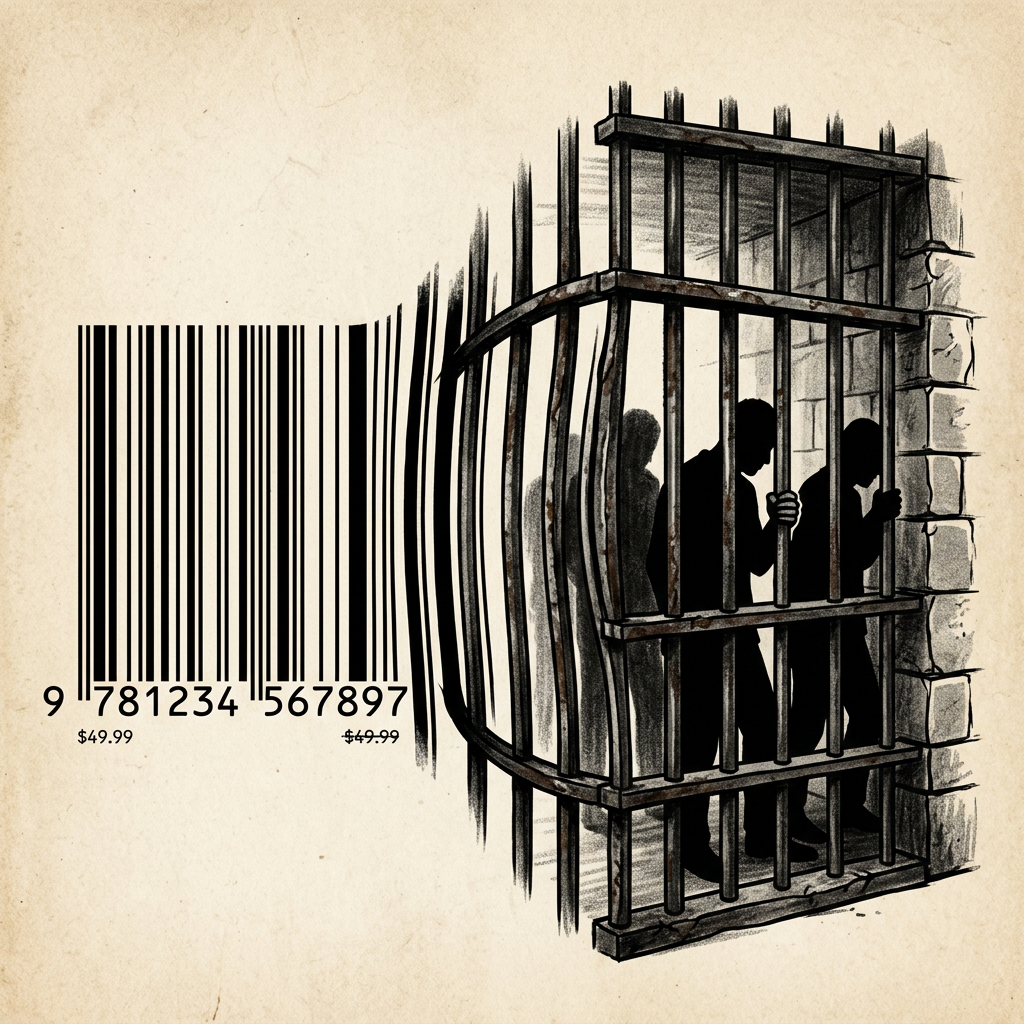
I stood behind the register for three years before I noticed it. Not the patterns themselves—those are obvious to anyone who pays attention—but what they mean. A customer hands you a crumpled bill, you scan an item, you hand back change. Repeat. Repeat. Repeat. But if you watch long enough, the transactions begin to speak, and what they whisper is a story about how we live, how we cope, and how we hand our freedom away in small, careless pieces.
The Clerk Who Saw Through the Barcode
At first, a register is just a machine. You learn the beep of the scanner, the hiss of the receipt printer, the weight of coins in the drawer. But after the thousandth customer, you stop seeing items and start seeing intentions. The man who buys a single energy drink at 6 a.m. isn’t thirsty; he’s running on two hours of sleep and a belief that caffeine can fix despair. The woman who buys three packs of gum every Tuesday isn’t addicted to mint; she’s a nail-biter trying to keep her hands busy.
I learned to read people by their baskets. Parents buy bulk snacks and cheap wine. Students buy ramen and extra lighters. The lonely buy single-serving meals and premium coffee, as if treating themselves could fill a void. But the most telling purchase is always the cheapest one: the lottery ticket, the pack of cigarettes, the mini-bottle of liquor. That’s the one that reveals the truth.
A Ledger of Lives in Small Purchases
A barcode is a lie. It tells you the price, the weight, the inventory number. But it doesn’t tell you the cost. Every scanned item is a clue to a life:
- > The instant coffee and powdered creamer belong to a trucker who hasn’t seen his kids in a week.
- The off-brand cereal and gallon of milk signal a single parent cutting corners to make the budget stretch.
- The multipack of cheap razors and a single rose suggest a man trying to clean up for a date he can’t afford.
- The two-for-one energy shots and a prepaid phone card are the tools of a gig worker caught in a 16-hour shift.
These are not purchases. They are confessions. Each transaction is a snapshot of a private battle—against time, against money, against loneliness. And the most heartbreaking part? No one looks you in the eye. They stare at the card reader, at the floor, at the candy display. They don’t want you to see them. But the clerk sees everything.
Gamblers, Workers, Soldiers: Patterns Emerge
After a while, you stop seeing individuals and start seeing archetypes. They walk through the door in predictable waves.
> The Gambler arrives every day at 3:17 p.m. He buys a single scratch-off ticket and a pack of menthols. He never wins, but he never stops. He’s not playing the lottery; he’s buying hope for a dollar.
> The Worker buys a large black coffee and a breakfast sandwich at 5:45 a.m. He moves with a mechanical rhythm. He doesn’t speak unless necessary. His hands are calloused, his eyes are tired. He is the engine of the economy, and he runs on fumes.
> The Soldier comes in late at night, in uniform, buying a Monster energy drink and a bag of peanut butter cups. He’s stationed nearby, probably bored, probably lonely. He spends thirty seconds choosing the candy, as if it matters. It doesn’t. He just wants to be somewhere that isn’t the barracks.
And then there’s The Desperate. They buy with coins. They count the change out slowly, piece by piece, while the line behind them sighs. They buy one can of cheap beer or the smallest pack of rolling papers. They are the ones who taught me that poverty is not a lack of money—it’s a lack of options.
The Hidden Economy Feeding on Desperation
Look closer at the ledger. The numbers tell a story that no spreadsheet can capture. Every small purchase is part of a hidden economy—one that preys on the exhausted, the hopeful, and the broke.
- Lottery tickets are a tax on people who can’t do math.
- Payday loan slips are a promise of tomorrow’s misery.
- Single cigarettes sold under the counter for a quarter each are a symptom of addiction served in tiny doses.
- Prepaid debit cards are the currency of people the banks have banned.
These items don’t fuel lives; they fuel survival. And the people who sell them? We become the invisible gatekeepers of this system. We hand over the scratch-off, the prepaid Visa, the cheap tallboy, and we pretend it’s a normal transaction. But inside the drawer, behind the receipt tape, we know better.
> “The real profit isn’t in the markup—it’s in the repeat customer who can’t escape.”
The whiskey miniatures, the lottery tickets, the cheap vape pens—they are the threads of a gilded trap. Each one tells you the same thing: this person is stuck. And we, the clerks, are the ones who nod, scan, and say, “Have a nice day.”
Every Transaction Condemns the Age of Chance
We live in an era where hope is sold in small, disposable packages. The lottery ticket. The energy drink. The scratch-off worth a dollar. The age of chance asks you to believe that randomness might save you. It asks you to trade your last dime for a dream that will almost certainly fail.
But the clerk sees the cost. We see the man who buys dinner and a ticket, then comes back an hour later to cash in his three-dollar win. We see the woman who buys a sandwich with her food stamp card and a pack of Newports with cash. We see the gap between what people need and what they buy—and it’s a chasm.
> “The most dangerous purchase is the one made in desperation, because it’s never the last.”
The hidden pattern is this: we are all buying time, hope, or escape. The items change, but the transaction is always the same. A clerk’s revelation is not a secret—it’s a mirror. When you look at the register screen, you see a price. But when you look at the customer, you see the whole damn age.
So the next time you buy a scratch-off, a cheap bottle, or a pack of smokes at 2 a.m., ask yourself: What am I really paying for?
Because the clerk knows. And so do you.
Leave a Reply