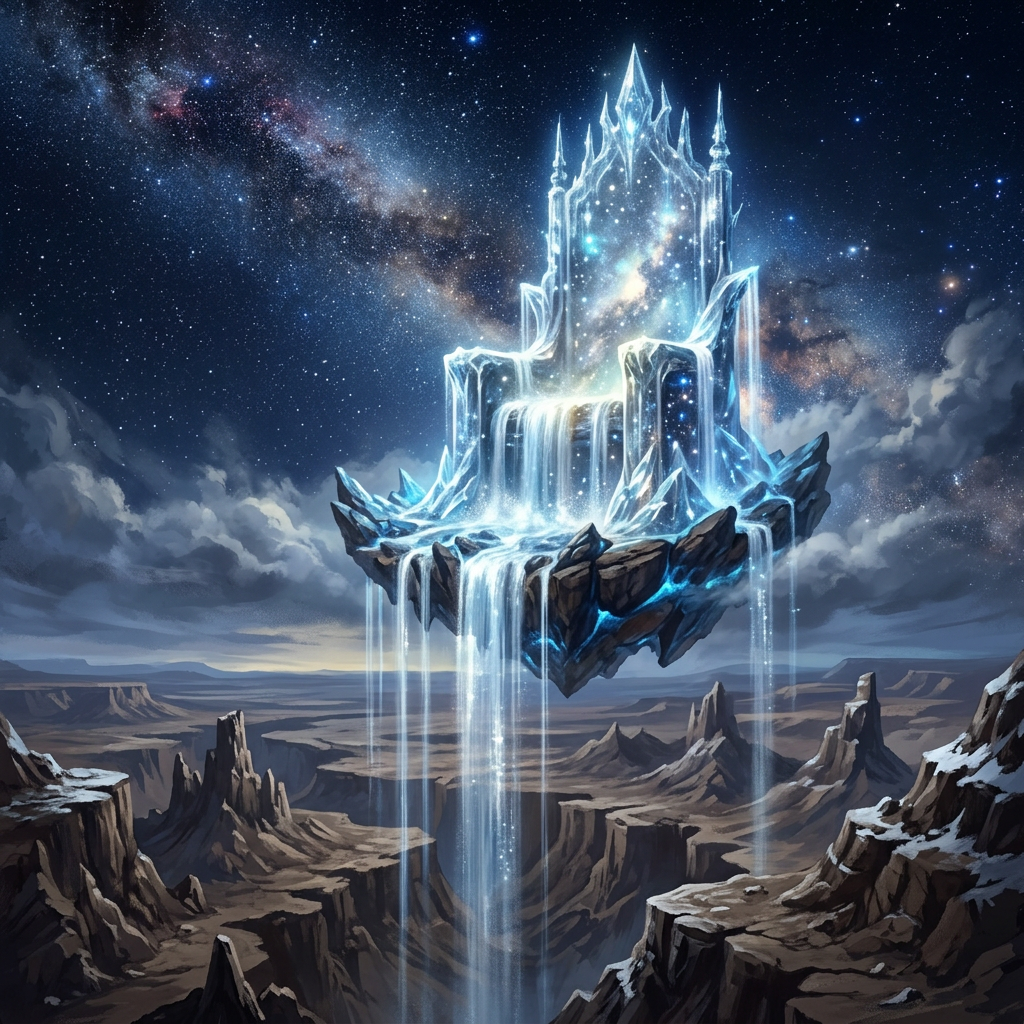
The River That Rose to Touch the Sky
Long before the first empire or the last king, there was a river. It did not flow toward the sea like all others, but instead ran uphill, defying every law of nature and logic. This was not a trick of the eye or a legend whispered by desperate settlers—it was the first sign that the world was changing.
I first heard this story from an old cartographer who had spent forty years mapping forgotten waterways. He spoke of a river in the highlands that began as a modest stream, then one day simply decided to climb. It rose over cliffs, wrapped around mountain peaks, and twisted upward into the clouds. Locals called it the Skyward Current, believing it carried the souls of the faithful to a celestial throne. But the truth, as I later discovered, was far stranger.
The river did not rise because of magic. It rose because something below the earth had shifted. Tectonic plates, aquifers, and ancient reservoirs had been rearranged by a series of deep seismic events. Water, seeking the path of least resistance, found only one direction: up. This geological anomaly created a phenomenon we now call inverse hydrology, where gravity seems to pause. The river did not break the laws of physics—it merely found a loophole in them.
When the Rivers Died, a Throne Ascended
As the Skyward Current grew, other rivers began to fail. The great waterways of the continent—the Silverrun, the Gilded Drain, the Feeder of Ten Cities—started to slow. Their beds cracked, their fish vanished, and their banks turned to dust. Engineers and mystics alike were baffled. How could one river rise while all others died?
The answer was a slow horror. The same seismic shifts that lifted the Skyward Current had blocked the underground arteries feeding the other rivers. Water that once flowed freely was now being redirected, forced into new channels beneath the earth. The dying rivers became skeletal reminders of what the world had lost.
- Farmers watched their fields turn to desert.
- Merchants saw trade routes dry up overnight.
- Children forgot the sound of running water.
Meanwhile, the Skyward Current rose higher. Fishermen who tried to cast nets into its cascades found their lines pulled up, not down. Boats tied to docks were ripped from their moorings and swept into the clouds. And at the very top, where the river met the sky, something began to form.
Shattered Stones and the Upward Flow
The river carried not only water, but debris. Broken stones, eroded cliffs, and shattered temple carvings were drawn into its upward path. The current was not gentle—it was a violent, rushing column that stripped the land clean. Geologists called it a reversed erosive system, where the river’s energy was focused on lifting, not cutting.
I visited the region during the second year of the phenomenon. The air was thick with mist, and the ground trembled beneath the weight of so much displaced matter. Locals had begun to build scaffolds and platforms, trying to reach the river’s summit. They believed that at the top, the river would deposit all it had collected, creating a throne from the wreckage of the old world.
> “The river takes everything it touches,” an elder told me. “But it gives back what we need most—a place to sit above the flood.”
The debris did not simply pile up. It organized itself into a structure. Symmetrical. Intentional. As if the river remembered the shape of thrones from ancient carvings and temples. The stones fit together without mortar, held in place by the constant upward pressure of the water. It was a throne born from destruction, built by the very force that was killing the world below.
A Throne of Liquid Starlight Formed
When the structure was finally complete, something remarkable happened. The water itself changed. It no longer looked like water. It shimmered with an internal light, translucent and glowing with a pale blue hue. Scientists called it photoluminesce, a property usually found in deep-sea organisms, but here it was in a freshwater column miles high.
At night, the throne appeared to be made of liquid starlight. It pulsed gently, as if breathing. Those who climbed to the base of the throne—and few dared to go higher—reported a sense of calm, almost euphoria. The water seemed to sing, a low hum that vibrated through the stone.
- The throne was said to grant visions of the future.
- Pilgrims left offerings of dried flowers and copper coins.
- Some claimed the water could heal wounds if applied to the skin.
But not everyone was welcome. The throne had a guardian: a current of resistance that pushed back against anyone who tried to ascend without purpose. The river, it seemed, had a consciousness of its own. It would only allow the worthy to sit upon the throne. And no one had yet proven worthy.
The Second Throne: Truth After Illusion
Years passed. The world below continued to change. New rivers were born from melted glaciers, and ancient aquifers refilled. The dying rivers of old never returned, but the land adapted. People learned to live with less water, to harvest moisture from the air, to build cisterns and wells.
And then, a second throne appeared.
It formed not in the sky, but deep in an underground cavern. It was made not of shattered stones, but of clear ice and crystalline formations. The river that created it was a subterranean inverse flow, mirroring the Skyward Current but inverted. Where the first throne rose to the heavens, this one descended into the earth.
The second throne was not a place of starlight but of truth—a place where illusions shattered. Those who sat upon it saw themselves as they truly were, without pretense or self-deception. Many who tried to sit were driven mad by the clarity. Others emerged transformed, their lies and excuses stripped away.
> “The first throne gives you power,” a traveler told me. “The second gives you reality. You must be ready for both.”
The two thrones, one above and one below, now exist in balance. They are not seats for kings or queens. They are reminders that the world is always in motion, that the laws we take for granted are only temporary, and that something can rise from nothing—if the river decides to change its course.
Conclusion
I have spent years following the paths of these thrones, speaking with those who have climbed them and those who have fled from them. The story of the river that rose to the sky is not just a geological oddity or a myth. It is a metaphor for how the world transforms itself when we least expect it. We build our thrones from the rubble of our old lives. We climb toward the light, or we descend into the truth. Either way, the river flows.
And sometimes, it flows upward.
Leave a Reply