The Harbor That Birthed an Unmaking Wind
Hobart awakens slowly, like a mariner rubbing salt from his eyes. The Derwent River lies still, a mirror reflecting the gray-pink blush of dawn. But on this particular morning, something was different. The water didn’t shimmer; it withheld. The usual bustle of fishing boats and early ferries seemed muted, as if the city itself was holding its breath. Locals call this phenomenon the unmaking wind—a strange, dry breeze that doesn’t arrive from the sea but seems to leak from the mountain slopes. It carries no salt, no scent of eucalyptus, only an eerie stillness that unstitches the fabric of the ordinary.
In Hobart, mornings are typically painted in layers: the deep indigo of the river, the gold of sunrise on kunanyi/Mount Wellington, the white of seabirds. But when the unmaking wind rises, those layers peel away. The harbor becomes a stage where the familiar script of dawn is rewritten in invisible ink.
6:03 AM: When the Morning Began to Unravel
The first sign was subtle—a clock tower that struck the hour, yet its chimes sounded hollow, as if swallowed by the air itself. Then came the lights: streetlamps flickered, not failing, but dimming their amber glow into a weary gray. Birds that usually sang from the jacaranda trees fell silent. Their songs didn’t stop; they simply dissolved into the thickening quiet.
- The Ferries Stopped: The MV Cartela sat motionless, its engines humming but its wake refusing to form. The water became a pane of glass, unrippled even by the wind.
- Cafés Dimmed: Baristas on Salamanca Place noticed their espresso machines ran cold. Steam no longer rose. The morning coffee ritual, normally a hymn of hiss and clatter, became a mute pantomime.
- Footprints Vanished: Puddles left by last night’s rain dried within seconds, leaving no trace of their presence. The streets grew clean—too clean, as if the wind had erased all proof of human passage.
What made this unravelling terrifying was its precision. The wind didn’t howl or tear. It unmade gently, like a carpenter dismantling a chair, board by board, until only the memory of a seat remained.
Signs Without Letters, Paint Without Color
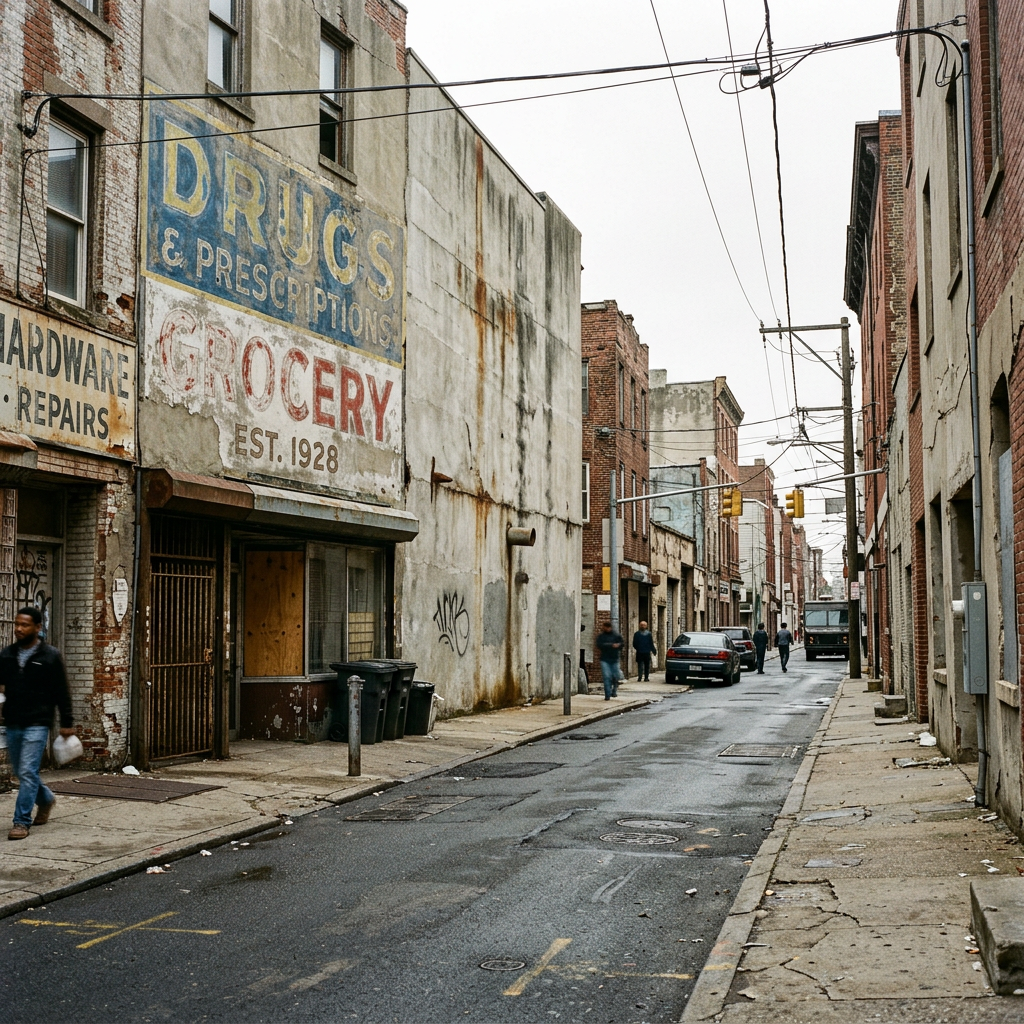
As the morning staggered toward 7 AM, the unmaking wind turned playful—and cruel. The road signs along Davey Street lost their lettering. Not faded, not bleached, but absent, as if a cosmic hand had wiped them clean. Drivers slowed to a crawl, reading invisible instructions. The paint on the historic sandstone buildings began to peel, but not in flakes. Instead, it bled into the stone, seeping inward until walls turned monochrome, devoid of the terracotta and cream that had defined them for generations.
- Shopfronts on Elizabeth Street became blank canvases. The names of bakeries, bookshops, and boutiques simply ceased to exist. Windows still displayed goods, but without labels, without context, they looked like artifacts from an abandoned civilization.
- The Royal Tasmanian Botanical Gardens lost its directional plaques. Visitors wandered, not lost in space, but in meaning. What was a rose if its name was no longer attached? What was a path without a destination?
- Children’s Chalk Drawings on the pavement remained—but the colors drained from them, leaving only ghostly outlines of rainbows and stick figures. The laughs that had accompanied their creation still echoed, but faintly, as if recorded on a dying tape.
This was not destruction; it was denial of definition. The wind refused to let anything be called by its true name.
The Bowl’s Whisper in the Vanishing Breeze
Amid this gentle catastrophe, those who paused to listen caught The Bowl’s Whisper—a low, resonant hum that seemed to emanate from the concrete bowl of the Hobart City Hall amphitheater. Locals say the wind, while unmaking the morning, also speaks. It doesn’t use words, but shapes. The hum was the sound of silence becoming solid, of absence taking form.
Key observations from those who heard it:
> “It sounded like a cello string being plucked underwater—deep, mournful, and inevitable. I knew I should run, but I couldn’t move. I felt like I was listening to the world unmake itself.” — Maia, café owner on Battery Point.
> “The hum didn’t come from speakers. It came from the air itself. Every breath I took felt thicker, like inhaling memory.” — Tom, university student.
- The hum shifted in pitch, rising as the wind grew stronger, falling as it gentled.
- Birds responded: seagulls circled, not crying, but humming, their throats vibrating with the same frequency.
- Phone signals dropped: calls cut out, replaced by a low-frequency buzz that felt more like a vibration than a sound.
The Bowl’s Whisper was a reminder that the unmaking wind was not a silent force—it was a conversation with the city, one that Hobart had never asked to join.
What Illusion Built, the Wind Erased Forever
By 8:30 AM, the wind died as suddenly as it had begun. The sun broke through the clouds, and the Derwent resumed its gentle ripple. But Hobart was not the same. The signs remained blank, the paint still drained, the puddles unreformed. The city had been stripped of its ornament, left with only its skeleton.
- Illusions that the town had constructed over decades—grand facades, welcoming signs, comforting routines—were gone. What remained was raw, exposed: the honesty of stone, water, sky, and the people who still walked the streets.
- The wind revealed something deeper: that beauty is not in labels, but in presence. A blank signpost still points to somewhere; a colorless building still shelters lives. The morning, though unmade, was more real.
- Lessons for those who felt it:
- Don’t cling to names. What you call your life is less important than how you live it.
- Listen to silence. In the absence of noise, truth often speaks loudest.
- Embrace erasure. Sometimes, to be unmade is to be freed from the weight of illusion.
Hobart learned that morning that the wind didn’t destroy—it unmade. And in that unmaking, it offered a stark, beautiful gift: a chance to see what was always there, hidden beneath the ink of our own stories.
Leave a Reply