The Coach’s Whisper About a Fading Town
I remember the first time Coach Anera pulled me aside after practice. The rink was empty, save for the hum of the old Zamboni and the echo of our skates scraping ice. “Look around,” she said, nodding toward the bleachers that hadn’t been full in years. “This town is shrinking. But as long as kids are lacing up, we still have a chance.” At the time, I thought she was just being dramatic. But now, looking back, I realize her whisper was a prophecy about Tuktoyaktuk—a place that isn’t just cold; it’s forgotten.
Our Arctic town, perched on the edge of the Beaufort Sea, has always had to fight for relevance. The world moves on, oil prices crash, government money dries up, and people leave. Yet, through it all, two things remain constant: the permafrost melting under our feet, and the hockey drills that keep our identity from drifting away like sea ice.
How Gambling Erased Streets From the Map
It’s easy to romanticize life in the North, but the reality is harsher than a -40°C wind chill. For years, Tuktoyaktuk has been bleeding residents. The biggest culprit? Not the climate—though that’s bad enough—but a quiet epidemic of opportunity erosion. When the only work left is seasonal or tied to a volatile resource economy, people start making desperate bets.
- The housing lottery: Families move south, abandoning homes that cost a fortune to heat, leaving rows of boarded-up houses along Mission Road.
- The education gamble: Parents send teens to boarding schools in Inuvik or Yellowknife, hoping the trade-off for a diploma is worth losing connection to the land.
- The silence trap: Elders stop telling stories because no one is left to listen. Streets on the map—like Tuktu Drive and Old Airport Road—become ghost corridors, erased not by an official decree, but by sheer depopulation.
Gambling isn’t just about cards or bingo nights. It’s about the slow wager that your hometown will survive another decade. And for a while, Tuktoyaktuk was losing that bet.
Formation Drills as Anchors for Our Future
But then something strange happened. The same hockey drills we used to grumble through as kids became a lifeline. It wasn’t about winning games anymore—it was about keeping the community intact. Here’s how:
> “When you’re running the F1 breakout drill, you’re not just learning to pass. You’re learning to trust the person next to you. That trust is what builds a town back up.” > — Elder Maria, former Arctic Winter Games coach
- The Faceoff Circle Drill: Every Tuesday night, kids and adults gather at the Tuk Arena. The center ice circle becomes a meeting point where Inuvialuit elders share stories between shifts. No one rushes.
- The 3-on-2 Rush: Designed to simulate game pressure, but really used to teach kids to communicate under stress. Parents sit in the stands, sipping coffee, forming de facto support groups.
- The Breakout Drill: A hockey term for escaping your zone. In a shrinking town, this became a metaphor for launching youth into the world while ensuring they always have a home to return to.
These drills don’t look flashy. They’re the same patterns you’d see in any Canadian minor hockey league. But here, they’re anchors—tactile, repeatable rituals that say: we are still here.
When Arctic Ice Mirrored Our Broken Rhythm
One winter, the ice didn’t cooperate. A freak warm spell in January turned the outdoor rink into slush. For two weeks, we couldn’t practice. The town felt it instantly. Without the nightly rhythm of skate sharpening and whistle blasts, people stayed home. The bingo hall got quieter. The co-op store sold fewer groceries. It was as if the heartbeat of Tuktoyaktuk had flatlined.
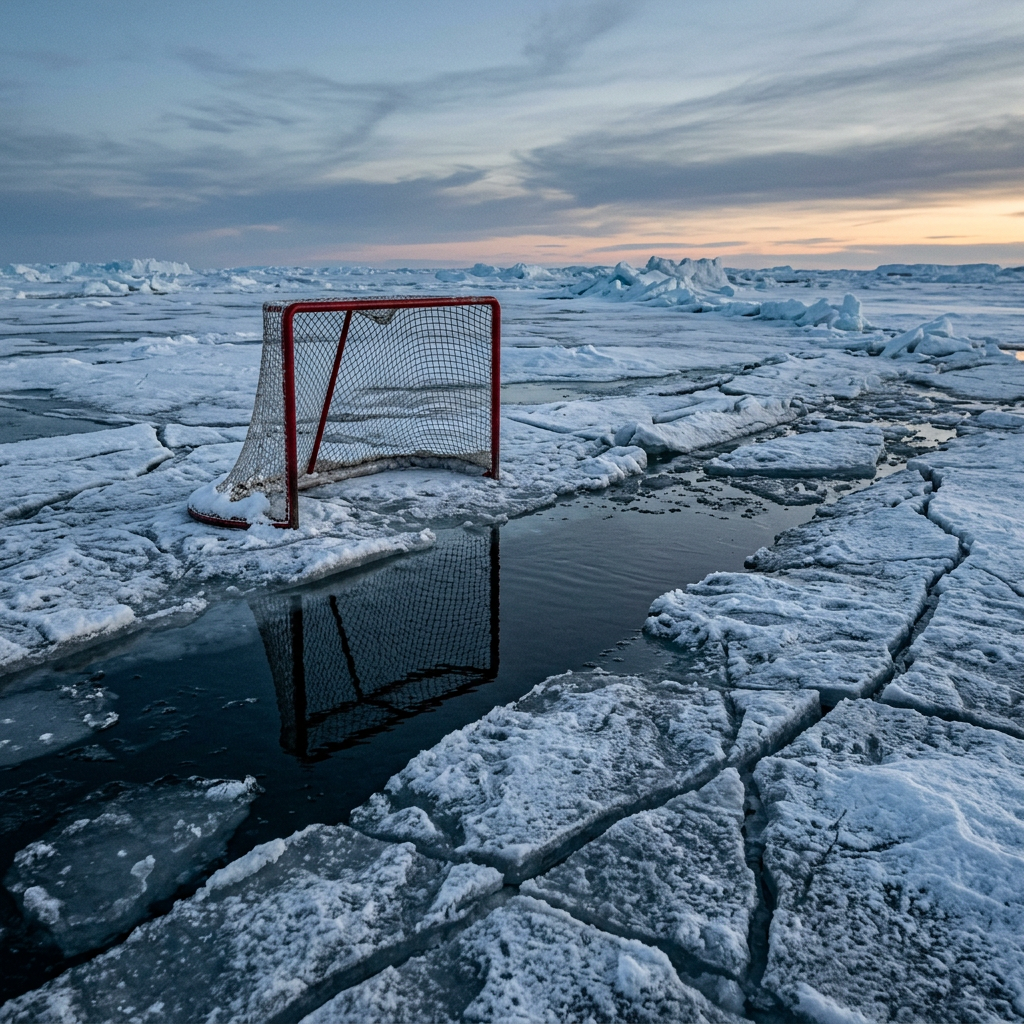
I remember standing at the edge of the flooded rink, watching the water reflect the gray sky. That’s when I understood: hockey wasn’t just a sport; it was our collective pulse. Without drills to structure our evenings, we had nothing to distract us from the fact that the coastline was eroding, the permafrost was collapsing, and census numbers were dropping.
The ice eventually refroze. But the lesson stuck: we cannot afford to let our rhythm break. Every drill, every slap shot, every early morning practice is a refusal to accept that our map is obsolete.
Keeping Tuktoyaktuk Bright Through Hockey
Maintaining a hockey program in a remote Arctic town is a logistical nightmare. Pucks cost three times what they do in Edmonton. The nearest rink repair technician is a two-hour flight away. Yet, we do it anyway. Here’s how:
- Fundraising through potlucks: Every month, families cook muktuk and bannock, sold after games to pay for ice time.
- Multi-generational coaching: A 70-year-old grandmother teaches stickhandling while a 16-year-old runs the off-ice warmups. Age doesn’t matter; commitment does.
- The “Tuk Pact”: Every player signs a promise to volunteer at one community cleanup or elder visit per season. Hockey gives back to the town that builds it.
> “A hockey drill is just a pattern on ice. But when you do it together, in one of the coldest, most isolated places on Earth, it’s a declaration that we won’t be erased.” > — Local parent, at season’s opening
Conclusion
Tuktoyaktuk is not on any major highway. It’s not a tourist destination that makes the cover of magazines. But every time the puck drops at the Tuk Arena, we prove that small towns don’t have to fade. They can be held together by the scrape of blades, the smack of a stick, and the stubborn belief that a well-run formation drill is worth more than any government grant.
When the world forgets us, the rink remembers. And as long as kids are lacing up, we’re still on the map.
Leave a Reply