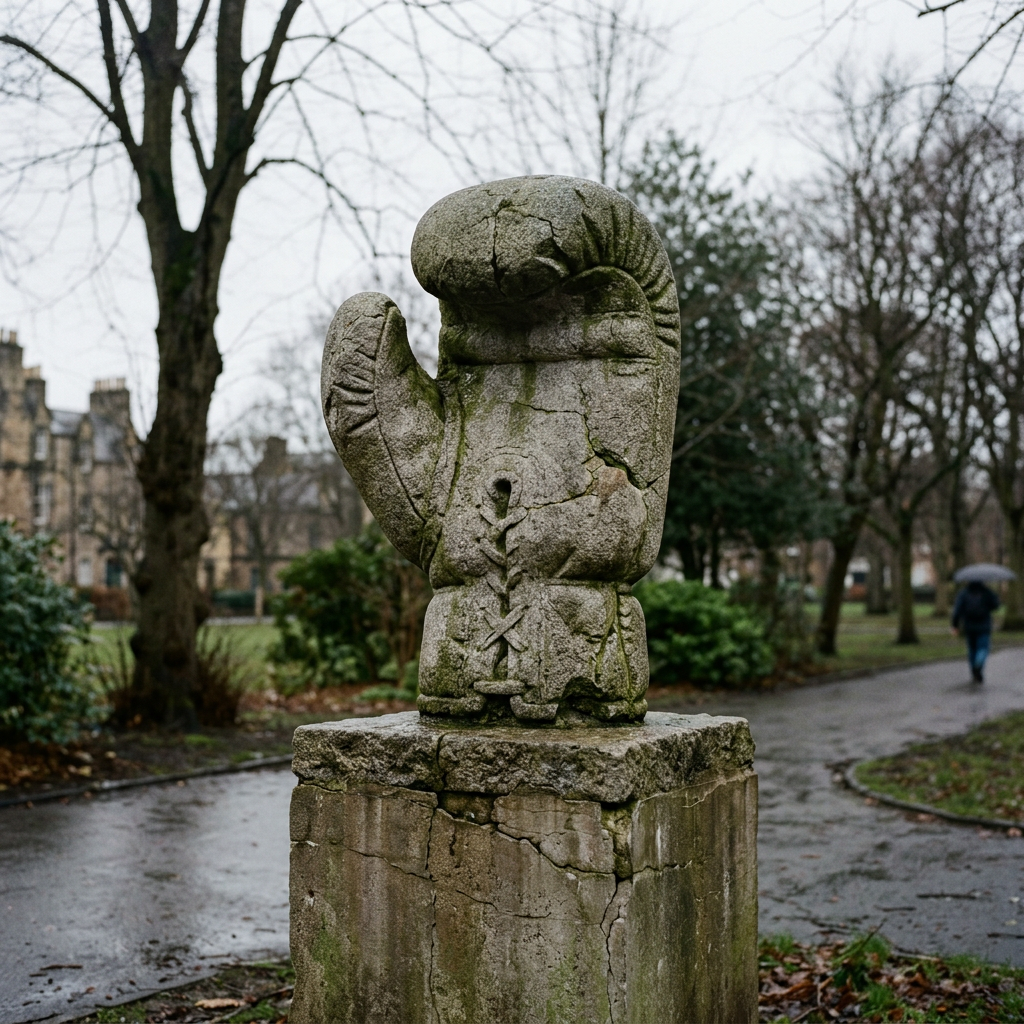
It was a Tuesday morning, and I had just finished my usual jog around the town square. The air was crisp, the benches were empty, and the only sound was the wind rattling a loose sign above the old bakery. I sat down next to Old Man Hargrove, a retired boxing trainer who had spent sixty years molding kids into champions. He wasn’t looking at me. He was staring at the silent streets, his weathered hands resting on a walking cane.
“Do you hear it?” he asked, without turning. “That’s the sound of an empire dying.”
I thought he was being dramatic. But over the next hour, he taught me how the silence of our town was a symptom of something much larger—a crumbling system that had once promised us strength and stability.
A Trainer’s Warning in the Empty Town Square
Hargrove didn’t just train fighters. He trained survivors. He saw boxing as a metaphor for life: economic discipline, strategic restraint, and the wisdom to know when to take a hit versus when to dodge. He told me that our town’s silence reminded him of the aftermath of a devastating knockout—when the crowd goes quiet, and all you hear is the referee’s count.
- Warning signs he identified: closed storefronts, families moving away, and kids who stopped playing in the streets.
- Patterns he noticed: a rise in desperation gambling, a drop in local business investments, and a culture of trading long-term security for short-term thrills.
- Parallels to boxing: “An empire doesn’t fall when the big punch lands. It falls when the fighter stops moving their feet.”
He said our town was a microcosm of a larger empire—an economic system built on leverage and debt—that was now gasping for air.
The Hollow Quiet: Sound of an Empire’s Final Years
Hargrove described the quiet as a “hollow” sound. “It’s not the peaceful quiet of a sleeping village,” he explained. “It’s the quiet of a room after someone loses their life savings on a bad bet.”
He compared empires to aging boxers. In their prime, they dominate the ring: every punch lands, every move is precise, and the crowd roars. But as years pass, reflexes slow, injuries accumulate, and opponents figure out their weaknesses. The empire appears strong, but the noise of its success fades into a low hum.
> “Empires die with a whisper, not a bang. And the whisper sounds like a town where nobody laughs anymore.”
He pointed out that our town’s silence was mirrored in larger trends: corporate consolidation, stagnant wages, and a loss of local sovereignty. The same rules that once built muscle now bound the limbs.
How We Mistook Sports Discipline for Financial Control
This was the lesson that hit hardest. Hargrove often trained young athletes who came from families obsessed with short-term wins—buying flashy cars, taking questionable loans, and believing that tomorrow’s problems would solve themselves.
“They thought discipline meant squeezing every penny until it screamed,” he said. “But that’s not discipline. That’s control through fear. Real discipline is letting go of bad habits, even when they feel good.”
- Examples from boxing: skipping proper warm-ups for extra rounds; ignoring rest days for more sparring; betting on one big fight instead of building a career.
- Examples from finance: overleveraging on debt; chasing meme stocks instead of diversified portfolios; turning economic policy into a spectator sport.
- The mistake: Mistaking the appearance of strength (big houses, big loans) for actual resilience (savings, skills, community).
He concluded that our town—and the larger empire—had become addicted to financial gambling disguised as strategy.
Cutting Out Gambling—Like Rot from a Wounded Town
Hargrove’s solution was blunt: “You have to cut out the rot before it kills the whole body. And in this town, the rot is gambling.”
By gambling, he meant any system that relies on luck over work, short-term hype over long-term investment, and outside rescue over internal rebuilding. He described watching local families pour money into speculative schemes while their homes fell apart. “That’s not a community. That’s a casino with a cafeteria.”
> “You can’t fix a broken fighter by betting on a miracle punch. You fix them by reminding them why they started training in the first place.”
He urged a return to fundamentals: small businesses, community savings circles, apprenticeships, and local barter systems. Not as a romantic fantasy, but as a survival tactic. “Empires fall. But villages can rebuild, if they remember how.”
Silence Breaks: Rebuilding Structure from the Ground Up
As we sat there, a few kids wandered into the square with a soccer ball. Hargrove smiled for the first time. “That’s the sound of a town starting to breathe again.”
He explained that rebuilding requires a return to structure:
- Start with the basics: Fix the local park. Open a repair shop. Start a Saturday market.
- Train young: Teach kids real skills—carpentry, accounting, negotiation—instead of just how to chase likes or lottery tickets.
- Embrace suffering: “Growth hurts,” he said. “You can’t lift a heavy weight without shaking. But the shaking means you’re alive.”
He reminded me that empires are not eternal. They are systems of extracted trust, and when the trust runs out, the silence comes. But within that silence, there is also possibility—a chance to stop listening to the old roar and start building something quieter, stronger, and real.
Conclusion: The Quiet After the Fall
I walked away from the empty town square with a new understanding. The silence wasn’t just emptiness. It was a diagnosis. Old Man Hargrove had heard the empire’s death long before the newspapers printed the obituary. He heard it in the absence of laughter, the loss of apprenticeships, and the quieting of workshop hammers.
But he also heard the potential for rebirth. In the same silence that spells an empire’s end, a community can find its voice. It starts not with grand proclamations, but with one trainer, on one bench, teaching one kid how to throw a proper punch—and how to stand back up when the empire falls.
Leave a Reply