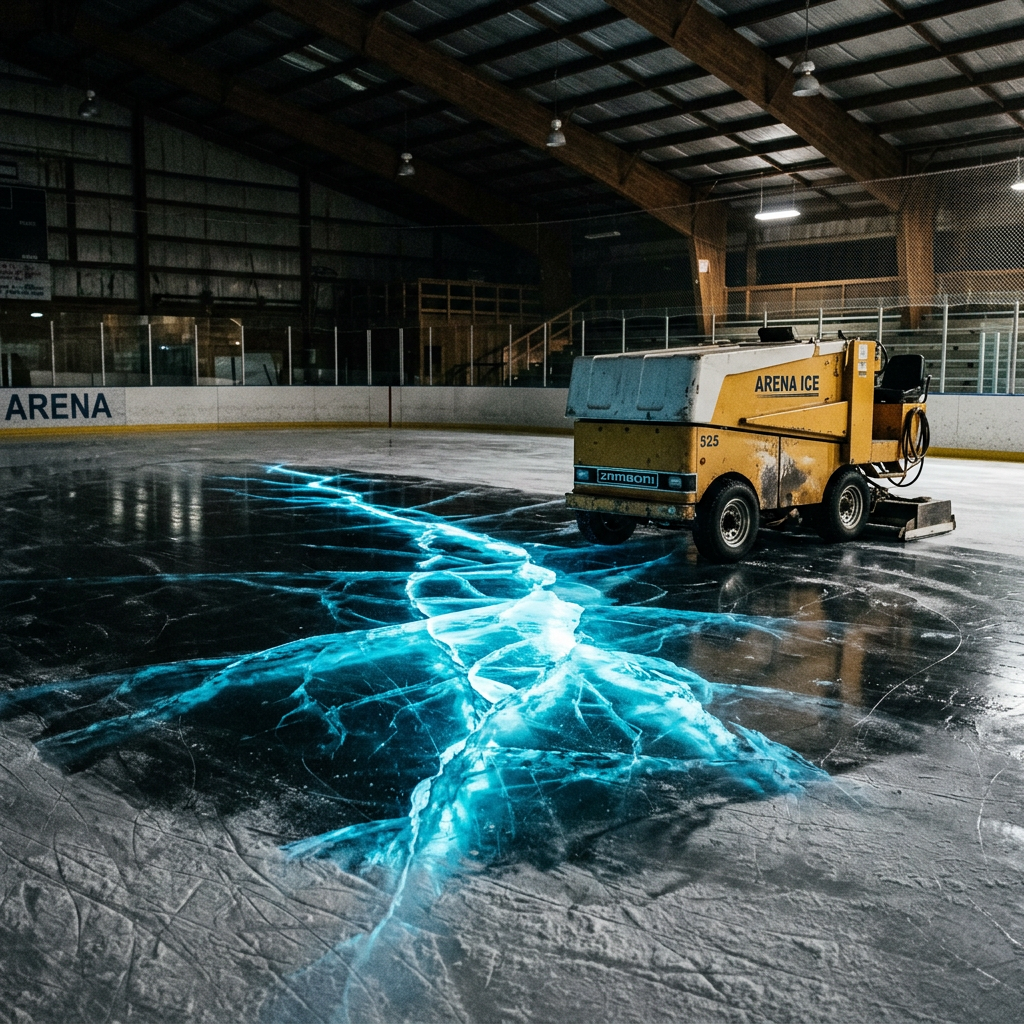
The Whisper Beneath the Zamboni
In a place as small as Millbrook, every zamboni lap told a story. The ice was our shared bedrock, a communal diary etched in skate cuts and frozen spray. But during the winter of 2017, something darker than a hard check began to splinter the surface. The whispers started not in locker rooms or stands, but in the low hum of the rink’s old refrigeration unit—a sound we mistook for a mechanical groan until it became a name.
The fault was not geological. It was behavioral—a crack in our collective character, born from a single bad habit that spread like a chilling draft through town.
How a Rink Custodian First Heard the Fault’s Name
Old Man Hendricks, the rink custodian with a limp and a quiet way of listening, was the first to put words to the fracture. He’d been cleaning up after a late-night drop-in game when he found a crumpled betting slip near the penalty box. It wasn’t the first. Over weeks, he’d swept up dozens, tucked into skate bags, wedged under bleachers. He told no one at first, but the name grew in his chest like a splinter.
> “The fault’s name is gambling,” he finally said, leaning on his mop. “It’s not the money. It’s the silence it leaves behind.”
He meant the quiet that fell over teammates who used to jabber on the bench. The way parents stopped chatting at the snack bar. The empty chairs at Miller’s Diner after games. The fault was a fissure in trust, and it began to swallow the town’s glue: the hockey community.
Gambling as a Hammer Blow to Our Town
The numbers were small—a few thousand dollars, an illicit pool run by a former assistant coach—but the damage was outsized. The fault cracked everything it touched:
- Trust evaporated between players who had grown up passing pucks on the same pond.
- Families fractured as debts were hidden and then exposed in angry parking lot confrontations.
- The rink itself became a haunted place, where the joy of a slap shot was replaced by sideways glances and whispered accusations.
- Youth enrollment dropped by 40% in one season, parents pulling kids from a community they no longer recognized.
Our town’s identity, forged in ice and teamwork, was melting into suspicion. The hammer blow of that fault had sent cracks from the locker rooms to the church pews.
Formation Drills That Wove Us Back Together
The repair did not come from a fine or a ban. It came from restorative action, hockey-style. A retired schoolteacher and a former NHL scout named Coach Ruiz proposed something radical: we would not punish our way out of this. We would drill our way out.
Five drills became our weekly liturgy:
- The Trust Pass: Blindfolded players received passes from a partner, learning to depend on sound and instinct.
- The Debt Line: A shooting drill where every missed goal meant a sincere apology to a teammate.
- The Pocket Check: Players swapped their bags weekly—no secrets allowed in zippered compartments.
- The Family Shift: A 3-on-3 format where siblings paired together, restoring broken household bonds.
- The Zamboni Cleanse: After every practice, the entire team held hands and skated a slow lap, silent, as Hendricks drove the machine in a spiral pattern over the ice.
> Key principle: You cannot fix a fault in the ice by ignoring it. You must resurface the whole sheet, together.
These drills were not quick fixes. They were slow, awkward, and sometimes painful. But each week, the ice beneath our skates felt more solid. Parents returned to the bleachers. The diner filled again with post-game chatter.
Why the Crack Still Sleeps Beneath Our Ice
Today, the rink hums with laughter again. The betting slips are gone, and the former coach moved away. But the fault did not vanish. It sleeps beneath the ice, a memory etched in the frost lines.
We keep it alive not as a scar, but as a reminder. At the start of every season, Coach Ruiz points to a faint seam in the ice near center ice—a small crack that reappears despite the resurfacings.
> “The crack is still here, just like the temptation,” he says. “We don’t pretend it’s gone. We just learn to skate around it with grace.”
And so we do. The drills continue. The trust passes multiply. The zamboni hums its steady lullaby. The fault is not healed—it is managed, woven into the fabric of a town that chose teamwork over collapse.
Conclusion
A fault of behavior can split a community faster than any geological crack, but hockey taught Millbrook that recovery is not about sealing the break—it’s about learning to skate together across the seam. The ice holds our weight only when we trust the skates of those beside us. The drills we ran did not erase the past; they forged a future where the crack beneath becomes a part of the game, not the end of it.
Leave a Reply