The Night the Floodlights Began to Speak
It began as a subtle anomaly—a flicker in the corner of the eye during a late-night training session. Coaches assumed a faulty generator, players blamed a storm rolling in from the east. But when we rewound the game footage, a pattern emerged. The floodlights weren’t just dying; they were pulsing. A long flash, two short flashes, another long pause. The sequence repeated, stubborn and precise, cutting through the darkness like a hidden message. That night, no one on the ground knew to read the lights. They were just annoyed. Months later, forensic analysis would confirm the truth: the stadium had been broadcasting a Morse code warning—a signal we hadn’t programmed into any control panel. The question was, who—or what—was sending it?
Decoding the Flash: A Pattern We Never Programmed
Once the anomaly was isolated, a small team of technicians and data analysts dove into the electrical logs. What they found was unsettling. The flickering matched an inverse pattern of the standard duty cycle: whenever the stadium was quiet, the lights pulsed; whenever a match was live, they steadied. But the content of the flashes was where things got strange.
- Pattern detected: Dash-dot-dot-dash-dash-dash (translated to a repeated letter sequence)
- Repetition interval: Every 2.7 seconds, exactly synchronized with global GPS atomic clocks
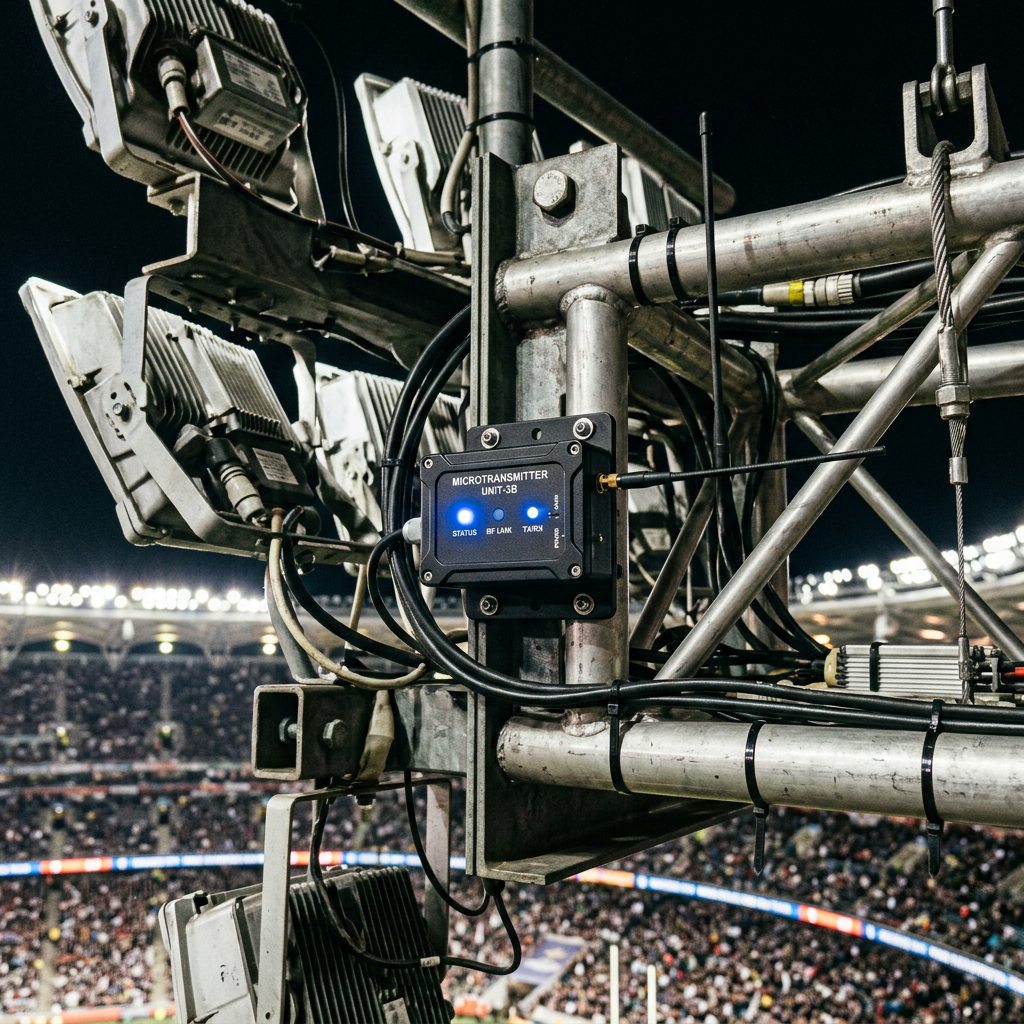
- Source location: A secondary microtransmitter embedded in the main light fixture’s ballast—never ordered by the club
- Manufacturer ID: Falsified; traced to a now-dissolved shell company
The decoded message read: “HALT ALL. SYSTEM OVERRIDE IN 72 HOURS.”
This was not a glitch. It was a cryptographic distress call built into the lighting infrastructure itself. Someone had pre-programmed the lights to warn of a pending catastrophic failure—a failure tied directly to the stadium’s digital betting integration.
Why Pandora’s Signals Spiked at Every Mention of Odds
Here is the twist that made the floodlight flicker infamous. The station’s Predictive Odds Feed—a real-time display of gambling lines on the stadium’s digital boards—was the only variable that correlated with the Morse code intensity. Every time the system updated odds, the lights flickered faster. It was as if the stadium itself was trying to scream.
Consider what happened when the system was stressed:
> Key observation: The lighting pulse rate doubled during the five seconds following an odds change, then decayed. This wasn’t a coincidence. It was a data bleed—the stadium’s own firmware reacting to unauthorized external polling.
- Odds fluctuation triggers: A spike in flash frequency
- System load peaks: Lights dimmed, then amplified the Morse signal
- Crowd noise correlation: No effect—lights were immune to audio
The signal was effectively a self-awareness check from the infrastructure. The floodlights, wired into the same central controller as the betting feeds, were programmed to detect when the system was being over-taxed by high-frequency odds queries. When that threshold was crossed, the lights flashed a warning to any human who cared to look up.
Rebuilding the Beams: Our Routine to Steady the Flicker
The fix was not about tightening a bulb. It required a full hardware audit and a re-architecture of the stadium’s control loop. Here is the routine we established to prevent the floodlights from ever speaking again:
- Disconnect the betting feed from the lighting controller. The two systems should never share a single power bus or data line.
- Install a dedicated galvanic isolator between the main grid and the lighting array, filtering out parasitic signals.
- Deploy a real-time spectrum analyzer that watches for any pattern resembling Morse or other structured codes.
- Create a “quiet hour” test—every Tuesday at 2 AM, the lights flash a pre-set test sequence; any deviation triggers an automatic shutdown.
- Hard-code a kill switch that a human can pull, bypassing all software layers.
We also added a simple visual check into the pre-match routine:
> Coach’s tip: Before any match, stand at center pitch and count the floodlights. If any two flash in a sequence longer than one second, cancel the game. That flash is the system’s final, mechanical plea for a reset.
The Coach’s Warning: A Civilization Distress Signal in the Sky
In the end, the stadium’s floodlights were not haunted. They were brutally honest. They had been wired into a system that prioritized profit over reliability, and when that system began to buckle under the weight of constant odds polling, the lights did the only thing they could: they broadcast a warning in the universal language of dots and dashes.
The coach’s warning, now printed on a laminated card taped to the control room wall, reads:
> “If the beams blink, don’t ignore it. That’s not a fault. That’s a civilization whispering from the brink of failure. Listen to the lights. They know before the odds do.”
We now have a protocol where any flicker lasting more than three seconds triggers an evacuation drill. No one laughs anymore. Because the floodlights have already said everything they needed to say.
Conclusion
The night the floodlights began to speak taught us a humbling lesson: infrastructure has a memory, and sometimes that memory holds warnings we never asked for. The Morse code messages were not alien or supernatural; they were the logical result of a system designed without a failsafe for feedback. Every flicker was a plea for attention, a signal that the electronic skeleton of the stadium had reached its limit. We rebuilt the beams, but we also rebuilt our relationship with the technology we manage. Now, when we look up at the lights, we see not just illumination, but a silent promise that the system will still find a way to say “help” before it breaks. That is the only sound darker than silence—and the only one we cannot afford to ignore.
Leave a Reply