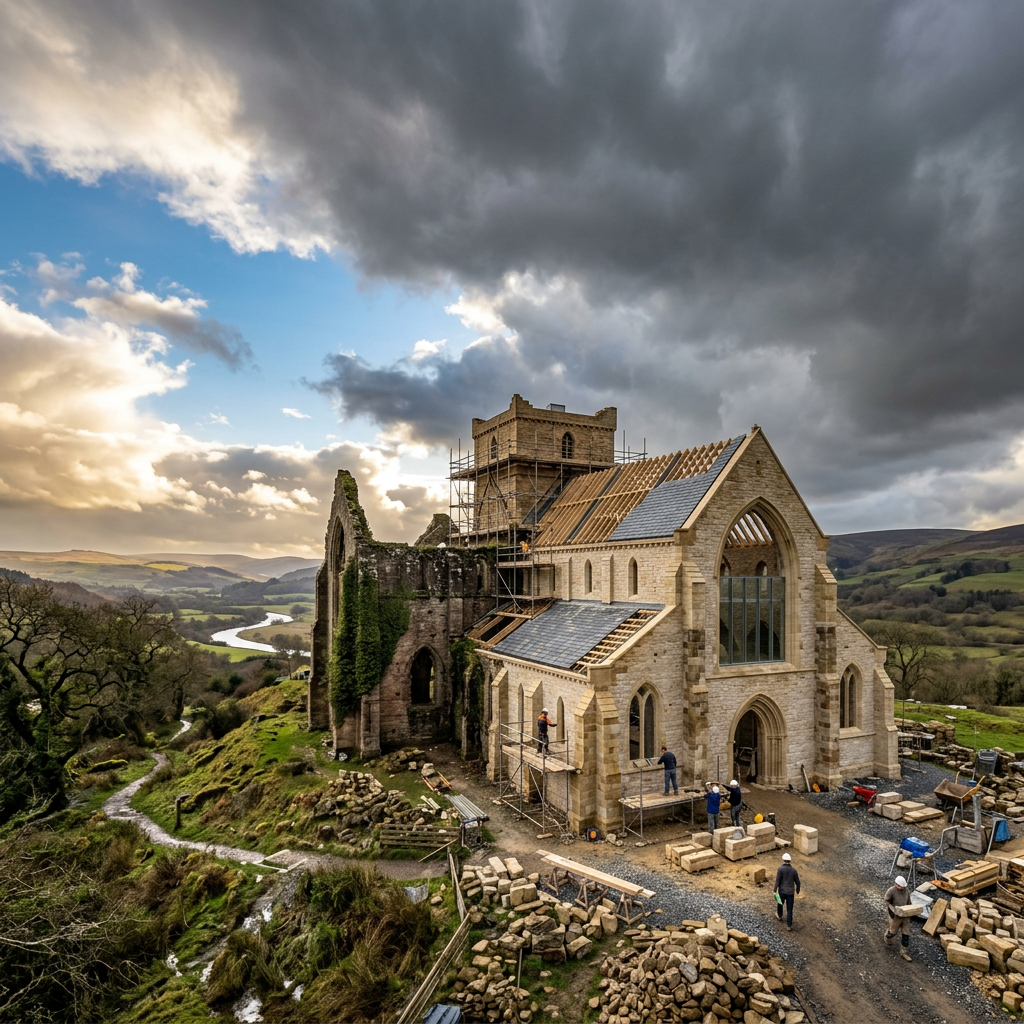
In a world obsessed with individual achievement and self-promotion, the idea of building anything meaningful often gets distorted. We are taught to construct monuments to our own names, empires that stand as proof of our worth. But there exists a different kind of building—one that is not driven by ego, but by covenant. This is the quiet, revolutionary art of constructing for the whole, where the foundation isn’t pride, but a sacred promise to something larger than the self. This is the story of the covenantal circle that builds for the world.
The Covenant Circle Takes Shape
A covenant is deeper than a contract. While a contract sets terms for exchange, a covenant establishes a relationship of identity and purpose. When people are drawn into a covenant, they stop being a collection of individuals and become a circle. This circle is not defined by its walls, but by its center—a shared commitment that holds every member accountable.
- Mutual Responsibility: Each person bears the weight of the others, not out of obligation, but out of belonging.
- A Shared Vision: The circle is oriented around a future that no single person could create alone.
- Sacred Trust: The bond between members is considered inviolable, creating a safe space for vulnerability and risk.
This isn’t a closed club for the exclusive few. The very shape of a circle—open, endless, and unbroken—implies that its purpose is to radiate outward. The strength generated within the circle is not hoarded; it is transformed into blessings for the world.
Building for the World, Not for Ourselves
Here lies the great paradox of the covenant: the more tightly bound you are to your circle, the freer you are to serve those outside it. Building for the world means your design principles shift. You are no longer asking, “What will make me look brilliant?” but instead, “What will serve the most people for the longest time?”
> “A house built for the world has no front door that only a few can enter. Its doors are as wide as the horizon.”
When we build for ourselves, we prioritize speed, efficiency, and personal recognition. When we build for the world, we prioritize durability, generosity, and accessibility. This requires a profound internal shift. It demands that we let go of the need to own the credit. The building is not a trophy; it is a shelter.
Three Strangers Answer One Unseen Voice
Every great covenantal circle begins with a moment of dissonance. Three strangers—or perhaps more, but often just a handful—sense the same quiet call. They don’t know each other. They have no shared history to rely on. Yet, they all lean in toward the same invisible pull.
This is the most fragile moment. There are no guarantees, no templates. Each person is a stranger to the others, but they are not strangers to the voice that summoned them. They answer not because they understand the full plan, but because they trust the source of the call.
- They bring different tools, different wounds, and different strengths.
- They do not know what the building will look like.
- They only know they must build it together.
This initial answer is an act of faith that transforms strangers into neighbors, and neighbors into co-creators. The unseen voice is the bond that will later become the covenant.
A Fellowship Silent but Unbreakably Bound
As the work begins, words become less necessary. The fellowship that emerges from a shared purpose is not loud. It is not built on constant verbal affirmation or public rallies. Instead, it is a silent fellowship, where actions speak with clarity and trust is the only currency.
Members of this covenant learn to read each other. They anticipate needs before they are spoken. They catch one another when the burden becomes too heavy. The silence is not a void—it is a container for deep respect.
> “The strongest bonds are not those forged in passionate agreement, but those tempered in shared silence during the hardest hours of the building.”
This bond becomes the invisible scaffolding of the project. When the walls crack and the plans fail, the circle holds. The fellowship does not break because it was never built on convenience. It was built on fidelity to the promise.
Engineering Through Collapse and Timing
No building of real worth is ever completed without disaster. The covenant circle will face collapse. It may be a financial setback, a betrayal, a natural disaster, or simply the slow erosion of hope. This is where true engineering begins.
The first rule of covenantal engineering is this: collapse is not the end; it is a lesson in timing. The world’s greatest structures are not those that never fell, but those whose builders knew when to let old frameworks go and when to rebuild.
- The Timing of Letting Go: Sometimes, the plan must die so the purpose can live.
- The Timing of Patience: Other times, you simply wait—for the ground to settle, for hearts to heal, for the right season to return.
- The Timing of Rebuilding: This is not done in haste. It is done with the wisdom gained from the first fall.
The circle does not waste energy blaming the collapse. Instead, it studies the debris and asks, “What does this brokenness reveal about our foundation?” The answer always leads them back to the covenant—and with renewed understanding, they build again, stronger and more humble than before.
Conclusion
The covenantal circle is not a project management technique. It is a way of being human. In a fractured world, it offers a model of belonging without possession and construction without exploitation. When we allow ourselves to be bound by promise rather than profit, and when we build not for the glory of our own names but for the shelter of the world, we participate in something ancient and eternal.
The circle builds quietly. It builds through strangers, through silence, through collapse, and through perfect timing. And in the end, what it builds is not just a building—it is a home for the world. Everyone is invited in.
Leave a Reply