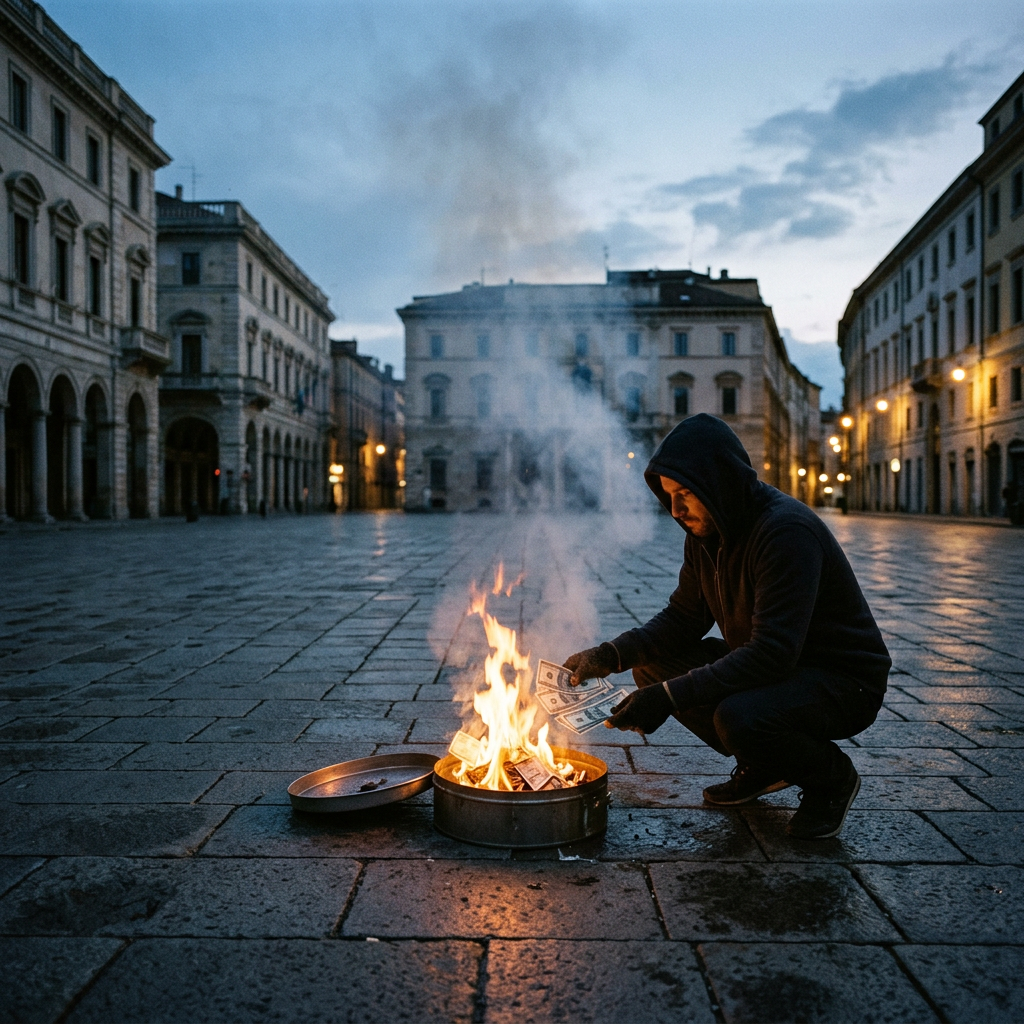
In the span of human history, some shifts happen with a bang—others with a barely audible creak. The unraveling of the modern global order was the latter. It didn’t begin with a declaration of war or a catastrophic natural disaster. It began with a rumble—a low-frequency disturbance in the machinery of everyday life that most people dismissed as static.
The Quiet Collapse No One Saw Coming
For years, the world operated on an unspoken assumption: that the systems propping up modern civilization were too big, too interconnected, and too resilient to fail. Trade routes, financial networks, and energy pipelines had grown into a single, pulsing organism. But beneath the surface, structural fatigue was setting in.
Consider the warning signs that were ignored:
- Trust in international institutions had eroded to a 50-year low.
- A handful of supply chains controlled nearly 80% of critical goods.
- Central banks were printing money at rates that defied historical logic.
- Debt-to-GDP ratios had ballooned past the point of no return.
> “It is not the strongest or the most intelligent who will survive, but those who can best manage change.” — Paraphrased from lore, yet perfectly suited to systems, not species.
The collapse was not sudden. It was a slow-motion derailment masked by quarterly profits and clickbait headlines.
Fractures Beneath the Global Economy
The second tremor came from the global economy itself. For decades, the system seemed to reward everyone—cheap goods for consumers, cheap labor for corporations, and cheap credit for governments. But the foundation was cracked.
Key indicators of the coming unraveling included:
- Weaponized interdependence: Nations used trade as leverage, turning partners into hostages.
- Commodity volatility: The price of food and energy swung wildly, destabilizing entire regions.
- Shadow banking grew faster than regulated markets, creating hidden risk pools.
When a major central bank finally blinked—raising interest rates too fast, too late—it didn’t just cool inflation; it snapped a thread. Suddenly, countries that had borrowed in dollars found themselves unable to pay. The liquidity drought became a global contagion.
When a Small Nation’s Currency Breaks
The first visible crack in the facade appeared not in New York or London, but in a small, resource-rich country few could locate on a map. Its currency had been pegged to the dollar for decades, propped up by promises and foreign aid. Then, the aid stopped. Export revenues plummeted. The central bank’s reserves ran dry.
What happened next was textbook, yet terrifying in execution:
- The government imposed capital controls, trapping foreign investors.
- Black market exchange rates soared 400% in a single week.
- ATMs ran out of cash by noon.
- Streets filled with protests, not for political change, but for bread and fuel.
> “A currency crisis in one country is a footnote. A currency crisis in a systemically important node is a novel.”
Within days, neighboring nations faced similar pressure. The contagion spread faster than any bailout could travel.
The Supply Chain Snap They Called Temporary
When factories in the small nation shut down, they weren’t just a local problem. They manufactured a critical component—a gasket—used in everything from cars to medical ventilators. The world’s largest shipping lines rerouted. Ports clogged. Warehouses emptied.
What experts called “a temporary disruption” became a permanent structural break. The just-in-time model collapsed into just-in-case hoarding. Companies realized:
- Resilience costs more than efficiency.
- Every product now had a geopolitical risk profile.
- The era of cheap, reliable logistics was over.
Shelves in wealthy nations went half-empty. In poorer ones, they went bare. The tip of the spear? A three-cent rubber gasket that no one thought mattered.
A Whispers Begins: “It Has Started”
The first person to say it out loud was not a politician or a billionaire. It was an elderly economist, scribbling on a napkin in a café, who looked up at the television and muttered, “It has started.” The phrase caught fire on social media. It became a meme, then a rallying cry, then a grim acknowledgment.
What “it” meant was different for everyone:
- For the financier: It was the collapse of the final domino—a major sovereign default.
- For the farmer: It was the dust bowl season that never ended.
- For the mother: It was the hospital that ran out of insulin.
- For the soldier: It was the order to guard empty grain silos.
The rumble had become a roar. The old order was not reforming. It was unraveling.
Conclusion
The First Rumble was not a single event, but a succession of failures—economic, logistical, and psychological—that compounded into a new reality. It taught a brutal lesson: systems are only as strong as their most ignored weak point. As the dust began to settle, one thing became clear—the unraveling was not an end. It was the birth pangs of something far more uncertain. The question was not whether the world would change, but whether it would change fast enough to survive.
Leave a Reply