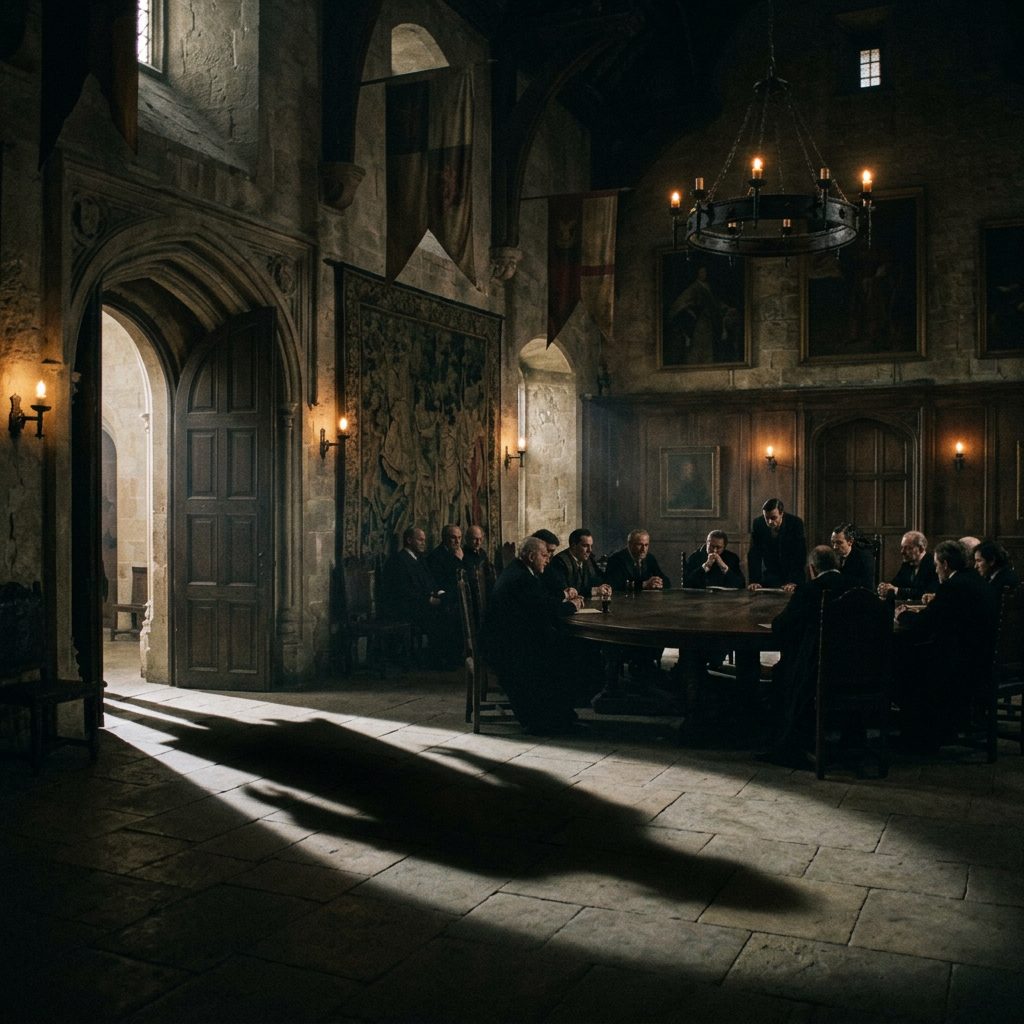
The Advocate Returns: A Silent Arrival
The door to the council chamber did not creak; it simply swung open, a silent admission of an unwelcome guest. The Advocate, once a celebrated pillar of reform, returned not with a triumphant speech or a plan for a new dawn, but with a quiet presence that felt like a deep chill. There was no fanfare, only the heavy weight of an unspoken truth: sometimes, the most dangerous return is the one you never see coming. The city, once buzzing with the energy of collective resolve, now felt the first tremor of instability—a reminder that courage, though powerful, is never a permanent state. It is a garden that must be tended daily, or the weeds of doubt will inevitably creep in.
The Fragile Foundation of Courage
Courage is not a fortress; it is a fragile scaffold erected over a chasm of uncertainty. What the council had built over years of hard-fought advocacy was nothing short of miraculous: a system where voices were heard, where protections were in place, and where trust was the currency of progress.
- Shared purpose had united diverse factions.
- Transparent processes had built a bedrock of credibility.
- Small victories had been celebrated, reinforcing the community’s belief in change.
Yet, this foundation, as sturdy as it seemed, had a hidden flaw. Courage is sustained by momentum, and momentum is easily broken. When fear whispers its first arguments—“Is it safe?” “Is it worth it?” “What if we fail?”—the entire structure begins to sway. The Advocate knew this intimately. After all, it was fear that had driven the Advocate away in the first place, and now it was fear that whispered the route back.
Fear as the Advocate’s Sharpest Weapon
Fear is not a blunt instrument; it is a scalpel. The Advocate, having once used courage to heal, now turned to fear to dissect. The strategy was subtle, almost elegant. Instead of overt threats, the Advocate spread uncertainty like fine dust over everything the council had built.
> “A single stone of doubt can bring down the tallest tower of trust.” — Old Proverb
The Advocate did not argue against progress; instead, they posed gentle, reasonable questions:
- “Are we certain these changes won’t harm our most vulnerable?”
- “Has anyone considered the cost of moving too fast?”
- “Is it possible that our courage was actually recklessness in disguise?”
Each question, on its own, seemed like prudent caution. But together, they formed a storm of hesitation. The council members, once bold, now found themselves second-guessing every prior decision. The Advocate’s weapon was not lies, but the subtle erosion of confidence. Fear, when wrapped in the cloak of concern, is nearly impossible to fight without appearing aggressive or closed-minded.
The Council Faces the Unseen Threat
The council’s greatest strength—their reliance on debate, data, and deliberation—became their greatest weakness. The Advocate’s tactics did not require a visible enemy. The battle was internal, fought in quiet meetings and whispered conversations.
The members did not see the threat coming because it moved alongside them. They began to notice:
- Prolonged silences during votes on key initiatives.
- A decline in public engagement, as citizens sensed the fraying unity.
- A subtle shift in language, from “we can” to “we should be careful.”
The real danger was not a coup or a violent overthrow. It was the slow corrosion of the very mindset that had built the city’s resilience. The council realized too late that the Advocate was not attacking their actions—they were attacking their identity. The question “Who are we?” was now answered with uncertainty instead of pride.
Stewardship and the Corrosion of Trust
The most insidious effect of the Advocate’s return was the way it attacked stewardship. Stewardship is the active, daily care of a community’s values. It requires vigilance, communication, and a willingness to renew commitments openly.
Consider how trust corrodes when stewardship fails:
- Without open conversation, assumptions harden into accusations.
- Without shared rituals, the memory of past courage fades.
- Without constant reinforcement, fear fills the vacuum left by faded hope.
The Advocate understood that fear breeds a corrosive version of caution—one that masquerades as wisdom but actually erodes the bonds of trust. A once-unified council became a collection of wary individuals, each protecting their own territory instead of nurturing the common ground.
Yet, a crucial lesson emerged from this shadow: fear can only break what courage built, but it cannot build anything new. The Advocate could dismantle, but could not create. This realization, though painful, offered the council a fragile hope. To rebuild, they would need to not only resist fear but also actively rekindle the flame of collective courage.
Conclusion
“The Advocate Returns” is more than a cautionary tale about a past figure; it is a mirror held up to any community, organization, or nation. It reminds us that the work of courage is never finished. Fear is patient, and it will always wait at the edges of our triumphs, ready to exploit the smallest crack in our resolve.
The antidote to the Advocate’s influence is not silence or aggression, but radical stewardship—the consistent, humble, and public renewal of the values we claim to hold. Trust is not a monument you build once and admire forever; it is a fire you must tend daily, or it will die. And when the Advocate returns—as they always do—the only force strong enough to meet them is not a fortified wall, but a community that remembers, together, what its courage actually built.
Leave a Reply