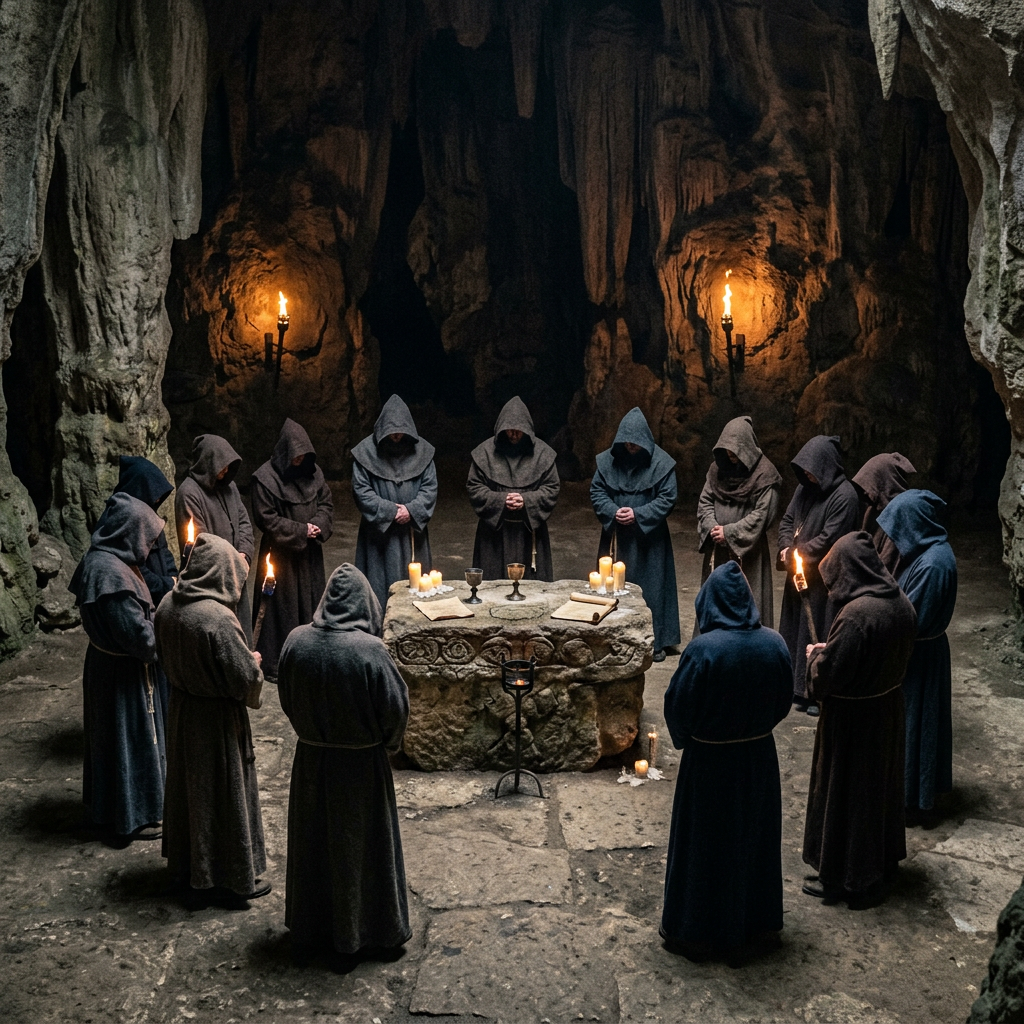
The Silent Convocation Beneath the Ancient Stone
Beneath the roots of a mountain older than memory, a council was called. Not by trumpets or messengers, but by a quiet resonance felt in the marrow of those who were meant to hear it. The place was a hollow chamber lined with obsidian and moss, where a single slab of granite sat untouched for centuries. Here, twelve figures gathered, not as rulers, but as witnesses. The world above them was fracturing—clinging to old systems of control while the ground shifted beneath its feet. The old councils had failed, not from malice, but from the weight of their own stagnation.
This was not a meeting of politicians or generals. It was a silent convocation of keepers—each chosen not for ambition, but for a deep, unspoken alignment with the principles of balance. In this place, there were no banners, no titles, and no votes. There was only the pact that had been waiting to be awakened.
Choosing Integrity Over Power: The Twelve Stewards
The selection of the Twelve was not random. Each steward came from a different discipline, a different corner of human experience, yet all shared a common thread: they had refused the temptations of dominance in their previous lives. They were:
- A botanist who rewilded corporate wastelands without a single contract.
- A historian who buried false narratives with quiet documents.
- A weaver of code who built transparent networks, invisible to the powerful.
- A healer who treated the wounds of those forgotten by the system.
- A musician whose melodies disarmed mobs before violence could bloom.
- A storyteller who preserved the voices of the silenced.
- A farmer who restored dead soil without patents or profit.
- A mediator who resolved disputes without law or force.
- A cartographer who mapped hidden resources for common use.
- A guardian who protected the vulnerable without weapons.
- A poet who bent language away from propaganda.
- A child—the youngest—who saw clearly what adults had learned to ignore.
> “We were not chosen for our strength, but for our refusal to misuse it. That is the only qualification for guardianship.” – The Historian
Their first act was not to issue decrees, but to sit in a circle and listen. For three days, they spoke nothing of strategy. They spoke only of what they had seen, what they had suffered, and what they had hoped for. In that silence, the true council was born.
The Balanced Scale: Instrument or Counterweight?
The ancient stone in their chamber was not a table; it was a scale. Carved with runes that shifted in the firelight, it represented the core of their mission: balance. But balance, the Stewards learned, was not neutrality. It was a living tension.
They faced a crucial question: Were they to become an instrument of balance, or a counterweight? An instrument merely reflects the forces at play. A counterweight, however, actively resists imbalance.
The council’s first test came from the merchant guilds, who offered vast resources in exchange for loyalty. The Stewards refused. Next came the populist factions, demanding they enforce a new order. Again, they declined.
Instead, they established three principles for every decision:
- Do not amplify power – Never take an action that increases one side’s dominance without giving the other side a voice.
- Protect the fragile – The weak are not to be sacrificed for abstract ideals of fairness.
- Act only when the scale tips – Do not interfere in stable systems, but intervene decisively when the tilt threatens collapse.
A Covenant of Guardians, Not a Tool of Control
The Stewards’ most radical departure from previous councils was in their covenant. They bound themselves not to a charter of laws, but to a series of vows:
- The Vow of Impermanence – No steward serves for life. Each year, one steps down and a new keeper is chosen by the community they protect.
- The Vow of Transparency – All decisions are recorded in a living document, open to anyone. Secrets are allowed only when revealing them would cause immediate harm.
- The Vow of Non-Action – They cannot initiate change, only respond to imbalance. Their role is guardian, not architect.
- The Vow of Solitude – They have no armies, no wealth, no headquarters. Their authority comes solely from the trust of those who recognize their purpose.
> “A guardian who builds walls is already a tyrant. True protection is invisible.” – The Weaver
This covenant was not written to last forever. It was written to be renewed. The Stewards understood that every generation must re-earn its right to guard. The stone beneath them would not enforce the pact; only their character would.
Dawn of a New Age: Stewardship Without Masters
The world did not change overnight. The old systems creaked, resisted, and in some places, collapsed. But slowly, a new pattern emerged. Communities began to recognize the Stewards not as a government, but as a mirror. When the scale tipped too far toward greed, the Stewards’ network quietly seeded alternative economies. When fear rose, the poets wove counter-narratives of hope. When the land was wounded, the farmer and the healer worked together to restore it.
This was not utopia. There were still conflicts, still tragedies, still moments when the council failed to act in time. But the age of masters had ended. No throne was built, no flag raised. The Twelve remained twelve, and the stone beneath the mountain grew warm with the quiet weight of thousands who now kept the council’s trust. The guardians were no longer the only ones watching—every person who chose balance over control became a steward in their own right.
Conclusion
The Council of Stewards endures not because of its power, but because of its restraint. In a world that craves strong leaders and quick fixes, they offer something rarer: humble vigilance. Their legacy is not carved in monuments, but in the daily acts of those who refuse to dominate or be dominated. The new age they guard is not one of perfect peace, but of perpetual care—a covenant whispered beneath an ancient stone, heard only by those willing to listen.
Leave a Reply