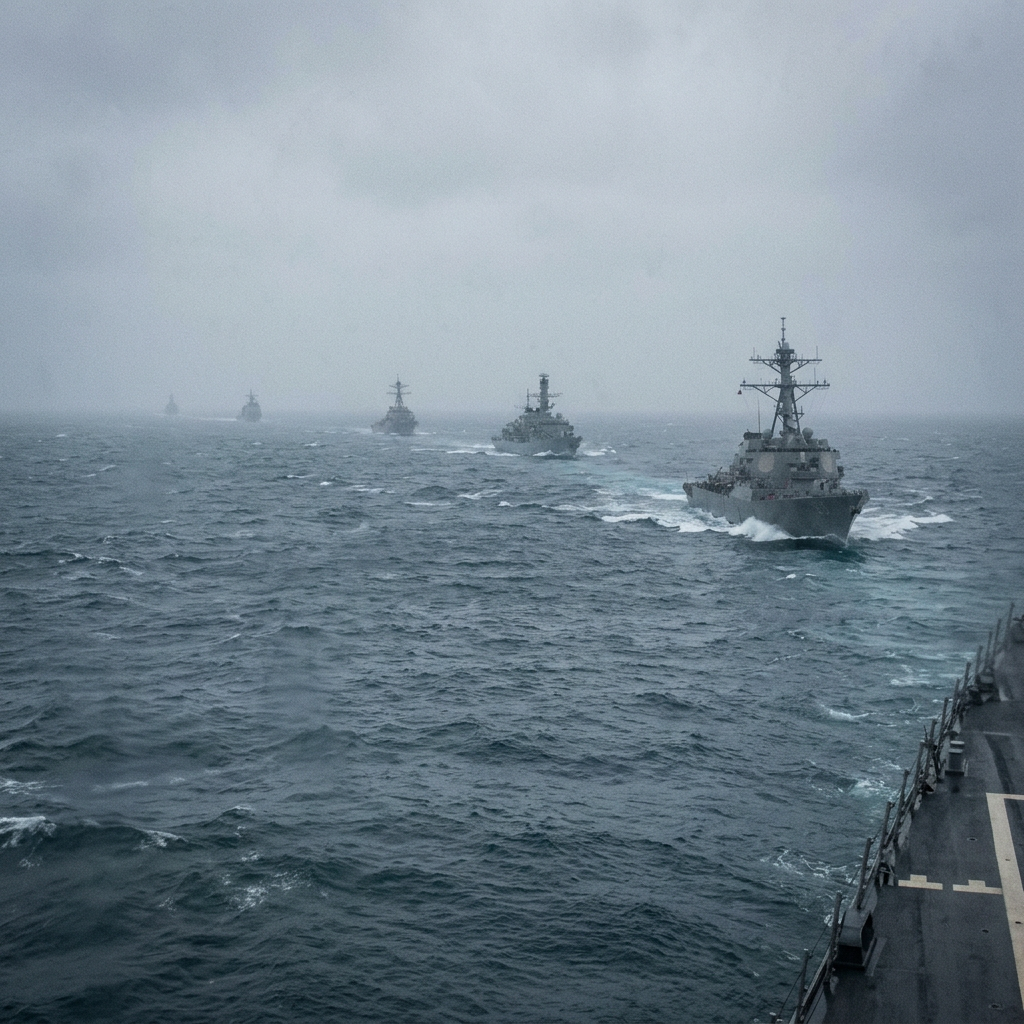
The world’s maritime arteries are rarely silent, but in recent times, a new, resonant tone has been added to their hum. It is the sound of a tightening grip—a metallic call from an Iron Strait, where geopolitics and trade converge into a single, pressurized channel. This article explores the complex interplay of power, strategy, and vulnerability that defines these narrow passages, and how their condition sets the pulse for global commerce.
The Trumpet’s Echo Over Narrow Seas
The term “Iron Strait” might evoke a physical object, but it is more accurately a metaphor for the hard, unyielding reality of modern maritime chokepoints. These are not just stretches of water; they are strategic valves through which a staggering percentage of the world’s energy and goods must flow. When a major power—or a volatile state—tightens its control over such a passage, the effect is immediate and global.
> “A strait is not a bridge. It is a door. And the one who holds the key decides who enters the market.”
The “trumpet” in our title suggests a call to attention—a warning. When the passage becomes constrained by political pressure, military posturing, or environmental risk, the echo is felt not just in maritime insurance rates, but in the price of fuel on every continent. The narrow seas, from Malacca to Hormuz, and from the Bosphorus to the Taiwan Strait, are becoming louder, more insistent, and more dangerous.
Clenched Waters: A Fist Around Shipping Lanes
Imagine a network of global shipping lanes as the circulatory system of the planet. Now, picture a fist slowly closing around the aorta. That is the reality of a militarized strait.
- Strategic Squeeze: The Strait of Hormuz sees about 20% of the world’s oil pass through it. A single mine or a disabled tanker can halt the flow, instantly spiking crude prices.
- Insurance Spikes: War-risk premiums for vessels transiting contested waters can double or triple overnight, adding millions to operational costs.
- Alternate Routes Are Few: The Suez Canal has no realistic shortcut. The Cape of Good Hope adds weeks and thousands of nautical miles, burning more fuel and increasing emissions.
The clenching is not always military. It can be regulatory—a new inspection regime, a change in environmental law, or a local political dispute that slows traffic to a crawl. But the result is the same: the maritime pulse tightens, and the global supply chain skips a beat.
Unspoken Threats in the Steel-Blue Surge
Beyond the headlines of naval exercises and diplomatic standoffs, there are quieter, more insidious dangers that strengthen the grip of the Iron Strait.
- Underwater Infrastructure: Subsea cables and energy pipelines are now vulnerable targets. An attack on a cable in a narrow sea can disconnect a nation’s data connectivity before a single ship is harmed.
- Environmental Liability: A collision in a constrained channel can lead to catastrophic oil spills that close the passage for months, not days.
- Cyber Disruption: Ports on either side of a strait are high-value targets for cyberattacks. Disabling port logistics can effectively bottle up traffic without a single shot fired.
These threats are the steel-blue surge—the deep, cold current of risk that flows beneath the surface of daily trade. They are unspoken because they are complex, difficult to attribute, and often ignored until they strike.
Maritime Pulse Tightens with Every Wave
The pulse of the maritime world is measured in the tempo of port calls, the speed of transit, and the cost of freight. The Iron Strait’s influence tightens this pulse in three distinct phases:
- First Phase: The Echo. Rumors of closure or conflict cause an immediate speculative spike in shipping rates and futures markets.
- Second Phase: The Squeeze. Actual restrictions force ships to queue, wait, or reroute. Congestion builds at anchorages, and container availability plummets.
- Third Phase: The Tether. Long-term uncertainty leads to supply chain re-engineering. Companies invest in nearshoring, duplicate routes, and inventory hoarding—all of which are inefficient and costly.
Every wave that breaks against a hull in a constrained strait is a reminder that the flow of goods is not a natural right, but a negotiated privilege. The tightness of the pulse directly correlates with the level of trust—or distrust—between the powers that flank the waterway.
Corridors Tremble Under the Iron Strait’s Call
The final consequence is a systemic trembling. The world’s economic corridors—the trade links between Asia, Europe, and the Americas—are only as strong as their weakest strait. When the Iron Strait sounds its call, these corridors tremble.
How to Prepare for a Tightened Maritime Pulse
- For Businesses: Diversify logistics. Do not rely on a single chokepoint. Consider multi-modal transport options (rail, air) for critical components.
- For Governments: Invest in naval diplomacy. A visible, credible maritime presence can deter unilateral action and ensure freedom of navigation.
- For Investors: Watch insurance premiums. They are the earliest warning signal of an impending squeeze. A sudden spike in war-risk ratings is a red flag.
- For the Public: Understand the link. The price of a winter tomato or a new smartphone is directly tied to the stability of these iron straits.
> “The sea is a highway, but a highway with no exits. Every strait is a toll booth, and sometimes, the toll is not measured in money, but in patience and power.”
Conclusion
The Iron Strait Trumpet is not a mythical instrument. It is the real, percussive sound of pressure building in the world’s most vital waterways. As political tensions simmer and climate change alters maritime routes, this trumpet will only grow louder. To ignore its call is to risk being caught off-guard when the pulse tightens to a breaking point. The key to resilience lies not in hoping for calm seas, but in understanding that the iron grip of geography and power will always demand a price for passage. The question is whether we are prepared to pay it.
Leave a Reply